Industrial-Grade Racking & High-Density Storage Solutions
Precision cold-rolled Q235B and Q355B structural steel systems manufactured under stringent ISO tolerances for modern logistics centers, distribution hubs, cold storage, and heavy e-commerce fulfillment facilities.
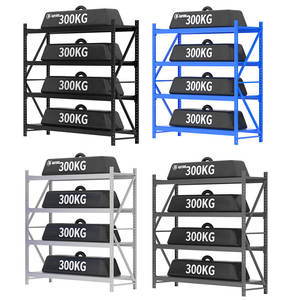
RD-33# Q235 Steel Multilayer Storage Rack Medium Duty Tier Adjustable Powder Coated Multi-Level Rack For Heavy Weight Cargo
- Steel Grade: Certified Q235B Cold-Rolled
- Load Capacity: 500 - 1,500 kg / Tier
- Finish: Phosphated Epoxy Powder
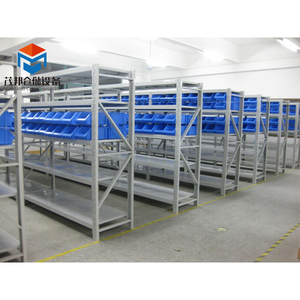
Manufacture Factory Metal Materials Light Duty Racks Warehouse Storage Racks Light Equipment 400 kg Metal Rack
- Configuration: Clip-In Boltless Shelving
- Load Capacity: Up to 400 kg / Shelf
- Application: Bins, Hardware, Spare Parts
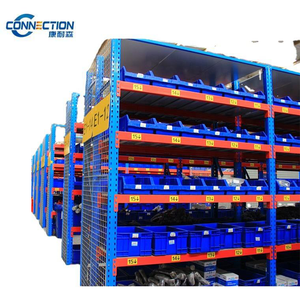
Heavy Duty Metal Shelving Industrial Warehouse Storage Rack Shelf Steel Racking System For Stacking Racks Shelves
- Structural Profile: Omega Upright 90×70 / 100×70
- Load Capacity: 1,000 - 4,000 kg / Level
- Safety Standard: FEM 10.2.02 / AS4084
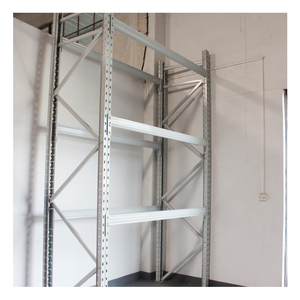
Heavy Duty Boltless Shelf Rack Adjustable Metal for Warehouse Storage Steel Low Price
- Connection: Butterfly Hole / Keyhole Rivet
- Load Capacity: 300 - 800 kg / Level
- Decking: Steel Sheet or Solid Plywood
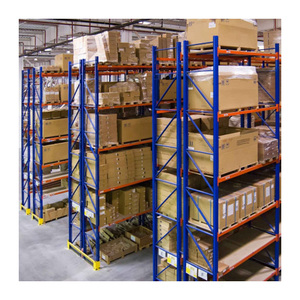
China Rack Factory Manufacturer Custom Warehouse Heavy Duty Pallet Racking Storage Shelf
- Beam Section: Box Beam 80 - 160 mm
- Bay Height: Up to 14,000 mm Clear
- Customization: Forklift Guide Rails & Ties
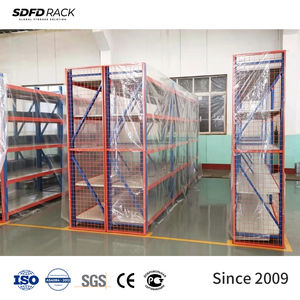
Wholesale Hot Selling 2400x600x2200 Medium Duty Longspan Warehouse Shelves 4 Layers/400kg Load Capacity Industrial Storage Racks
- Dimensions: 2400 × 600 × 2200 mm
- Pitch Step: 50 mm Level Adjustability
- Structure: Stepped Beam & Drop-In Panel
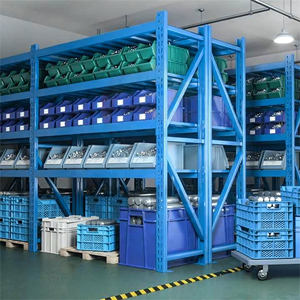
High Quality Durable Corrosion Protected Boltless Adjustable Warehouse Light Duty Industrial Metal Shelving Metal Storage Racks
- Surface Tech: Pickling & Phosphating Coat
- Assembly Time: Zero Bolts / Tool-Free
- Corrosion Rating: High Humidity / Salt Fog Rated
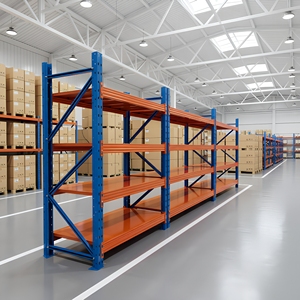
Custom Size Color Industrial Warehouse Shelf 4-Layer Adjustable 300-500KG Light Duty Rack Waterproof Powder Coated Metal Storage
- Layer Capacity: 300 - 500 kg / Layer
- Color Schemes: RAL Standard (Blue/Orange/Grey)
- Protection: Waterproof Electrostatic Finish
End-to-End Vertical Manufacturing Under One Roof
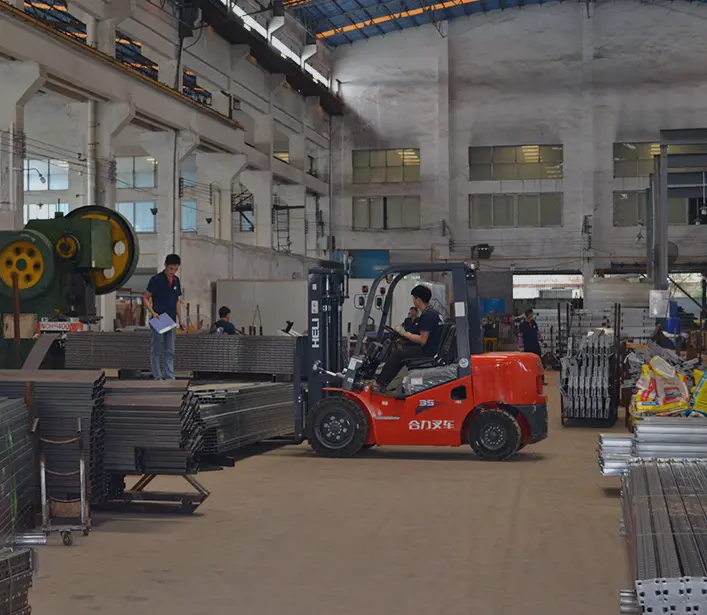
Founded in Guangzhou, Guangzhou Heda Shelves Co., Ltd. operates a premier 30,000 square meter integrated industrial racking production base. Engineered for international engineering contractors, 3PL giants, and supply chain operators, our production guarantees complete traceability from primary strip steel coil inspection to maritime export packaging.
Unlike trading intermediaries, our factory utilizes automated continuous cold roll-forming lines, computerized multi-stage punching machines, heavy-duty robotic seam welding, and an automated continuous 7-stage surface pretreatment line. Every batch undergoes strict yield strength tensile verification, salt spray chamber degradation testing, and strict deflection-under-load analysis matching European standard EN 15512 and American RMI criteria.
Chemical Pretreatment & Anti-Corrosion
Our 7-stage chemical immersion process incorporates acid pickling, multi-rinse de-greasing, zinc-phosphating, and nano-ceramic passivation prior to non-porous thermosetting electrostatic powder coating. This prevents under-film rust even under 95% relative humidity in tropical climates.
Container-Optimized Logistics (FOB/CIF)
Overseas sea freight can dramatically impact total landed cost. We engineer custom nested bundles, upright knock-down assemblies, and wooden cradle dunnage that utilize 98.5% of 40HQ container cube space, significantly driving down per-pallet freight costs to global seaports.
Complimentary 3D CAD & Static FEA
Our dedicated engineering team creates turnkey 3D warehouse layouts, forklift turning radius simulations, aisle-clearance designs, and finite element analysis (FEA) structural stress calculations before production, completely free of charge to procurement teams.
Future Sourcing Trends in Industrial Racking & Intralogistics (2025–2030)
As warehouse real estate costs skyrocket globally and automation reshapes fulfillment centers, structural racking procurement has transitioned from buying commodity steel to procuring precision-engineered infrastructure.
1. Decarbonized Steel Sourcing & ESG
Global logistics developers (Prologis, Goodman, GLP) increasingly evaluate embodied carbon footprints. Tier-1 buyers demand racking sourced from mills utilizing Electric Arc Furnace (EAF) processing and scrap-recycled hot-rolled coils, accompanied by Environmental Product Declarations (EPD).
- Low-carbon Q235B / Q355B coil supply chains
- VOC-free, zero-heavy-metal powder coatings
- 100% circular recyclability of components
2. Shift to Total Landed Lifecycle Cost (TCO)
Traditional procurement focused purely on FOB China price-per-kilogram. Modern procurement teams calculate structural life expectancies, impact resilience, rapid upright repair compatibility, and freight packing densities that save thousands per maritime shipment.
- Flat-pack modular nesting in 40HQ containers
- Reinforced wrap-around bottom column protectors
- Interchangeable teardrop & slotted beam connectors
3. AS/RS & Automated Shuttle Readiness
Labor shortages worldwide have driven a transition toward high-density Radio Shuttle racking, Four-Way Shuttle arrays, and miniload AS/RS systems. Manual static racking bays are increasingly pre-engineered with precision floor rails for future automation upgrades.
- Millimeter-level deflection tolerance compliance
- Pre-punched guide rails for AGV/AMR pathways
- High-strength structural beam locking pins
Technological Frontiers in Modern Racking Design
Industrial storage systems are evolving into hyper-engineered structural ecosystems. Below are the pivotal technological developments revolutionizing warehouse rack integrity and operation.
Seismic Resilience & Dynamic Damping
With seismic activity posing catastrophic structural failure risks in active fault zones across California, Chile, New Zealand, Japan, and Turkey, modern racking incorporates non-linear dynamic time-history analysis, flexible baseplates, and high-ductility steel alloys.
- Baseplates designed according to Eurocode 8 & RMI MH16.1
- Top-tier diagonal portal bracing frames
- Ductile energy-dissipating beam end connectors
IoT Strain Telematics & Health Monitoring
The integration of micro-strain optical fiber gauges and wireless IoT acceleration sensors allows real-time structural load monitoring. Warehouse operators receive automated alerts the moment a forklift exceeds allowable impact or upright deflection thresholds.
- Real-time telemetry against structural overload
- Instant impact detection via tri-axial accelerometers
- Predictive maintenance alerts on WMS dashboards
Extreme Climate Surface Engineering
Cold storage facilities (-30°C) and coastal high-salinity warehouses induce severe condensation and thermal shock. Pre-galvanized components (Z275/Z600), hot-dip galvanizing, and specialized hybrid epoxy-polyester powder systems eliminate micro-fracturing and rust bleed.
- Cold-room rated steel resistant to ductile-to-brittle transition
- Hot-Dip Galvanized (HDG) to ASTM A123 standards
- Salt-spray testing exceeding 1,000 continuous hours
Engineering Specification Matrix: System Comparison
Select the optimal storage density, throughput rotation, and mechanical handling profile for your distribution center:
| Racking Type | Access Principle | Volumetric Density | Typical Payload | Primary Application | Forklift Compatibility |
|---|---|---|---|---|---|
| Selective Pallet Racking | 100% Direct (FIFO) | Moderate (40–45%) | 1,000–4,000 kg/level | General 3PL, FMCG, Diverse Multi-SKU | Counterbalance, Reach Truck, VNA |
| Drive-In / Drive-Through | LIFO (or FIFO) | High (70–75%) | 1,000–2,000 kg/pallet | Bulk Seasonal Goods, Cold Storage, Beverages | Standard Counterbalance, Narrow Reach |
| Radio Shuttle System | Automatic FIFO / LIFO | Ultra-High (80–85%) | 500–1,800 kg/pallet | Cold Chain, Food Processing, High-Volume SKUs | Standard Forklift (Loads lane mouth) |
| Push Back Racking | LIFO (Nested Carts) | High (65–70%) | 1,000–1,500 kg/pallet | Medium-turnover stock, 2-6 pallets deep | Standard Counterbalance / Reach |
| Heavy-Duty Cantilever | Unobstructed Front | High for Long Items | 500–3,000 kg/arm | Steel Pipes, Timber, Rebar, Drywall, Sheet Metal | Side Loader, Multi-Directional Forklift |
| Industrial Mezzanine Floor | Multi-Tier Manual Picking | Max Vertical Utilization | 300–1,000 kg/m² | E-Commerce Picking, Garment, Small Component Bins | Hydraulic Pallet Jack, Forklift Gate, Chute |
Industrial Warehouse Racking: Global Buyer FAQ
Direct technical and commercial answers compiled by our chief structural engineers to streamline international bidding, regulatory verification, and containerized dispatch.
How does Chinese Q235B and Q355B steel compare with international structural steel grades (ASTM / EN)?
What engineering information is required to receive a free 3D CAD design and structural load quotation?
How does HEDA ensure upright frames and beams resist extreme marine corrosion during ocean transit and humid storage?
Can HEDA Shelves warehouse racking meet regional seismic codes (RMI MH16.1, AS 4084, Eurocode 8)?
How are components packaged to prevent scratching, bending, and shipping volume wastage during ocean shipping?
What installation support does HEDA provide for overseas warehouse projects?
What warranties and quality guarantees accompany structural racking exports?
How do mechanical storage systems maintain operations during power grid disruptions?
Connect Directly With Our Warehouse Racking Engineering Team
Eliminate middleman markups. Receive factory-direct pricing, customized 3D CAD architectural floor plans, static structural calculations, and container loading simulations within 24 business hours.