High-Performance Industrial Storage & Heavy-Duty Pallet Systems
Explore our certified structural steel racking configurations engineered for maximum cubic volumetric efficiency, extreme seismic compliance, and seamless material handling integration.
The Global Dominance of Chinese Shuttle Pallet Racking Engineering
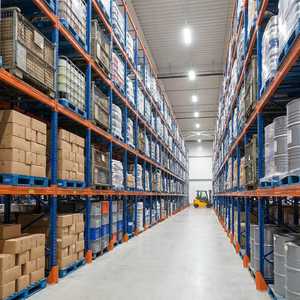
In modern intra-logistics, volumetric cubic utilization and pallet throughput velocities define supply chain competitiveness. Global warehousing facilities face identical bottlenecks: escalating square-meter land values, severe labor overheads, rising energy tariffs in cold-chain environments, and escalating demands for high-frequency inventory turnover. Traditional storage architectures—such as selective pallet racking, standard drive-in racking, and manual stack storage—increasingly represent operational compromises. Selective racking consumes over 55% of total floor space purely in operational forklift travel aisles; drive-in racking drastically degrades throughput velocity while introducing severe structural impact risks as heavy material handling equipment navigates deep interior bays.
As the international manufacturing hub for intralogistics infrastructure, China has developed an unmatched industrial cluster for Radio Shuttle Pallet Racking Systems. Integrating advanced precision roll-forming metallurgy, automated robotic laser welding, cold-chain surface coatings, and sophisticated embedded PLC motion-control telemetry, top Chinese manufacturers have redefined what procurement executives expect from automated high-density storage. Sourcing from a Tier-1 Chinese supplier is no longer merely a cost-arbitrage decision; it is a structural engineering strategy that delivers European-standard (FEM/EN 15512) and American-standard (RMI) certified systems engineered directly for automated logistics operations.
SSAB & Baosteel Q355B Steels
Fabricated exclusively from high-yield cold-rolled structural steel coils. Uprights and heavy box beams undergo computer-controlled multi-station continuous roll forming to ensure laser-flat dimensional tolerances within ±0.5mm across 12-meter continuous spans.
Next-Gen Radio Frequency Shuttles
High-torque brushless DC motorization, Siemens and Omron PLC processing modules, integrated optical position sensors, photoelectric collision avoidance, and industrial LiFePO4 battery banks enabling up to 10 hours of continuous multi-shift cycles.
Landed-Cost Optimization (TCO)
Precision knock-down engineering maximizes sea freight container stuffing metrics. Our modular nested upright frame and beam packing configurations yield up to 28 tons per 40HQ container, lowering landed logistics expenditure by 22% to 35% compared to regional suppliers.
Comparative Engineering Matrix: High-Density Storage Architectures
To assist operations directors and supply chain engineers in selecting the correct structural asset, the following benchmark compares primary heavy-duty systems across capacity, throughput, equipment utilization, and operational lifecycle metrics:
| Storage System Type | Space Utilization | Selectivity Profile | Pallet Throughput Speed | Forklift Impact Risk | Cold Room ROI Multiplier |
|---|---|---|---|---|---|
| Selective Pallet Racking | 40% – 45% (Aisle Heavy) | 100% Immediate | Moderate (Forklift dependent) | Moderate to High | Baseline 1.0x (High energy loss) |
| Drive-In / Drive-Through | 65% – 70% | Low (Last-In, First-Out) | Low (Forklift inside bay) | Critical (High collision risk) | 1.8x |
| Push-Back Cart Racking | 65% – 75% | Moderate (2–6 Pallets/Lane) | Medium (Gravity assisted) | Low to Moderate | 2.2x |
| Gravity Pallet Flow | 75% – 80% | High (Strict FIFO) | High (Dynamic roller beds) | Very Low | 2.6x |
| 2-Way Radio Shuttle Racking | 85% – 90% Optimal | High (Configurable FIFO/LIFO) | Extremely High (Autonomous) | Negligible (Aisle isolated) | 3.8x (Industry standard) |
| 4-Way Multi-Shuttle System | 92% – 95% Max Cube | 100% Automated Matrix | Ultra-High (ASRS Integrated) | Zero (Unmanned dark warehouse) | 4.5x (Capital Intensive) |
As demonstrated by structural spatial analyses, the Radio Shuttle Pallet Racking system provides the highest practical equilibrium between capital expenditure (CapEx) and operational velocity (OpEx). By eliminating the need for lift trucks to navigate inside storage tunnels, cycle times per pallet transfer are curtailed by up to 60%, forklift fleet wear-and-tear is drastically curtailed, and rack structural integrity is preserved indefinitely from mast and chassis collisions.
Future Procurement Trends in Shuttle Pallet Racking (2025–2030)
How forward-thinking global supply chain directors are re-architecting procurement criteria to navigate automation convergence, energy volatility, and operational resilience.
1. Transition to 4-Way Multi-Shuttle & AMR Integration
Procurement is pivoting from standard 2-way linear shuttles toward omnidirectional 4-way shuttles integrated with Autonomous Mobile Robots (AMRs) and vertical pallet elevators. This eliminates forklift reliance completely, converting vertical cube space up to 24 meters into dense, autonomous dark-store distribution hubs.
2. Cold-Chain Thermal Integrity & Green Energy
Refrigerated and blast freezer facilities (-25°C to -30°C) represent the highest growth sector for shuttle racking. Buyers require lithium supercapacitors capable of rapid 15-minute charging cycles and specialized hot-dip galvanized or anti-condensate epoxy powder coatings that prevent embrittlement and electrochemical oxidation.
3. Verified Structural Traceability & EN 15512
Global project tenders increasingly reject uncertified steel profiles. B2B buyers mandate mill test certificates (MTC) proving steel purity, automated ultrasonic weld testing reports, and Finite Element Analysis (FEA) validating seismic elasticity under localized Richter magnitudes.
Deep Engineering Analysis: 2-Way vs. 4-Way Shuttle Kinematics
A technical evaluation of shuttle pallet racking systems requires examining the kinematic interface between the galvanized running rail profiles and the shuttle chassis wheelsets. In conventional 2-way radio shuttle configurations, the shuttle travels along a singular horizontal axis within a deep storage channel (ranging from 10 to 40 pallets deep). Pallet elevation is executed via a heavy-duty hydraulic or mechanical eccentric scissor cam mechanism capable of lifting loads between 1,000 kg and 1,800 kg in under 2.5 seconds.
However, the technological frontier has shifted to 4-Way Multi-Shuttle Architectures. These units feature dual orthogonal wheel assemblies allowing seamless directional 90-degree transitions between longitudinal storage channels and cross-aisle transfer rails without physical turning radius overhead. Integrated with laser rangefinders, absolute optical encoders, and Wi-Fi 6 / 5G industrial mesh network communication, 4-way shuttles report real-time telemetry to WCS (Warehouse Control Systems) with positioning tolerances under ±1.5 mm. For buyers planning automated distribution centers, selecting an exporter capable of engineering both the mechanical steel matrix and the low-voltage communication rail interfaces is paramount.
25+ Years Industrial Lineage (Since 2001)
Two and a half decades of structural racking manufacturing delivering over 10,000 completed warehouse and distribution center installations across 120+ countries worldwide.
30,000 m² Facility & 30,000-Ton Monthly Output
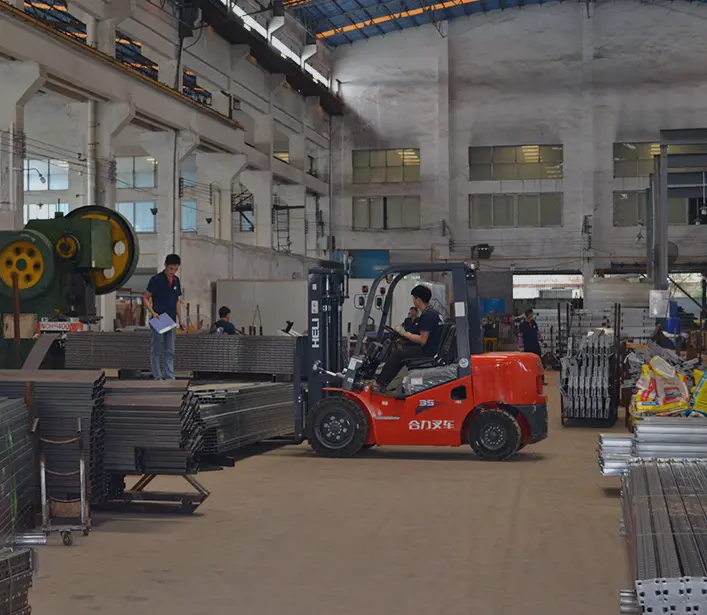
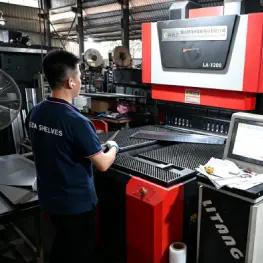
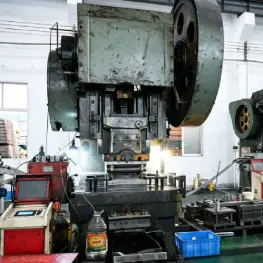
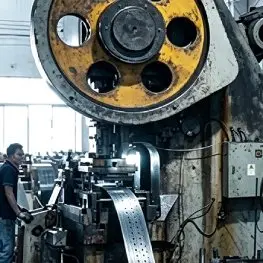
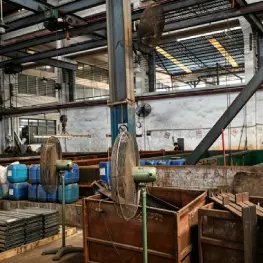
Fully vertically integrated manufacturing under one roof—from coil slitting and automated CNC continuous column punching to high-speed profile bending and powder finishing.
Rigorous CE & ISO 9001:2015 Certifications
Holding verified CE Declaration of Conformity (No. 2435-CPR-8605159) and ISO 9001:2015 Quality Management (No. 18624Q00169R0M), guaranteeing load calculations adhere strictly to global FEM standards.
Free 3D CAD/SolidWorks Structural Engineering
Our dedicated engineering department drafts full spatial layouts, dynamic pallet lane flow models, and FEA deflection calculations within 24–48 hours of initial consultation.
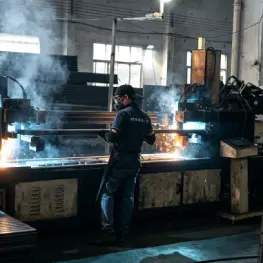
10-Stage Precision Production Pipeline
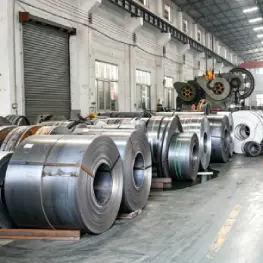
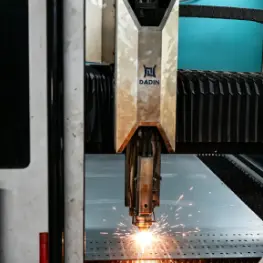
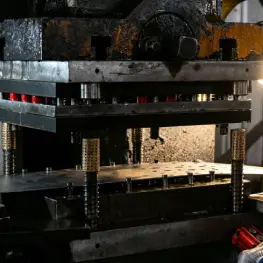
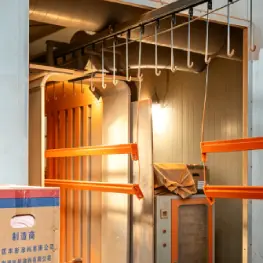
From prime cold-rolled steel coils to high-adhesion electrostatic powder coating, every structural component undergoes rigorous in-line quality controls to ensure extreme load longevity.
Shuttle Pallet Racking Procurement & Technical FAQ
Comprehensive technical answers to critical engineering, installation, battery maintenance, seismic validation, and global logistics questions.
What floor flatness tolerance (FF/FL) is required for shuttle racking?
Unlike Very Narrow Aisle (VNA) systems that demand extreme Superflat floors (DIN 18202 Table 3 Group 4), radio shuttle racking operates with lower floor constraints because the shuttle navigates within the leveled steel rail network rather than on the concrete floor. However, an overall floor leveling tolerance of ±3mm across a 2-meter straightedge is strongly recommended to ensure upright baseplates are evenly shored and chemical anchor bolts retain certified shear values.
How do shuttle batteries perform in sub-zero cold storage (-25°C)?
Standard ternary lithium batteries suffer voltage collapse and capacity degradation exceeding 50% under freezing conditions. HEDA Shuttle systems utilize custom cold-chain engineered Lithium Iron Phosphate (LiFePO4) battery units outfitted with embedded internal heating management circuitry. The internal heating elements maintain cell core temperatures between +10°C and +15°C during discharge, ensuring uninterrupted 8 to 10-hour duty cycles at -25°C to -30°C blast freezer ratings.
What is the maximum lane depth achievable in a radio shuttle system?
Mechanically, a shuttle lane can extend up to 40 or even 60 meters (accommodating 35 to 50 pallets per lane level). However, structural intralogistics best practices dictate optimal depths between 15 and 30 pallets per lane. Overly deep lanes can create inventory accessibility delays if a single SKU requires partial picking, and proper fire suppression sprinkler penetration (NFPA 13 in-rack sprinkler guidelines) must be designed into lanes exceeding 25 meters.
Can the system accommodate diverse pallet dimensions (Euro vs. GMA)?
Yes. The shuttle guide rails can be engineered with adjustable flange profiles or dual-step seating surfaces. Furthermore, the shuttle cart itself is manufactured in multi-pallet configuration models (e.g., 1200x800mm Euro pallets, 1200x1000mm UK/Asian pallets, and 48x40-inch GMA American pallets). Software optical sensors automatically detect pallet front and trailing edges, halting travel if an uncalibrated overhang occurs.
How are export components packed to prevent oceanic container damage?
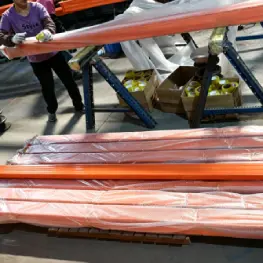
Export sea shipments face high humidity, saline air, and mechanical vibration. Upright frames are packed in heavy-gauge steel-banded bundles with timber dunnage buffers; step beams are nested face-to-face with protective bubble membrane interleaving. Small hardware items (galvanized footplates, grade 8.8 structural bolts, safety lock pins, and anchor bolts) are sealed in waterproof moisture-barrier polybags inside timber crates. All container loading plans are 3D pre-modeled to maximize cargo weight (up to 26–28 tons in a 40HQ) while safeguarding against in-transit shifting.
What failsafe mechanisms prevent the shuttle from driving off the rack edge?
Security is multi-layered. Mechanically, heavy-duty mechanical wheel chocks and physical steel limit stops are bolted at the aisle terminal points of every running rail. Electronically, redundant diffuse-reflective optical sensors, ultrasonic obstacle detectors, and magnetic induction end-switches automatically sever motor voltage if the shuttle approaches within 300mm of an open rail boundary.