Galvanized Steel
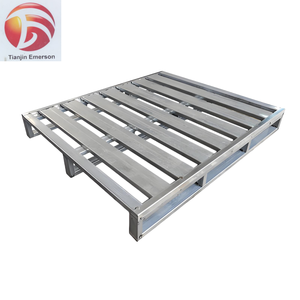
Customized Galvanized Steel Pallet for Heavy-Duty Storage
- Hot-dip galvanized anti-corrosion
- Capacity: 1,000 kg – 2,500 kg UDL
- 2-way and 4-way entry profiles
Factory-direct structural racking assemblies, certified Q235B cold-rolled profiles, and specialized material handling systems optimized for high-density logistics.
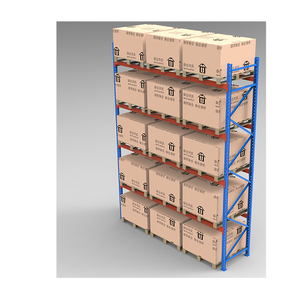
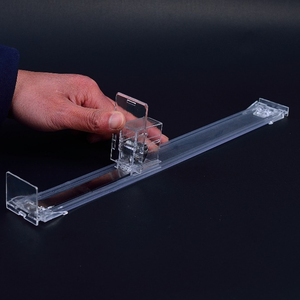
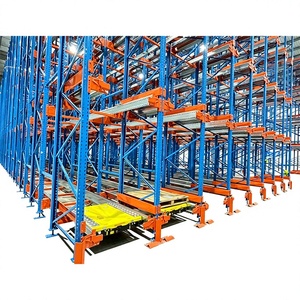
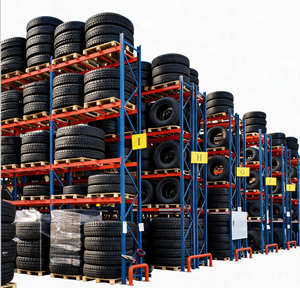
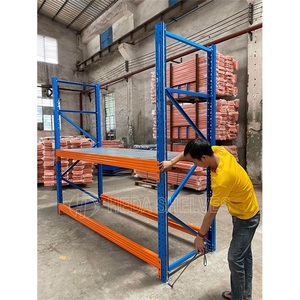
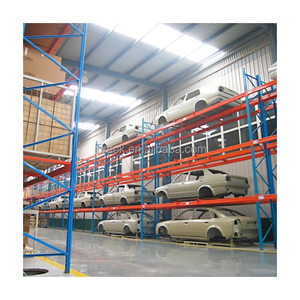
In modern industrial logistics, Single Deep Pallet Racking (universally classified as Selective Pallet Racking) represents the international gold standard for flexible, direct-access warehousing. Mechanically characterized by a single pallet placed per bay depth along each aisle flank, this structural steel architecture provides immediate, unhindered 100% SKU selectivity. For supply chain operators, distribution centers, and high-throughput distribution hubs, single deep racking eliminates the honeycombing losses, picking delays, and specialized truck requirements often associated with high-density double deep, drive-in, or push-back arrays.
China has firmly established itself as the global epicenter of structural pallet rack fabrication, driven by centralized primary steel mills (such as Baosteel and Shougang), high-speed continuous CNC roll-forming lines, and integrated industrial coating ecosystems. Sourcing directly from certified Chinese manufacturers allows international logistics directors, general contractors, and warehouse designers to eliminate middleman margins while engineering structural profiles precisely tailored to localized seismic parameters (IBC/UBC, Eurocode 8), international building codes (RMI MH16.1, FEM 10.2.02, EN 15512, AS 4084-2012), and exact forklift handling clearances.
However, navigating the landscape of Chinese racking factories requires rigorous verification of metallurgic properties, structural cross-sections, welding certifications, and anti-corrosive pretreatments. A failure to specify accurate yield strengths or deflection tolerances can compromise entire warehouse facilities under dynamic pallet loading conditions. This whitepaper details the engineering benchmarks, comparative operational trade-offs, and procurement trends essential for executing factory-direct single deep racking contracts with maximum ROI.
Selecting an optimal pallet storage system requires calculating total storage density versus retrieval velocity. While high-density solutions maximize raw floor cubic space, they introduce operational constraints regarding batch access, forklift specialization, and cycle times. The following engineering matrix contextualizes single deep selective racking against high-density alternatives:
| Racking Topology | Pallet Selectivity | Floor Area Utilization | Material Handling Equipment | Rotation Logic | Relative Capital Cost |
|---|---|---|---|---|---|
| Single Deep (Selective) | 100% Immediate | 35% – 42% (Aisle Dependent) | Standard Counterbalance / Reach | Strict FIFO / LIFO | Baseline (Lowest $/Pallet) |
| Double Deep Racking | 50% Direct Access | 50% – 58% | Pantograph / Deep Reach Forklift | LIFO (Per SKU Pair) | Low-to-Medium (+20-30% on trucks) |
| Very Narrow Aisle (VNA) | 100% Immediate | 55% – 62% | Turret Truck / Wire-Guided VNA | Strict FIFO / LIFO | High (Floor tolerance + Rig) |
| Radio Shuttle Racking | Lane-Dependent | 70% – 85% | Standard Forklift + Automated Shuttle | Programmable FIFO / LIFO | High (Electro-Mechanical) |
| Drive-In / Drive-Thru | < 15% (Channel Based) | 65% – 75% | Standard Counterbalance Inside Lanes | LIFO (Drive-In) / FIFO (Drive-Thru) | Low-Medium (Prone to upright damage) |
Engineering Takeaway: Single deep selective pallet racking remains unbeatable in environments with high SKU diversity, rapid inventory velocity, and operational reliance on standard material handling machinery. It carries the lowest risk profile during facility reconfigurations and offers predictable deflection characteristics under constant cyclical loading.
Industrial racking systems operate under extreme compressive, shear, and rotational loads. The structural stability of an upright column or welded step-beam begins with certified hot-rolled steel strip coils conforming to Q235B (Yield Strength $f_y \ge 235 \text{ MPa}$, Tensile Strength $370\text{–}500 \text{ MPa}$) or Q355B ($f_y \ge 355 \text{ MPa}$) for extra-tall structural installations. In tier-one Chinese factories like Guangzhou Heda Shelves, every structural component undergoes a tightly controlled, automated ten-stage manufacturing lifecycle:
Mill-certified coil uncoiling, laser thickness verification, and high-precision rotary longitudinal slitting.
Automated high-speed punching presses form standardized 50mm/75mm diamond or teardrop pitch patterns.
Multi-station cold roll-forming lines bend profiles progressively across 18–26 roller passes to avoid residual stress.
Twin C-profile interlocking seams and 3/4/5-claw beam connectors welded with continuous robotic MIG shielding gas.
Automated deburring, weld spatter removal, and seam radiusing to prepare steel surfaces for chemical treatment.
Multi-stage acid pickling bath removes mill scale, oil, and atmospheric oxidation from raw components.
Chemical conversion coating develops a microscopic crystalline phosphate layer to guarantee maximum coating adhesion.
Multi-cascade pure water spray wash removes residual ionic salts, eliminating risk of premature blister corrosion.
Automated Swiss Gema powder spray booths apply epoxy-polyester thermoset powder (60–90µm thickness uniform).
High-temperature convection curing tunnel at 180°C–200°C followed by cross-hatch adhesion and load deflection testing.
Operating from our centralized 30,000 square meter production facility in Guangzhou, China, Guangzhou Heda Shelves Co., Ltd. (founded in 2001) has engineered warehouse racking systems for more than 120 nations. For international industrial clients, procurement risk is resolved by partnering with a manufacturer that controls the entire value chain—from structural coil roll-forming to computerized finite element analysis (FEA) and container-loading optimization.
Production strictly audited under CE Certification No. 2435-CPR-8605159 and ISO 9001:2015 Certification No. 18624Q00169R0M with full RoHS compliance.
Our engineering department delivers detailed structural AutoCAD floor plans, 3D parametric renderings, and load capacity deflection calculations within 24 hours.
Knock-down components bundled with steel strapping, foam padding, and custom wood blockings designed to achieve 98%+ volumetric fill in 40ft High Cube containers.
Mechanical single deep systems function flawlessly during power interruptions, extreme tropical heat, and high-humidity coastal atmospheres.
With an ongoing output capacity of 30,000 metric tons per month and 300+ seasoned fabrication engineers and technicians, HEDA Shelves satisfies both standard high-volume racking requirements and complex OEM/ODM build-to-print industrial tenders.
Procuring single deep pallet racks is no longer an isolated commodity purchase; it is a critical baseline for ongoing automation and sustainable infrastructure. Global supply chain volatility, decarbonization regulations, and automated robotic systems are actively reshaping how enterprise buyers evaluate Chinese manufacturing partners:
Modern single deep racks are increasingly engineered with tighter plumb tolerances (1/1000) and reflective positioning targets. This allows facilities to seamlessly transition from manual counterbalanced trucks to Vision-Guided Autonomous Mobile Robots (AMRs) without rebuilding upright frameworks.
To reduce freight deadweight and container shipping costs, tier-1 manufacturers are deploying advanced cold roll-forming with thinner, high-tensile micro-alloyed steel. This delivers equal or superior section moduli ($W_x, W_y$) while reducing steel coil tonnage by 8% to 14%.
International environmental reporting requires verifiable supply chain sustainability. Leading Chinese racking mills now utilize closed-loop acid recycling, non-chrome silane pretreatments, and electric-arc furnace (EAF) steel coils to cut the embodied carbon footprint per pallet position.
Critical engineering, logistics, and quality assurance questions addressed directly by our senior structural engineering team.
Submit your warehouse floor plan, clear ceiling height, pallet dimensions, and forklift fleet parameters. Our structural engineering team will generate a compliant AutoCAD layout, 3D visualization, and detailed pricing quotation within 24 hours.