Certified Stackable & Heavy-Duty Warehouse Storage Solutions
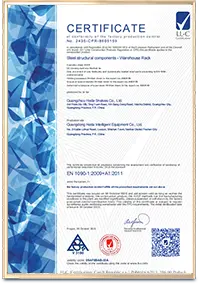
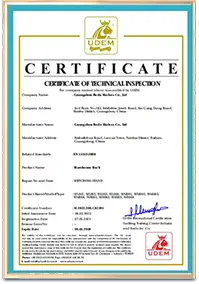
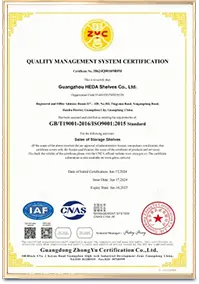
Direct manufacturer-engineered industrial racking, modular picking bins, and heavy-duty frame systems compliant with ISO 9001:2015 and CE certification standards.
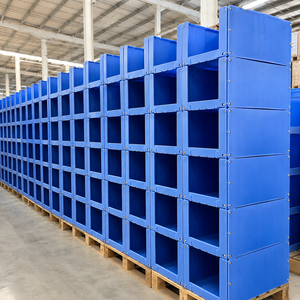
PP Corrugated Plastic Stackable Picking Bins Front Opening
Ultra-durable, moisture-resistant polypropylene corrugated picking bins engineered for warehouse shelves, dynamic parts picking, and hardware component classification.
- Material Grade: Virgin Virgin PP / Corrugated
- Access Style: Ergonomic Front Opening
- Customization: Dimensions, Colors, Dividers
Heavy Duty Steel Panel Pallet Racking Warehouse Storage
Plug-in interlocking beam rack configured with solid cold-rolled steel decking panels for high-load capacity palletized cargo and non-standard bulk packaging storage.
- Steel Standard: High-Strength Q235B Cold-Rolled
- Beam Loading: 1,000 kg – 4,500 kg / Level
- Surface Finish: Epoxy Electrostatic Powder
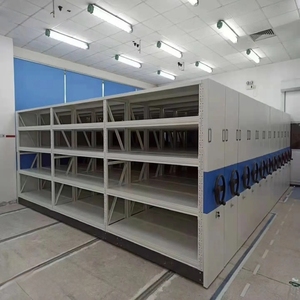
High-Density Industrial Mobile Steel Shelving for Cargo
Mechanically geared and track-guided high-density mobile carriage storage systems designed to eliminate fixed aisles and double volumetric warehouse capacity.
- Drive Mechanism: Mechanical Wheel / Motorized
- Floor Efficiency: +80% Storage Volume Gain
- Application: Commercial, School, Industrial
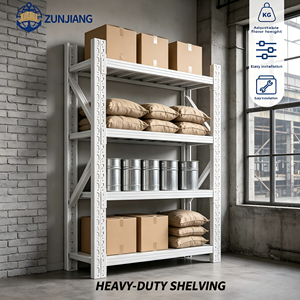
Heavy Duty Warehouse Industrial Metal Shelf Rack with Steel Deck
Rigid upright frame shelving equipped with heavy-gauge steel deck panels, delivering seamless direct forklift access and multi-tier picking stability.
- Configuration: Starter & Add-on Units
- Upright Pitch: 50mm / 75mm Adjustable
- Safety Factor: 1.5 Dynamic Safety Margin
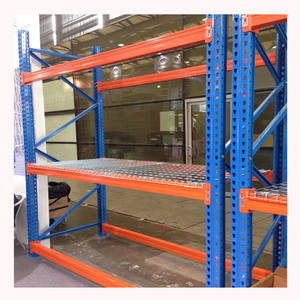
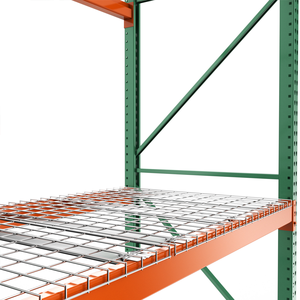
Teardrop Pallet Rack With Wire Mesh Decking System
North American standardized teardrop hole punch pallet rack integrated with welded wire mesh decks for enhanced fire sprinkler penetration and inventory visibility.
- Connection: Tool-less Teardrop Interlock
- Decking Type: Reinforced Wire Mesh Channels
- Compliance: RMI & ANSI MH16.1 Criteria
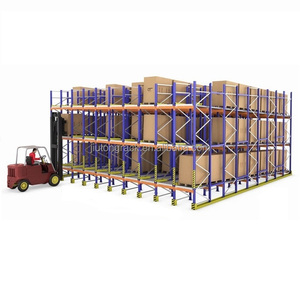
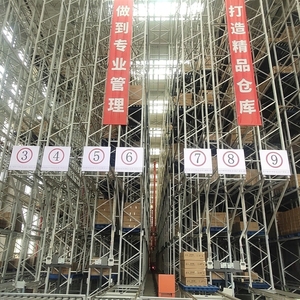
High-Bay Pallet Modular Gravity Flow Racking System
Unpowered gravity-driven dynamic roller bed rack enforcing strict First-In-First-Out (FIFO) pallet rotation for perishable logistics and FMCG high-throughput operations.
- Working Principle: Self-Regulated Gravity Rollers
- Braking System: Speed Controller Rollers
- Energy Demand: 0 kW (Zero Power Consumption)
Customized Global Long Span Shelving Rack for Bulky Goods
Versatile, medium-to-heavy duty longspan modular shelving framework engineered for manual case picking, e-commerce fulfillment centers, and spare parts handling.
- Span Width: 1,200mm to 2,700mm Clear Bay
- Tier Capacity: 300 kg – 800 kg Uniform Load
- Assembly: Fully Boltless Knock-Down
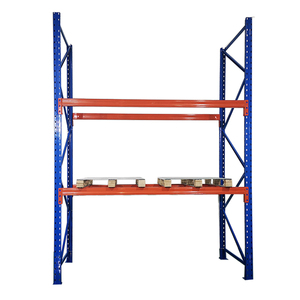
Customized Heavy Duty 4.5T Per Layer Metal Warehouse Pallet Rack
Engineered for extreme industrial applications: reinforced column profile uprights and structural box beams engineered to sustain concentrated pallet weights up to 4,500 kg per level.
- Payload Max: 4,500 kg (4.5 Metric Tons) / Tier
- Upright Profile: Omega Flange Heavy Roll-Formed
- Quality Standard: CE Certified & ISO 9001:2015
1. The Strategic Role of Stackable Pallet Racks in Modern Intralogistics
In the contemporary logistics ecosystem, warehouse spatial utilization, capital expenditure amortization, and operational agility govern supply chain profitability. Traditional fixed selective pallet racking provides reliable vertical capacity; however, it imposes an unalterable floor footprint. As global supply chain managers confront volatile inventory cycles, seasonal demand swings, and dynamic third-party logistics (3PL) contracts, stackable pallet racks (portable post pallets and stackable stillages) have emerged as a high-density, high-flexibility solution.
Manufactured primarily from cold-formed tubular steel profiles and high-strength structural base plates, stackable pallet racks allow industrial operators to create vertical bulk storage lanes up to 4 to 6 tiers high without dedicating permanent civil anchors into concrete slabs. When peak fulfillment windows end, these modular systems can be disassembled, demounted, or collapsed, reducing their footprint by up to 75% to 80% for reverse logistics transit or compact warehouse staging.
Volumetric Density Optimization
By transforming raw floor square footage into multi-tiered cubic vertical capacity, post pallet stacking eliminates dedicated forklift access aisles across bulk SKU storage blocks, raising volumetric utility past 65%.
Zero Civil Anchor Dependency
Unlike heavy-duty structural high-bays requiring deep floor anchor bolting and post-tensioned slab certifications, stackable systems utilize cupped-nesting feet to distribute static and dynamic loads safely.
Total Cost of Ownership (TCO)
Modular reconfigurability guarantees that steel equipment investments remain liquid assets. If manufacturing operations relocate or lease contracts expire, stackable frames ship within containers at low freight rates.
2. Structural Engineering Matrix: Stackable Pallet Racks vs. Fixed Storage Systems
Selecting the optimal storage mechanism requires precise alignment between cargo throughput velocities, building clear heights, handling machinery, and floor load tolerances. Below is an engineering evaluation comparing Chinese industrial-grade stackable post racks with standard selective beam racking and dynamic flow systems.
| Evaluation Parameter |
Stackable Post Pallet Racks |
Heavy-Duty Selective Pallet Racking |
High-Bay Pallet Flow / Dynamic Rack |
| Structural Steel Grade |
Q235B / Q355B Hollow Structural Tube |
Q235B Cold-Formed Omega Uprights |
Structural Channel + Cold-Rolled Beams |
| Load Capacity (Per Tier) |
1,000 kg – 2,500 kg per nest |
1,000 kg – 4,500 kg per beam level |
1,200 kg – 2,000 kg per roller lane |
| Floor Anchor Fastening |
None (Self-stabilizing nesting feet) |
Heavy Expansion / Chemical Anchors |
Anchored frame bases with impact guards |
| Maximum Stacking Height |
3 to 6 Tiers vertical (4m to 9m) |
Up to 16m+ (Clear-height dependent) |
Up to 12m (Dependent on slope run) |
| Aisle Space Requirement |
Minimal (Bulk block stacking layout) |
3.0m – 3.5m (Standard Counterbalance) |
Loading & unloading aisle only (FIFO) |
| Reverse Logistics Factor |
High (Collapsible / Demountable posts) |
Zero (Permanent installed structure) |
Zero (Dedicated fixed frame installation) |
| Corrosion Protection |
Electrostatic Powder or Hot-Dip Galvanized |
Thermoset Polyester Powder Coating |
Powder Coated / Galvanized Rollers |
| Typical Applications |
Cold storage, tires, agricultural bags, fabric |
Distribution hubs, multi-SKU FMCG, auto parts |
Perishable beverages, dairy, pharmaceutical |
3. Global Procurement Trends: Future Outlook (2025–2030+)
The procurement of industrial storage infrastructure in China is undergoing a structural paradigm shift driven by digital integration, automated material handling, and international ESG carbon reporting mandates. International procurement directors from North America, Europe, Australia, and Africa are revising vendor scorecards beyond purchase price alone.
A. Shift toward Standardized High-Strength Alloy Steels (Q355B & Micro-Alloys)
Historically, the China manufacturing baseline centered around commercial Q235B cold-rolled strip steel. Leading tier-one suppliers are actively transitioning high-stress components to Q355B low-alloy high-strength steel. This material shift yields a 35% higher yield point (355 MPa vs 235 MPa), enabling manufacturers to engineer thinner structural tube walls without sacrificing static buckling safety factors. For procurement managers, this lowers dead equipment weight, decreases maritime freight metrics per TEU, and lowers landed costs.
B. Circular Supply Chains and Reverse Logistics Ratios
As maritime freight fluctuations remain a key supply chain risk factor, international buyers prioritize stackable rack systems offering verified nesting compaction ratios. Modern engineering focuses on demountable four-post collars and foldable scissor-base designs that allow 40-foot High Cube (40HQ) maritime containers to carry up to 350 to 500 collapsed rack units per shipment—drastically driving down landed logistics cost per pallet location.
C. Environmental Surface Engineering (Zero-VOC & Ultra-Durable Powder Systems)
Western and global environmental compliance requires verification that suppliers have phased out outdated solvent paints. The global standard now mandates automated ten-stage pre-treatment lines (alkaline degreasing, ultrasonic cleaning, iron/zinc phosphating, and deionized rinses) followed by lead-free TGIC electrostatic thermosetting polyester powder coating. The resulting surface passes stringent 500 to 1,000-hour ASTM B117 salt spray tests, maintaining finish integrity inside high-humidity maritime ports and blast-freezer cold chain stores (-30°C).
4. Technological Advancements in China Stackable Rack Manufacturing
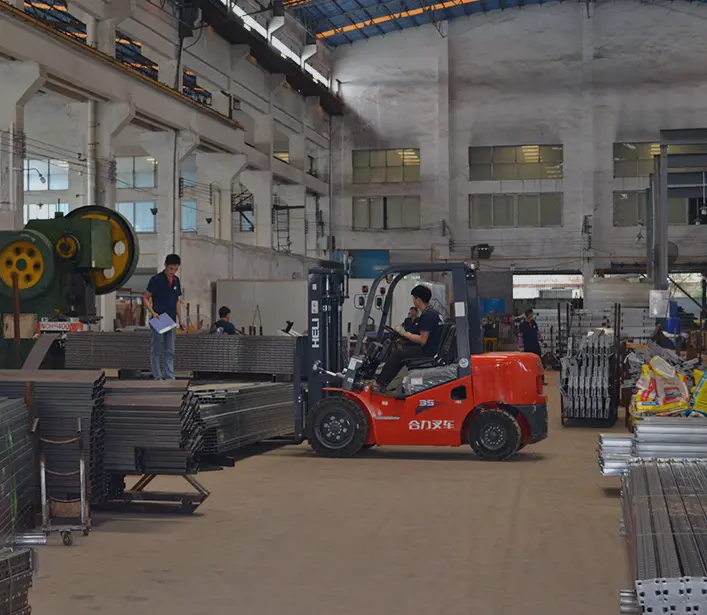
The competitive advantage of leading Chinese storage rack manufacturers is rooted in heavy capital investment in automated fabricating lines. The era of manual cut-off saws and hand-shielded metal arc welding has been replaced by fully integrated cyber-physical manufacturing systems.
Fiber Laser Tube Processing
Multi-axis CNC fiber laser cutting cells process square, rectangular, and round structural tubing in a single continuous clamping cycle. Interlocking post-socket slots, locating notches, and drainage holes achieve ±0.15mm tolerances.
6-Axis Robotic Seam Welding
Robotic welding workstations equipped with digital synergic power sources ensure deep, continuous penetration along critical base cup sockets and load-bearing post gussets, removing cold-lap defects and structural failure risks.
FEA Structural Verification
Prior to tooling production, engineers deploy Finite Element Analysis (FEA) under ANSI MH16.1 and FEM 10.2.02 codes to simulate real-world static capacity, eccentric post loading, and dynamic forklift impact resistance.
Industrial Buyer's Technical FAQ
Detailed engineering, manufacturing, and international trade answers for warehouse project planners.
How do cupped-foot stackable pallet racks ensure anti-toppling stability?
Stability is governed by conical inverted nesting cups welded beneath the base frame that interlock securely over the crowned caps of the upright posts below. This mechanical metal-to-metal register provides high resistance against horizontal shear forces and seismic micro-disturbances when stacked up to 4 to 6 units high.
What are the standard material tolerances and steel certifications supplied?
Certified products utilize primary mill-certified prime cold-rolled steel coils conforming strictly to Chinese national standard GB/T 700 grade Q235B (comparable to ASTM A36 / European S235JR) or Q355B (comparable to S355JR). Certified Mill Test Certificates (MTC) specifying chemical composition and elongation are submitted with every lot.
What coating options exist for cold-storage and corrosive applications?
For blast freezers down to -30°C or coastal logistics yards with high ambient humidity, we provide ASTM A123 hot-dip galvanization with average zinc coating thicknesses between 65 μm and 85 μm. For indoor ambient distribution centers, 70 μm to 90 μm electrostatic thermoset polyester powder coating provides superior scratch and impact resistance.
How are stackable racks packaged to avoid damage during maritime ocean transit?
Components undergo custom knock-down nesting on dedicated steel base skids. Posts are bundled in banded groupings padded with expanded polyethylene (EPE) foam wrap to eliminate friction marks. Base frames are nested face-to-face with protective corrugated spacers, optimizing 40HQ container volumetric capacity without exceeding payload mass limits.
What parameters are necessary to receive an accurate CAD layout and load calculation?
Our engineering group requires: (1) Warehouse clear ceiling height and interior column grid coordinates; (2) Pallet dimensions (Length x Width x Total Cargo Height); (3) Maximum gross weight per pallet; (4) Forklift model, turning radius, and maximum mast extension reach; (5) Environmental operating conditions (ambient vs cold store).
Can custom post sizes and mesh bottom bases be engineered for non-palletized cargo?
Yes. As an OEM and ODM manufacturing facility, we routinely engineer custom base infills including wire mesh decking, solid steel plates, or anti-slip diamond tread. Post heights, base depths, and heavy-duty forklift guide channels are tailored to accommodate automotive tires, agricultural seed sacks, textile fabric rolls, or irregular IBC tanks.
What structural safety factor is calculated into dynamic stack load ratings?
All designs incorporate an engineered static and dynamic safety factor of 1.50 to 1.65 based on FEM 10.2.02 (European Racking Code) and RMI MH16.1 (Specification for the Design, Testing and Utilization of Industrial Steel Storage Racks), ensuring zero permanent structural plastic deformation under uniform nominal capacity.
What is the standard manufacturing lead time for full container orders?
Standard fabrication cycles for a 1 to 5 container (40HQ) production order average 15 to 25 working days following CAD technical shop-drawing signoff. Urgent high-capacity distribution projects can leverage our 30,000-ton monthly facility capacity to meet aggressive critical-path commissioning milestones.