Precision Structural Racking & Automated Warehouse Systems
Manufactured to FEM 10.2.02, EN 15512, and RMI standards. Our components feature high-tensile cold-rolled steel (Q235B & Q355B) finished with continuous automated powder coating or hot-dip galvanization.
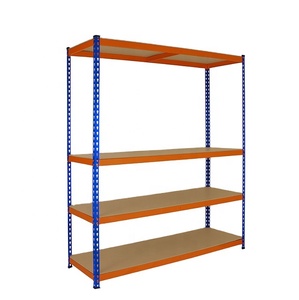
Modern Iron 5-Tier Medium Duty Rack Adjustable Garage Shelving Shelf Storage Units
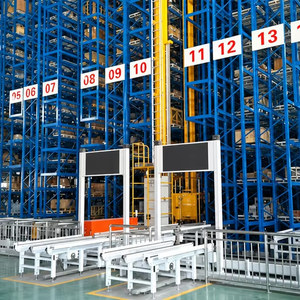
AS/RS Automated Storage and Retrieval System, High Bay Heavy Duty Pallet Rack
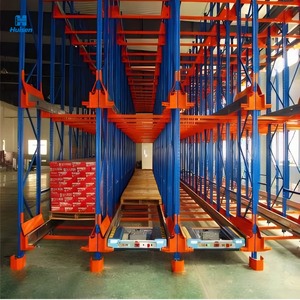
High Density Shuttle Storage System Pallet Radio Automated Warehouse Racking
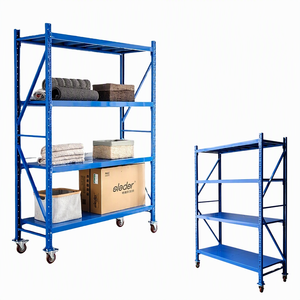
Light Duty Steel 4-Layer Powder Coated Storage Pallet Rack with Wheels 500kg Capacity
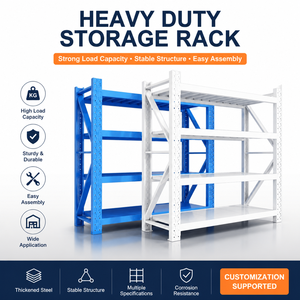
Medium Duty Shelving Rack With Separator Board for Small Factory Storage Room
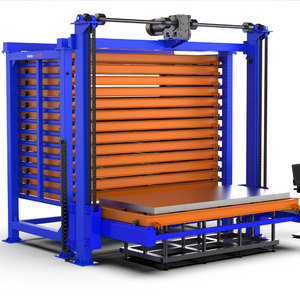
Fully Automatic Sheet Metal Warehouse Rack High Density Smart Storage Loading Robot
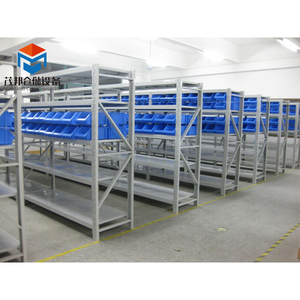
Manufacture Factory Metal Materials Light Duty Racks 400 kg Metal Rack System
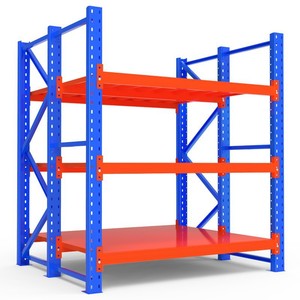
Adjustable Boltless 5-Layer Anti-Rust Warehouse Stacking Racks Xinanda Supermarkets
Years Engineering Heritage (Est. 2001)
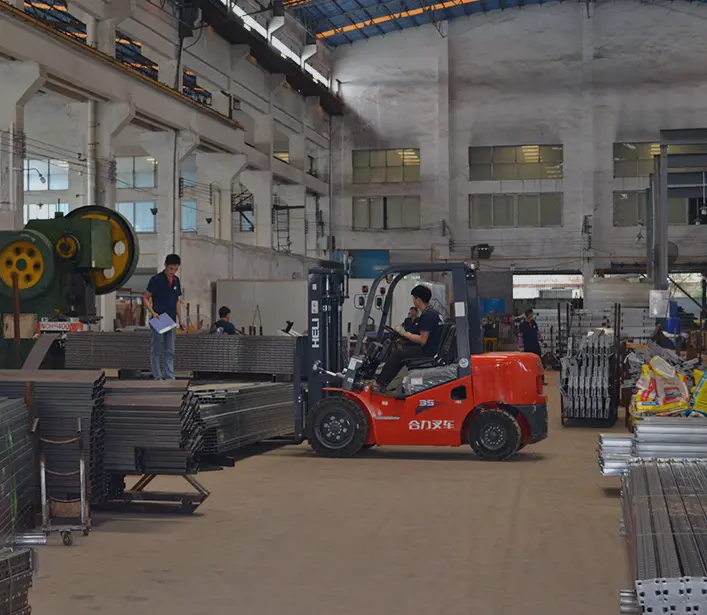
Continuous Fabrication Facility
Tons Monthly Structural Steel Throughput
High-Density Projects Commissioned
Optimizing Warehouse CapEx: Sourcing from Tier-1 Chinese Racking Manufacturers
In modern supply chain architecture, structural pallet racking is no longer a static line-item purchase; it is a load-bearing, seismic-critical infrastructure asset directly governing intralogistics throughput, occupational safety, and floor volumetric efficiency. Global supply chain leaders navigating the industrial realities of North America, Europe, Australia, the Middle East, and rapidly growing distribution hubs across Africa are re-evaluating procurement frameworks. Sourcing industrial storage racks directly from top-tier Chinese manufacturing operations offers a major economic advantage: direct reduction of capital expenditure (CapEx) alongside customized engineering, without compromising structural integrity or building code compliance.
Information Gain Directive for Global Engineering Teams: The distinction between low-grade spot-market steel fabricators and legitimate Tier-1 Chinese racking exporters lies in three engineering variables: continuous cold-roll forming roll profile count (18 to 24 roll stations preventing micro-fissures), structural steel metallurgical certificates (traceable Q235B vs. high-yield Q355B with verified elongation), and 10-stage automated pickling and phosphating surface treatment lines before electrostatic powder curing.
As warehouse clear-heights scale from traditional 8-meter clear heights to vertical automated high-bay facilities exceeding 30 to 40 meters, racking tolerances shift from millimeter allowances down to sub-millimeter precision. A manufacturing deviation of just 1.5mm at the base plate can result in dangerous cumulative vertical lean across an AS/RS stacker crane aisle, triggering optical sensor faults and emergency braking trips. Consequently, verifying the mechanical capabilities of Chinese factories—spanning computerized roll-forming, robotic welding cells, and finite element analysis (FEA) testing—is paramount for international procurement teams.
Future Procurement Trends in Industrial Storage Racking
The global storage equipment sector is experiencing structural transitions driven by rising land prices, automated labor substitution, and global building code harmonization.
1. Convergence of Static Racking & AMR / ASRS Robotics
The procurement boundary between racking frameworks and robotics has collapsed. Buyers are prioritizing rack systems engineered with reinforced bottom-beam deflectors, guide rails for Autonomous Mobile Robots (AMRs), and specialized runway cross-ties capable of sustaining continuous dynamic acceleration from 1.5-ton automated pallet shuttles.
2. Severe-Climate & Cold Chain Corrosion Metallurgy
With the rapid growth of refrigerated distribution centers for fresh produce, pharmaceuticals, and sub-zero proteins, demand for heavy zinc-galvanized finishes (HDG >65μm) and low-temperature impact ductile alloys has surged. Pretreated steel prevents micro-cracking and delamination under continuous -25°C to -30°C thermal stress.
3. Containerized Packing & Ocean Freight Density Engineering
Volatile maritime shipping rates require factories to redesign component geometry specifically for 40HQ maritime containers. Nestable "omega" upright profiles, bolted beam step profiles, and knock-down mezzanine frames allow Chinese exporters to reach 96% container volumetric cube efficiency, cutting freight cost per pallet position by 30%.
Comparative Engineering Matrix: Industrial Racking Architectures
A rigorous engineering benchmark to guide system selection based on floor utilization, SKU selectivity, automation compatibility, and CapEx per pallet position.
| System Architecture | Floor Space Utilization | Selectivity Profile | Typical Clear Heights | Forklift / Carrier Compatibility | Relative Cost / Position |
|---|---|---|---|---|---|
| Selective Pallet Racking | Standard (35%–40%) | 100% Direct Individual Pallet Access | 3m – 12m | Counterbalance, Reach Trucks, VNA | Baseline ($) |
| Drive-In / Drive-Through | High (60%–75%) | LIFO / FIFO (Batch SKU rotation) | 4m – 11m | Narrow Counterbalance, Reach Trucks | Moderate ($$) |
| Push-Back Racking | Moderate-High (55%–65%) | LIFO (2 to 6 pallets deep per lane) | 3m – 9m | Standard Counterbalance, Reach Trucks | Moderate ($$$) |
| Radio Shuttle System | Ultra-High (75%–85%) | Automated LIFO / FIFO Deep Lane | 4m – 22m | Forklift Interface + Battery Shuttle | Mid-High ($$$$) |
| AS/RS Clad High-Bay | Maximum (>85% Vertical) | 100% Automated System Controlled | 15m – 40m | Automated Stacker Cranes, AMR Transfer | High CapEx ($$$$$) |
| Heavy Duty Cantilever | Variable (Linear footprint) | 100% Clear Access for Long Goods | 3m – 10m | Side Loaders, Multi-Directional Trucks | Moderate ($$$) |
| Structural / Rack Mezzanine | Doubles / Triples Usable Area | Manual Picking & Pallet Hybrid | 2.8m – 5m / Tier | Hand Pallet Trucks, Vertical Lifts | Engineered ($$$) |
Guangzhou Heda Shelves Co., Ltd.: Global Manufacturing Standards
Established in 2001, Guangzhou Heda Shelves Co., Ltd. operates an advanced 30,000 square meter integrated manufacturing campus in Guangzhou, China. Unlike trading brokers or fragmented assemblers, Heda maintains complete end-to-end quality control across every metallurgical transformation stage: from raw slit coils of structural grade steel to precision automated multi-roll cold forming lines, robotic column perforating punching presses, and computer-controlled dual-track electrostatic powder coating systems.
Supplying critical warehousing installations across more than 120 countries, Heda specializes in custom-engineered structural solutions built to withstand heavy mechanical handling, intense temperature differentials, and regional seismic acceleration factors. Every installation begins with parametric load calculations executed by structural logistics engineers, ensuring deflection ratios adhere strictly to international limits (such as deflection under maximum operating load ≤ L/200).
-
3D BIM & CAD Design Complimentary layout, load simulation, and seismic clearance modeling.
-
Automated Pretreatment Pickling, phosphating, and de-greasing ensure 15+ year rust resistance.
-
Certified Metallurgy Certified Q235B & Q355B mill test certificates for commercial confidence.
-
Container Stacking Plans Pre-numbered components bundled specifically for rapid job-site unloading.
10-Stage Precision Production Process
A look at the mechanical, chemical, and thermal quality control points applied to every ton of structural steel racking leaving our factory.
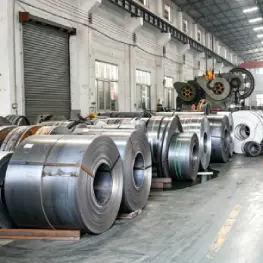
Raw Material Verification
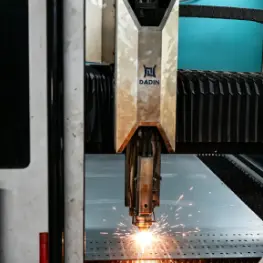
Precision CNC Slitting
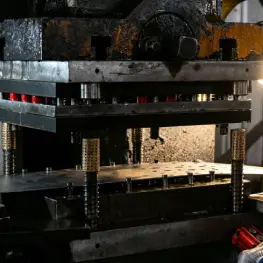
Automated Hole Punching
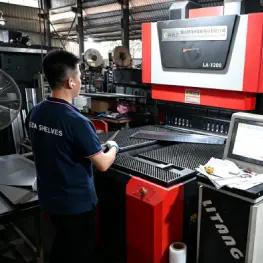
Cold Bending & Forming
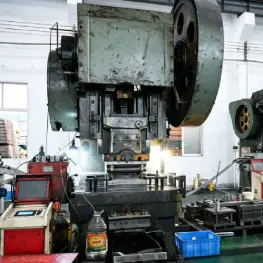
Multi-Roll Profiling
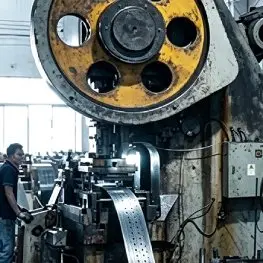
Edge Deburring & Polishing
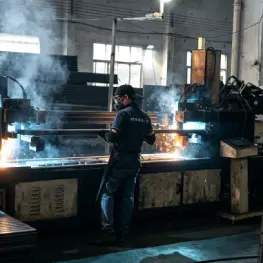
Automated Robotic Welding
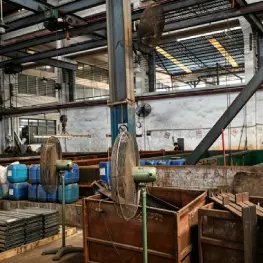
Pickling & Phosphating
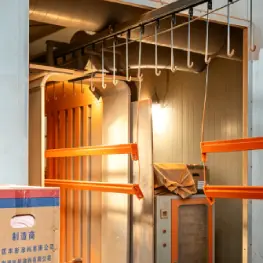
Electrostatic Powder Coating
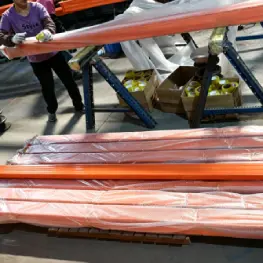
QC Testing & Container Loading
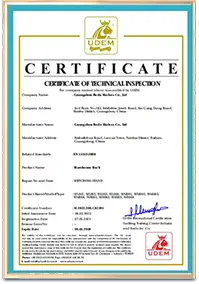
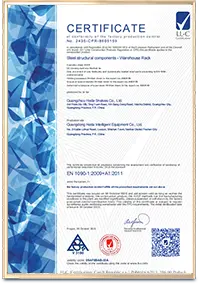 CE Certification (EN 15512)
Certificate: 2435-CPR-8605159
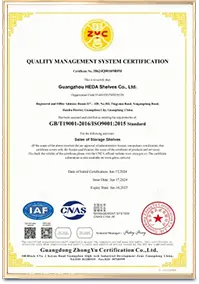
 ISO 9001:2015 Management
Reg: 18624Q00169R0M
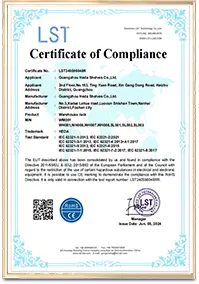 RoHS Compliance
Lead-Free Powder Coating Curing
 FEM 10.2.02 Structural Test
Continuous Point-Load Deflection Audited
Frequently Asked Questions: Sourcing Storage Racking from China
Clear, technical answers to the most common questions raised by project engineers, procurement officers, and third-party logistics operators.
How do you calculate warehouse floor point load versus rack baseplate sizing?
Racking engineers first review your concrete slab core compression rating (e.g., 25–35 MPa) and thickness (typically 150mm–250mm reinforced). We then calculate the cumulative upright frame load (combined dead load plus maximum uniformly distributed pallet load multiplied by safety dynamic factors). Our CAD systems size the heavy-duty anchor footplates (thicknesses from 6mm to 12mm) and choose expansion anchor diameter/embedment depths to keep point pressure on your slab safely below concrete punch-failure thresholds.
What is the metallurgical difference between Q235B and Q355B steel in racking?
Q235B possesses a nominal yield strength of 235 MPa and provides balanced ductility, making it ideal for standard beam sections and light-to-medium upright applications up to 8 meters. Q355B is a low-alloy, high-strength structural grade with a minimum yield point of 355 MPa. We specify Q355B for high-bay upright columns, AS/RS structures, heavy cantilever arms, and seismic-zone installations where frame cross-sectional profile thicknesses must remain manageable while carrying heavy loads.
How does HEDA protect pallet racking from corrosion during ocean shipping and in tropical or coastal ports?
During maritime transit, container interiors experience temperature shifts and condensing humidity ("container rain"). Our factory avoids superficial painting. Every component undergoes a full 10-step chemical pretreatment: hot alkaline degreasing, clean water rinses, acid pickling to eliminate mill scale, and micro-crystalline zinc phosphating. Finally, thermosetting epoxy-polyester powder is cured at 200°C, providing a dense 70μm–90μm barrier tested for over 500 hours of continuous salt-spray resistance. For open-air or freezer environments, we offer hot-dip galvanizing per ISO 1461.
Can warehouse systems function smoothly during electrical blackouts?
Yes. Mechanical systems like selective pallet racking, double-deep, drive-in, push-back, gravity flow, and cantilever racks require no electricity and operate without interruption during grid outages. For semi-automated Radio Shuttle installations, shuttles run on quick-swappable lithium-iron-phosphate (LiFePO4) battery modules with 8–10 hour runtimes. We supply secondary charging banks so spare batteries can charge during scheduled generator or solar windows, keeping material handling completely independent of local grid stability.
How is international on-site assembly handled without dispatching full factory crews?
Every export shipment includes color-coded, CNC-numbered components mapped to full 3D assembly CAD drawings and step-by-step installation manuals. Upright frames are typically shipped pre-assembled or knock-down with bolt-together diagonal and horizontal bracing. Beam-to-column connections feature interlocking connector teeth and safety locking spring pins. For large projects, our engineering office provides daily video conference walk-throughs, digital torque audits, or deploys a senior site supervisor to lead local installation crews.
What specific details are required to get a precise CAD layout and quotation within 24 hours?
To deliver an actionable layout, our structural engineering desk requires: (1) Architectural floor plan showing dimensions, clear height below ceiling trusses, and locations of building columns, access doors, or sprinklers; (2) Pallet dimensions (Length × Width × Total Height including goods) and maximum gross weight per pallet; (3) Forklift model, turning radius, and maximum reach height; and (4) Your target SKU count and pallet turnover velocity (FIFO vs. LIFO).
Accelerate Your Logistics Infrastructure With Direct Factory Engineering
Send your facility dimensions, building columns, and storage parameters to our engineering team. We deliver custom 3D spatial models, full structural load calculations, and container shipping optimization within 24 hours.