Featured Warehouse Roller Racks & Industrial Storage Solutions
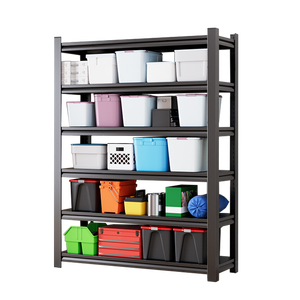
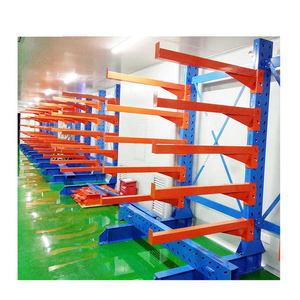
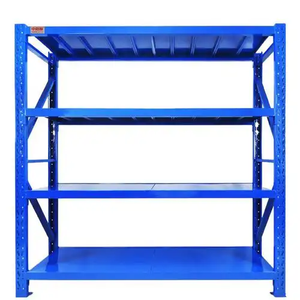
Select from our versatile range of heavy-duty pallet flow roller configurations, slotted live tracks, automated shuttle integration frameworks, and longspan systems manufactured to international seismic and static load tolerances.
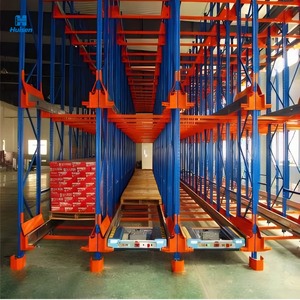
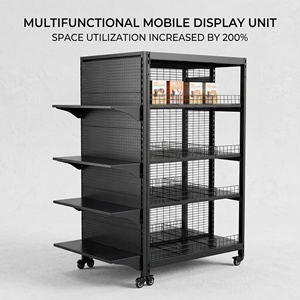
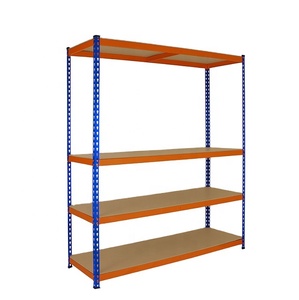
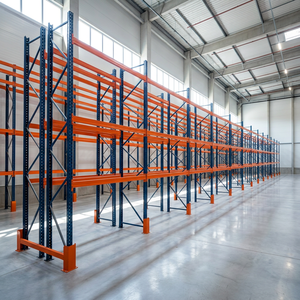
Physics & Kinematics of Heavy-Duty Gravity Roller Racks
In modern supply chain architecture, warehouse roller racks (commonly designated as pallet flow racking, gravity live storage, or carton flow systems) represent the zenith of passive mechanical automation. Operating strictly through the controlled exploitation of terrestrial gravity, these dynamic storage systems bypass electrical infrastructure requirements while facilitating strict First-In, First-Out (FIFO) inventory turnover. By establishing an inclined track matrix—typically calibrated between an inclination gradient of 1.5° to 3.5° (2.5% to 6% slope)—goods placed onto the elevated loading face glide autonomously toward the discharge picking face at a governed velocity.
Fnet = m · g · (sin θ - μr · cos θ) - Fbrake
Where m is the unit load mass, θ is the track angle of inclination, μr is the rolling friction coefficient of the precision steel bearings (typically 0.0015 to 0.0025 for cold-formed carbon steel races), and Fbrake represents the resistance applied by centrifugal or eddy-current speed controller rollers installed along the lane.
As an established China warehouse roller racks supplier with over 25 years of fabrication experience, Guangzhou Heda Shelves Co., Ltd. addresses the catastrophic failure modes frequently encountered by substandard roller racks: pallet runaway, dynamic impact damage at the picking stop, line-pressure-induced pallet crushing, and tracking divergence. Our engineering methodology incorporates heavy-gauge cold-formed rollers equipped with labyrinth seals, reinforced steel roller brackets, and integrated separator devices that physically decouple the first pallet from following rear pallets, protecting forklift operators during critical extraction phases.
Mechanical Subsystem Breakdown
A heavy-duty gravity flow roller lane is an integrated assembly of distinct mechanical components, each engineered to perform under severe static loads and repetitive dynamic shocks:
Centrifugal Brake Rollers
Direct mechanical friction or magnetic fluid deceleration rollers placed at every pallet interval (approx. 1.2m to 1.5m) automatically clamp velocity to an OSHA-compliant ≤ 0.3 m/s, preventing high-mass kinetic impacts.
Flanged Roller Tracks
Manufactured from 2.5mm cold-rolled galvanised steel channel with dual continuous lines of cylindrical steel or high-density polymer rollers, maintaining tracking alignment and preventing bottom-board twisting.
Load Separator Devices
Automatic mechanical kick-plates lock following pallets 300mm behind the front pallet. When the forklift lifts the lead unit, the separator resets, releasing the next load safely without sustained hydrostatic pressure.
Engineering Matrix: Warehouse Roller Racks vs. Alternative High-Density Systems
Comparative parametric analysis detailing storage density, picking cycle velocity, total cost of ownership (TCO), and operational reliability across prevailing industrial storage topologies.
| System Architecture | Stock Rotation Strategy | Volumetric Efficiency | Throughput Cycle Speed | Energy Dependence | Capital Investment (CAPEX) | Maintenance Index |
|---|---|---|---|---|---|---|
| Gravity Roller Pallet Flow | Strict FIFO | 85% - 90% (Ultra-High) | Rapid (Continuous Flow) | Zero (100% Passive Gravity) | Moderate to High | Low (Lubricated Bearings) |
| Carton Live Flow Racking | Strict FIFO | 75% - 85% (Split Case) | Maximum (Sub-Second Pick) | Zero (Gravity Wheel Beds) | Low to Moderate | Minimal (Polymer Wheels) |
| Selective Pallet Racking | Random / FIFO / LIFO | 40% - 50% (Aisle Intensive) | Moderate (Forklift Dependent) | Zero (Purely Static) | Lowest Baseline | Very Low |
| Drive-In Pallet Racking | Strict LIFO | 70% - 80% (Channel Block) | Slow (Mast Maneuvering) | Zero (Forklift Enters Bay) | Moderate | High (Impact Vulnerable) |
| Automated Radio Shuttle | Flexible FIFO & LIFO | 85% - 92% (Deep Lane) | Fast (Autonomous Runner) | High (Lithium-Ion Batteries) | High to Very High | Moderate-High (Electronics) |
| Push-Back Trolley Racking | Strict LIFO | 70% - 75% (2-6 Deep) | Moderate (Forklift Push) | Zero (Nested Carts) | Moderate | Low-Moderate (Track Align) |
Future Procurement Trends in Warehouse Roller Racking (2025–2030)
Global supply chains are undergoing structural realignments driven by omnichannel logistics volatility, explosive SKU expansion, urban warehousing land premiums, and decarbonization mandates. B2B warehouse procurement directors, third-party logistics (3PL) executives, and engineering consultants are adjusting their equipment acquisition strategies accordingly. Below are the transformative engineering trends reshaping warehouse roller rack specifications over the next five-year planning horizon:
1. AGV/AMR Interface Compatibility
Traditional picking faces were dimensioned exclusively for counterbalanced forklifts. Modern roller rack systems are now engineered with cantilevered discharge roller extensions and micro-switch brake releases that seamlessly interface with Automated Guided Vehicles (AGVs) and Autonomous Mobile Robots (AMRs) for lights-out depalletization.
2. Sub-Zero Cold-Chain Metallurgy
Pharmaceutical cold chains and flash-frozen agricultural distribution facilities (-30°C) cause standard bearing lubricants to solidify and low-grade steels to experience ductile-to-brittle transition. Next-gen procurement demands synthetic silicone low-viscosity greases and micro-alloyed structural steels that prevent embrittlement cracking.
3. Zero-Pressure Dynamic Accumulation
Pioneering carton and tote live storage systems now integrate pneumatic or mechanical escapement clutches into skate-wheel lanes. This allows fragile electronics packaging and uneven retail cases to advance without transferring forward momentum onto preceding containers, virtually eliminating product crush losses.
4. Circular Steel & Eco-Coatings
Western and emerging market compliance audits increasingly require Environmental Product Declarations (EPD). Modern Chinese tier-1 suppliers utilize electric arc furnace (EAF) recycled coil feeds combined with heavy metal-free zirconium pre-treatments and VOC-free thermoset powder formulations to minimize embedded Scope 3 emissions.
Overcoming the Sourcing Dilemma: China Direct Factory vs. Regional Distributors
International warehouse infrastructure procurement has shifted decisively toward direct-from-manufacturer contracts. Sourcing warehouse roller racks from Chinese suppliers provides decisive operational leverage when vetting against Western domestic integrators. The structural cost arbitrage of raw high-yield steel profiling (Q235B and Q355B structural grades), combined with vertically integrated roll-forming lines, automated CNC stamping matrices, and robotic gantry welding, yields a landed capital expenditure savings averaging 30% to 55%, even when accounting for intercontinental 40HQ container ocean freight.
However, realizing these capital efficiencies requires partnering with an enterprise possessing authenticated structural credentials, verifiable quality management regimes, and international project execution capability. Guangzhou Heda Shelves Co., Ltd. bridges this operational gap by maintaining in-house structural engineering teams that deliver comprehensive finite element analysis (FEA), 3D spatial CAD modeling, and seismic load validations before raw steel profiling commences.
Why Engineering Teams Choose HEDA Shelves as Their Primary Roller Rack Supplier
Established in 2001, Guangzhou Heda Shelves Co., Ltd. operates a centralized 30,000 square meter intelligent fabrication complex in Guangzhou, China. With over 300 specialized engineers, robotic welding technicians, and logistics specialists, we convert raw steel coil into certified, globally compliant dynamic racking systems delivering unmatched long-term reliability.
Our automated manufacturing workflows integrate 10 strict control stages: coil decoiling, precision continuous high-speed roll forming, CNC optical upright slotting, robotic MIG/TIG beam bracket welding, multi-stage ultrasonic degreasing, hot zinc phosphating, and dual-zone electrostatic powder coating baked at 200°C. This guarantees a durable 60–80 micron protective barrier capable of withstanding intense warehouse abrasion and corrosive tropical humidity.
Free 3D Architectural CAD & Load Modeling
Send our engineering team your building envelope dimensions, floor slab core drill reports, pallet footprint dimensions, and forklift reach specifications. Within 24 business hours, our structural design desk delivers full 3D CAD visualization plans, cross-aisle deflection models, and certified payload calculations completely free of charge.
Container-Optimized Knock-Down Packaging
Roller beds, pre-punched upright upright frames, dynamic brake tubes, and load beams are bundled with steel strapping, heavy protective foam wraps, and bespoke wooden crating. This packing regime maximizes 20GP/40HQ container cube utilization, minimizing transoceanic shipping cost per storage location while preventing in-transit marring.
Turnkey Global Installation & Supervision
Every shipment is coded to sequential erection blueprints. We supply step-by-step video manuals, numbered parts lists, and dedicated remote structural engineers to guide your regional millwright crews. For enterprise infrastructure installations, HEDA master technicians deploy on-site to oversee alignment, torque verification, and live load commissioning.
Frequently Asked Technical Questions: Sourcing Roller Racks from China
Clear, definitive answers written by senior structural and dynamic logistics engineers addressing operational tolerances, pallet interfaces, sub-zero cold rooms, and installation protocols.
How do you precisely calculate the roller track incline gradient for variable pallet payloads?
What prevents pallet warping, bottom-board splitting, and tracking divergence inside deep flow lanes?
Can HEDA warehouse roller racks operate reliably inside -25°C to -30°C refrigerated cold rooms?
What structural codes and seismic engineering calculations govern your pallet racking upright frames?
How does a pallet separator mechanism function, and why is it mandatory for lanes exceeding four pallets deep?
What information must your engineering department receive to prepare a turnkey layout and quotation?
What preventative maintenance and inspection procedures are required for warehouse roller tracks?
Accelerate Your Warehouse Intralogistics ROI Today
Consult directly with senior structural design engineers at Guangzhou Heda Shelves Co., Ltd. We provide free 3D architectural floor plans, FEA load validation, dynamic roller resistance calculations, and direct container factory pricing.