Factory-Direct Bin Shelving & Industrial Rack Systems
Engineered to eliminate picking bottlenecks, optimize micro-SKU density, and guarantee structural deflection resilience under heavy cyclic loading.
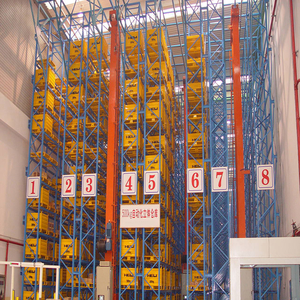
- System:Automated Crane/Shuttle
- Height Range:Up to 30 Meters
- Application:High-Velocity Pallet/Bin
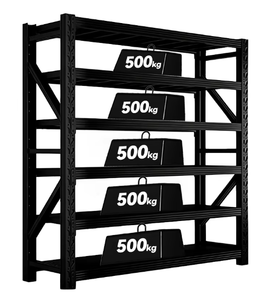
- Structure:Boltless Interlocking
- Capacity:500 kg/Tier UDL
- Finish:Epoxy Powder Coated
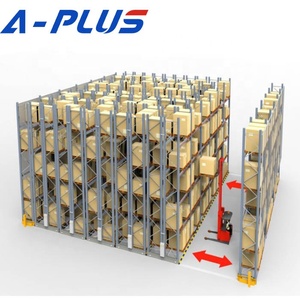
- Mechanism:Motorized / Manual Track
- Footprint Gain:+85% Space Efficiency
- Access:Single Floating Aisle
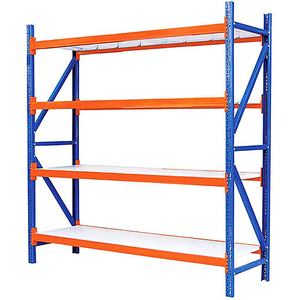
- Pitch Step:50 mm Adjustable
- Configuration:Steel Panel / Bin Dividers
- Colorways:RAL Industrial Dual-Tone
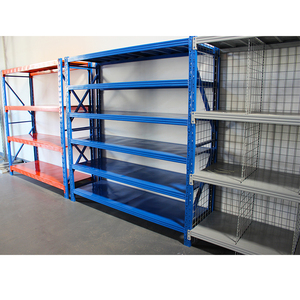
- Floor Level:2–4 Tiers Catwalks
- Span Width:Up to 2,500 mm Wide
- Picking Style:High-Density Manual/Tote
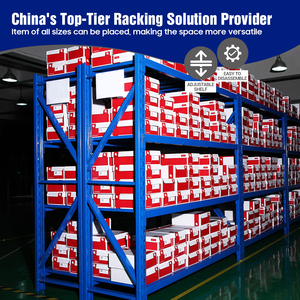
- Profile:Slotted Angle / Universal
- Assembly:Toolless Drop-In Locking
- Ideal For:Cartons, Bins, Retail
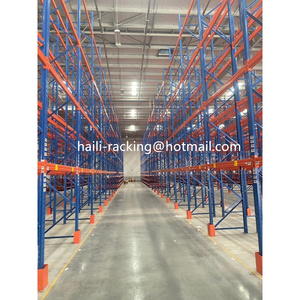
- Load Capacity:Up to 9,000 kg/Bay
- Mobility:Heavy Castor / Track Guided
- Safety Class:TUV / CE / ISO Certified
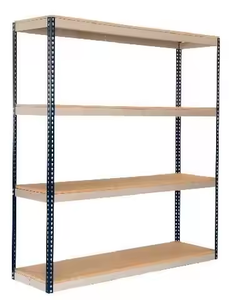
- Customization:Width, Depth & Uprights
- Compatibility:Plastic Bin / KLT Totes
- Protection:Anti-Corrosive Primer
The Architecture of Modern Warehouse Bin Shelving Systems
A rigorous examination of structural mechanics, pick-face optimization, metallurgy, and high-density space conversion in 21st-century supply chain environments.
Industrial warehousing has undergone an irreversible structural migration. The historical reliance on monolithic, single-deep pallet racks is no longer sufficient to satisfy the hyper-fragmented inventory profiles mandated by omnichannel fulfillment, e-commerce direct-to-consumer pipelines, and just-in-time (JIT) manufacturing spare parts management. Modern distribution centers now house millions of distinct stock-keeping units (SKUs), requiring warehouse managers to implement dedicated bin shelving systems that maximize vertical cubic space while driving ergonomic pick-face accessibility.
“Optimizing small-parts inventory through engineered bin shelving structures decreases warehouse worker travel time by up to 64%, elevates picking throughput from 60 to over 220 picks per operator-hour, and quadruples volumetric cubic utilization compared to unsegregated bulk racking.” — Intralogistics Engineering Bulletin.
1. Structural Metallurgy and Load-Deflection Standards
The operational longevity of a warehouse bin shelving network is directly dictated by the structural integrity of its underlying steel alloys and roll-formed cold profiles. Guangzhou Heda Shelves Co., Ltd. enforces the utilization of premium-grade Q235B high-tensile cold-rolled steel (SPCC equivalent). This carbon-manganese structural grade guarantees an optimal balance between yield strength ($f_y \ge 235 \text{ MPa}$) and ultimate tensile durability ($f_u \text{ up to } 510 \text{ MPa}$), precluding structural micro-fissures during precision cold-roll punching.
Under international intralogistics design parameters (including FEM 10.2.02 and ANSI MH28.1), bin shelving structures must adhere strictly to the deflection limit threshold of $L/200$ under Uniformly Distributed Loads (UDL). When a shelving span reaches 1,800 mm, maximum elastic downward deflection under capacity load must not exceed 9.0 mm. Sub-standard commercial racking frequently suffers from chronic beam deformation, which not only causes modular plastic bins to jam or tilt but compromises the cyclic fatigue life of the upright connectors.
| System Classification | Load Rating (UDL) | Upright Profile & Pitch | Bin Integration Mechanism | Optimal Industry Application |
|---|---|---|---|---|
| Light-Duty Boltless Shelving | 100 – 250 kg / level | 38×38 mm angle; 50 mm pitch | Drop-in shelf bins, corrugated totes | E-commerce apparel, electronics stockrooms |
| Medium-Duty Wide Span | 300 – 800 kg / level | 55×47 mm omega beam; 50 mm pitch | Drop-in vertical steel dividers, KLT boxes | Automotive replacement parts, 3PL logistics |
| Multi-Tier Mezzanine Bin Racks | 300 – 1,000 kg / m² | 80×60 mm structural column; integrated catwalks | High-density shelf-supported bin bays | Industrial hardware, pharmaceuticals, MRO |
| Automated Mobile Bin Shelving | 500 – 2,000 kg / carriage | Reinforced chassis on floor rail/stepper | High-density compartmentalized bins | Cold storage, archival vaults, cleanrooms |
2. Ergonomics, Pick-Face Optimization, and Bin Segregation Mechanics
Maximizing volumetric storage efficiency within a warehouse footprint is mathematically futile if pickers cannot retrieve individual items swiftly and safely. Scientific bin shelving design focuses intensely on the human-machine interface. The vertical storage envelope between 750 mm and 1,500 mm above finished floor level represents the operational "Golden Zone." Fast-moving class-A SKUs are positioned strictly within this strike zone to eliminate bending and reaching motions, accelerating manual pick throughput while drastically lowering repetitive strain injuries.
Furthermore, structural bin retention features are engineered directly into HEDA shelving components. Unlike generic flat steel shelves where loose bins slide laterally during retrieval, our customized bin rack systems integrate recessed front lips, transverse shelf retainers, and interlocking drop-in dividers. This modular compartmentalization allows a single 1,200 mm wide shelf deck to be subdivided into 4, 6, 8, or 12 discrete, labeled lanes matching standard European KLT containers, conductive anti-static ESD totes, or open-hopper plastic storage boxes.
Future Procurement Trends in Warehouse Bin Shelving (2025–2030)
Strategic purchasing insights for supply chain directors, procurement leads, and warehouse operations executives preparing for next-generation automated distribution.
1. Hybrid AMR & Shuttle Readiness
Static shelving is rapidly transitioning to AMR (Autonomous Mobile Robot) compatibility. Modern buyers mandate reinforced baseplates, optical target markers, and clearance tolerances that enable robotic picking shuttles to interface directly with bin levels.
2. Climate-Resilient Finishes
Global supply disruptions necessitate storing inventory across extreme microclimates. Procurement is shifting towards multi-stage pretreatment including automated pickling, zinc phosphating, and nano-ceramic powder coatings resisting over 500 hours of continuous salt spray.
3. Reconfigurable Modular Architecture
Rigid welded structures are obsolete. Procurement officers demand boltless teardrop or butterfly beam-to-column keyhole configurations that empower warehouse operators to alter shelf pitch and shelf depth without specialized machinery or downtime.
4. Sustainable Carbon-Indexed Steel
Corporate ESG directives are forcing scrutiny on supply chain embodied carbon. HEDA's precision production minimizes steel scrap generation below 1.8%, while modular flat-pack nesting maximizes sea-freight container packing density to reduce logistics carbon footprint.
Technological Evolution: From Passive Racks to Smart Intralogistics Nodes
Examining how digital warehouse management software (WMS), IoT sensory arrays, and vertical multi-tier engineering redefine warehouse bin storage.
The contemporary warehouse bin shelving unit is no longer a passive steel skeleton. Driven by the explosion of micro-fulfillment centers (MFC) situated near dense urban cores, bin shelving has integrated directly with hardware-assisted picking technologies. Modern high-density picking bays are wired during fabrication with pre-punched cable channels to accommodate Pick-to-Light (PTL) sensor arrays, digital alpha-numeric location displays, and weight-sensing shelf load cells that immediately alert inventory managers when a specific bin’s tare weight indicates an out-of-stock anomaly.
Simultaneously, the physical architecture of bin shelving has escalated upward. Where manual facilities once stopped at an operational height of 2.2 meters due to ergonomic reach constraints, current engineering deploys Rack-Supported Multi-Tier Mezzanine Bin Systems that reach 8 to 12 meters vertically. These installations incorporate integrated steel grid walkways, anti-slip staircases, pallet safety drop gates, and vertical reciprocating conveyors (VRCs). By turning vertical void volume into three or four independent, fully functional bin-picking decks, facilities multiply usable square footage by 300% to 400% without expanding the concrete building footprint or navigating costly municipal construction permitting.
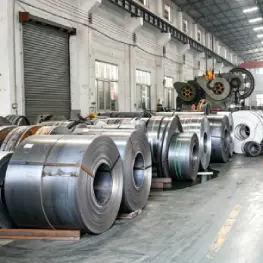
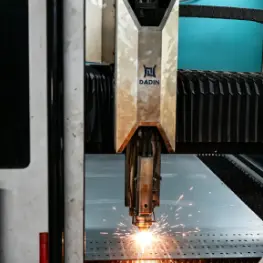
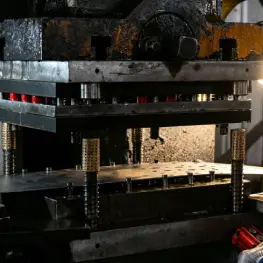
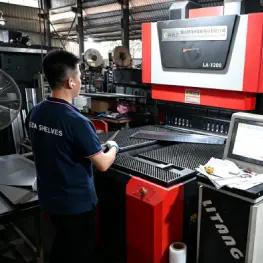
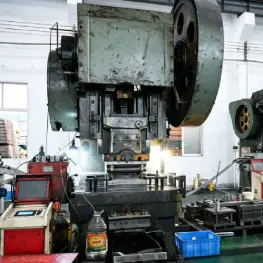
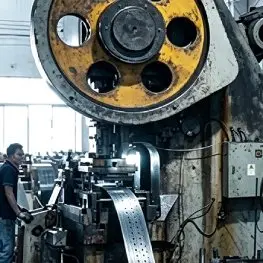
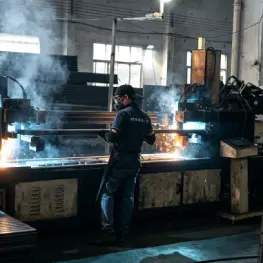
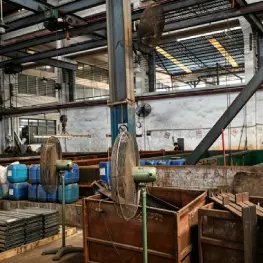
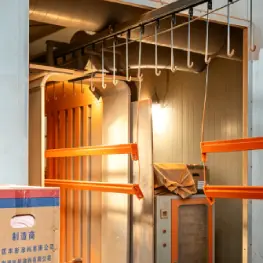
Inside HEDA’s 30,000 m² Advanced Production Facility
A completely integrated, uncompromised manufacturing continuum from raw steel coil slitting to electrostatically cured finished goods.
Rigorous Factory Quality Control
Founded in 2001 in Guangzhou, China, Guangzhou Heda Shelves Co., Ltd. has grown to become a global leader in intralogistics manufacturing. With an expansive 30,000 square meter standardized production base, an engineering staff of over 300 highly trained specialists, and a monthly production throughput surpassing 30,000 metric tons, we engineer storage infrastructure for more than 120 nations.
-
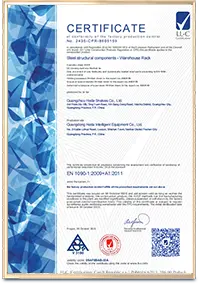
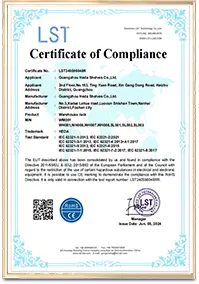
CE Machinery & Structural Directive Certified
Officially accredited under CE Certification No. 2435-CPR-8605159 for European structural steel conformity.
-
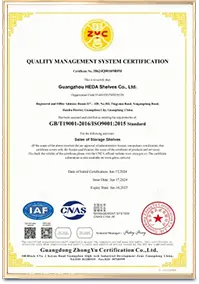
ISO 9001:2015 Quality Management Accredited
Audited quality systems under Certificate No. 18624Q00169R0M, strictly maintained through June 2027.
-
RoHS Compliance & Chemical Purity
100% lead-free, non-toxic thermoset powder coating safe for pharmaceutical and food-grade operations.

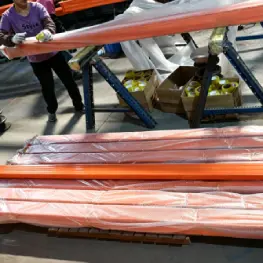
The 10-Stage Precision Production Line
Frequently Asked Questions (FAQ) for Global Buyers
Addressing core structural, freight, chemical treatment, and operational concerns raised by warehouse planners and international procurement committees.
How do warehouse bin shelving systems differ structurally from conventional selective pallet racks? +
What technical data must be provided to receive an accurate structural calculation and CAD layout? +
How does HEDA ensure powder coating adhesion and rust prevention during long maritime transit and tropical storage? +
Can HEDA bin shelving systems be expanded vertically or adapted into multi-tier catwalk mezzanines later? +
What packaging standards are implemented to eliminate container freight damage and optimize unloading speed? +
Are local installation teams capable of assembling HEDA bin shelving without on-site factory technicians? +
What is the standard manufacturing lead time and ocean shipping documentation workflow? +
How do HEDA bin shelving systems accommodate seismic zones and dynamic load stresses? +
Transform Your Warehouse Density Today
Provide your warehouse dimensions, clear height, and SKU metrics. Our structural engineering team will deliver a comprehensive 2D CAD floorplan layout, 3D photorealistic spatial rendering, and precise load-deflection calculation within 24 hours — free of charge.
- Zero-Cost 3D Layout Simulation
- Verified Structural FEM / ANSI Calculations
- Factory-Direct Wholesale Pricing
- Global Container Logistics Support
Consult a Racking Engineer
Connect immediately with our technical team to review project drawings and receive an official quotation.
Get a Quote