High-Efficiency Conventional & Specialized Racking Portfolio
Engineered with superior Q235B steel grade profiles, tight dimensional tolerance, and strict finite element stress analysis to satisfy diverse logistics frameworks.
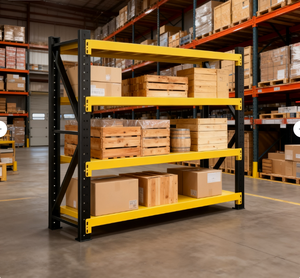
Estantes Metal Warehouse Adjustable Steel Display Stand Industrial Storage Racks Home Supermarket Iron Garage Storage Shelves
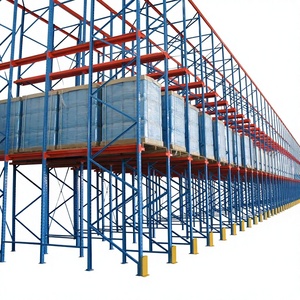
[Rongle] 2-Layer Steel Through-Aisle Drive-In Heavy-Duty Warehouse Shelving System (Blue/Red)
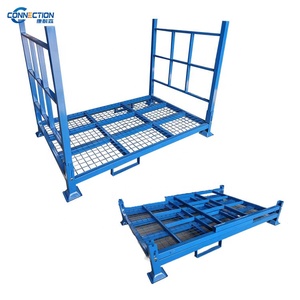
High Loading Capacity Steel Wire Mesh Pallet Foldable Stacking Rack Storage Tire Rack
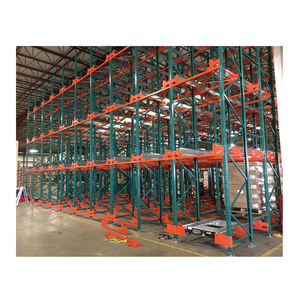
Heavy Duty Automatic Radio Shuttle Rack High Efficiency Automated Pallet Storage Racking System FILO/FIFO
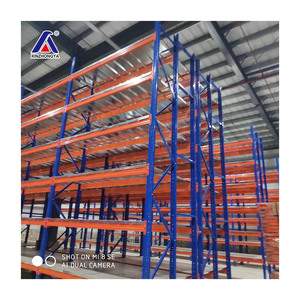
Q235b Steel Single Deep Double Side Selectivo Slective Pallet Storage Rack Warehouse Equipment
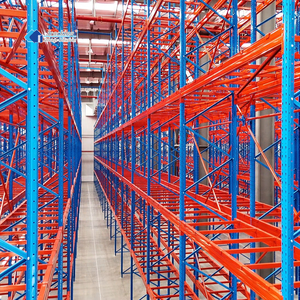
High Density Steel Storage Racks EU Standard Heavy Duty Adjustable Pallet Racking System for Warehouse Storage Solutions
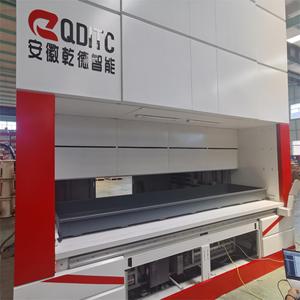
Industrial Stacking Racks Shelves-Mobile Durable Alloy Steel 15000kg Load Capacity Space-Saving Warehouse Storage System
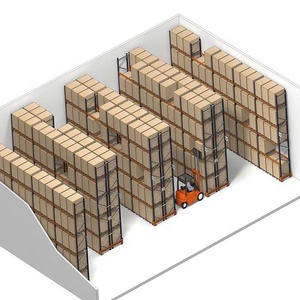
Heavy Duty Pallet Beam Racking Industrial Warehouse Storage Shelf Rack
Structural Engineering Integrity in Conventional Pallet Racking Systems
Conventional pallet racking (commonly referred to as selective pallet racking) serves as the backbone of modern global supply chains. As supply chain infrastructure confronts escalating real estate expenses, unpredictable port disruptions, and surging SKU proliferation, the specification of intralogistics storage hardware transitions from standard fixture purchasing to advanced structural risk management. When designing multi-tier conventional racking, our engineering framework integrates critical factors like static and dynamic live-load tolerances, seismic resonance profiles, forklift impact absorption, and floor slab deflection limits.
The Metallurgy & Mechanical Load Profiles of Q235B vs. High-Yield Alloys
The primary point of failure in poorly manufactured overseas racking lies in the structural steel chemistry and inconsistency in cold-roll continuous profiling. Our production leverages certified prime Q235B/SS400 hot-rolled steel strip, formulated with precise carbon-manganese ratios to preserve ductility under mechanical shock loading while offering exceptional yield stress thresholds exceeding 235 MPa. For specialized seismic regions or high-bay vertical configurations exceeding 12 meters, automated cold-roll forming lines roll up to 14 bending stages per profile. This preserves micro-crystalline structures along continuous cold-formed upright radii, substantially mitigating internal stress fractures and micro-cracking common in substandard stamp-folded alternatives.
Beam-to-column connections represent the critical rotational stiffness node of conventional systems. Our structural engineering utilizes reinforced multi-claw connector plates (typically 3-claw or 4-claw cold-stamped integral tabs) fitted with automated high-visibility locking safety pins. These connections provide documented, non-linear semi-rigid moment resistance. Under forklift acceleration or sudden deceleration impact loads during pallet placement, this stiffness geometry dissipates kinetic forces horizontally into the building slab anchor points via dual floor tie-plates, preventing progressive collapse phenomena across extensive storage runs.
Future Procurement Trends in Industrial Storage Racking
A strategic breakdown for chief procurement officers and logistics executives balancing capital equipment investment, supply chain agility, and landed equipment longevity.
Total Cost of Ownership (TCO) Prioritization
Procurement teams are moving away from evaluating strictly initial invoice FOB costs. Current sourcing strategies compute container-packing density factors, sea freight cube efficiency, surface anti-corrosion life expectancy, and seismic verification expenses, proving that pre-engineered systems yield superior multi-decade ROI.
Send an InquiryDual-Finish Micro-Climate Adaptability
Global logistics hubs face extreme operating conditions—from high coastal humidity across West and East Africa to sub-zero cold storage facilities down to -30°C. Specifying systems with multi-stage chemical pretreatment, micro-phosphating, and epoxy-polyester architectural powder coating has become a non-negotiable procurement standard.
Send an InquiryHybrid Mechanized Compatibility
Modern distribution hubs require racking structures that facilitate smooth operational shifts. Contemporary conventional racking systems must allow direct conversion into very narrow aisle (VNA) systems, rack-supported multi-tier catwalks, or automated shuttle platforms with minimal structural modifications.
Send an InquiryTechnological Advancements in Modern Pallet Racking
How cutting-edge structural dynamics, automated fabrication, and digital tracking are reinventing conventional storage engineering.
Automated CNC Roll-Forming & Punching
Advanced manufacturing utilizes automated computer-controlled roll-forming stations and in-line optic sensors. Continuous automated web hole punching ensures pitch accuracies within ±0.1mm, delivering rapid on-site assembly and eliminating field modification risks entirely.
Send an InquiryDigital Asset Telemetry & Impact Monitoring
The latest generation of conventional racks incorporates smart impact telemetry nodes integrated directly into sacrificial column base protectors. These sensors capture forklift collision shockwaves instantly, transmitting real-time strain-gauge alerts to facility engineers before structural micro-buckling leads to failure.
Send an InquiryDigital Twin Modeling & Finite Element Integration
Racking engineering now connects structural designs directly into architectural BIM (Building Information Modeling) pipelines. Warehouse planners can simulate automated forklift paths, seismic resonant vibrations, and thermal airflow variations within a unified 3D virtual environment prior to project fabrication.
Send an InquiryDirect Manufacturing Scale & End-to-End Export Capabilities
Drawing on decades of structural manufacturing experience, our state-of-the-art Guangzhou manufacturing complex provides reliable quality, certified load tolerances, and seamless international project delivery.
30,000 m² Integrated Facility
Every phase of our production—from uncoiling and precision roll-forming to robotic carbon dioxide gas-shielded welding, chemical acid pickling, phosphating, and automated electrostatic powder coating—operates under ISO 9001:2015 quality control oversight.
Certified Export Verification
We supply verified international standard credentials, including European CE certification (No. 2435-CPR-8605159) and ISO 9001:2015 (Certificate No. 18624Q00169R0M). Each production batch undergoes strict tensile testing, weld penetration inspection, and salt spray testing.
Container Freight Optimization
Through our proprietary bundle nested packaging, racking uprights and box beams are organized systematically to minimize container volume losses in 20GP, 40GP, and 40HQ configurations, substantially lowering landed sea-freight costs per pallet slot for long-distance transport.
Complimentary Turnkey 3D Architectural CAD Planning
Share your clear ceiling heights, building column placements, slab load capacities, and forklift turn radius profiles. Our licensed structural design team generates full CAD layout blueprints, 3D stress renders, and accurate load tables within 24 hours, completely free of charge.
Frequently Asked Questions on Conventional Pallet Racking
Straightforward answers addressing engineering parameters, production timing, maritime logistics, and global installation supervision.
What are the standard lead times for international project orders?
Our standard manufacturing cycle for standard conventional pallet racking runs between 15 to 25 calendar days for multi-container deployments (2 to 8 containers). Specialized custom colors, hot-dip galvanization, or non-standard profiles are coordinated systematically to synchronize with global shipping lines and vessel bookings.
How do you verify seismic stability and static capacity?
We calculate structural beam deflections strictly within the L/200 standard and column load factors following European EN 15512 and RMI standards. Our software simulates worst-case floor settlement, lateral live seismic shear loads, and concentrated impact loads, supplying full certified calculation reports before fabrication begins.
What anti-corrosion protection is specified for harsh and humid marine climates?
Every component completes an intensive multi-phase immersion wash, including chemical degreasing, acid rust-stripping pickling, micro-crystal phosphating, and fresh-water rinsing, prior to electrostatic thermoset polyester powder application. For humid port hubs or cold storage rooms, we offer full hot-dip galvanization (HDG) delivering exceptional anti-corrosion endurance.
What level of on-site installation guidance is provided overseas?
Each export shipment includes piece-marked components linked directly to detailed CAD layout installation blueprints and assembly guides. We provide full bilingual engineering video support, comprehensive torque bolt specifications, and can deploy senior installation supervisors directly on site to manage complex turnkey logistics operations.
Ready to Maximize Your Warehouse Floor Space & Throughput?
Consult directly with our engineering team for optimized racking layouts, steel load certifications, and competitive factory-direct export proposals tailored to your facility parameters.
Send an Inquiry