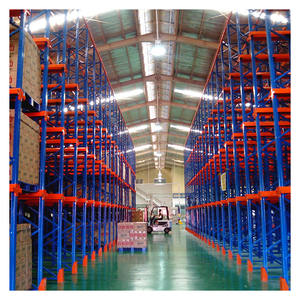
High-Density Storage Portfolios
Engineered Industrial Racking Systems & Technical Solutions
Explore heavy-duty configurations, flow rails, and structural systems manufactured in-house from prime cold-rolled steel coils for reliable warehouse operation worldwide.
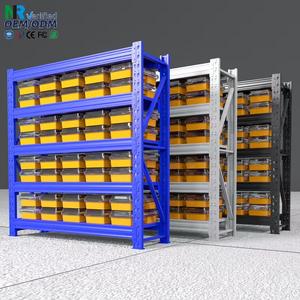
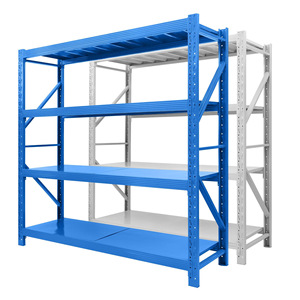
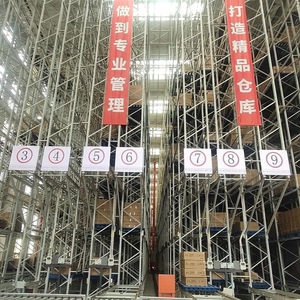
Technical Engineering Whitepaper
Optimizing Warehouse Cube Dynamics via Modern Flow Rail Engineering
Modern supply chain infrastructures encounter continuous margin compression caused by rising industrial real estate costs, shifting order profiles, and energy consumption across temperature-controlled supply chains. In response, modern logistics engineers frequently weigh traditional static storage methods against dense dynamic systems. Flow rail racking has emerged as an efficient, mechanically reliable alternative among high-density storage solutions. Unlike deep-lane drive-in systems—which demand that forklift trucks maneuver directly into structural rack uprights—flow rail systems maintain stationary structural integrity while allowing pallets to traverse dedicated dynamic tracks under controlled physical movement.
"Structural engineering in deep-lane operations requires an intentional balance: maximizing volumetric capacity while reducing mechanical failure points. Advanced flow rail profiles remove forklift transit inside rack corridors, reducing mast collision risks and maintaining uninterrupted throughput."
Flow Rail Kinematics: Mechanical Track Mechanics vs. Alternative Topologies
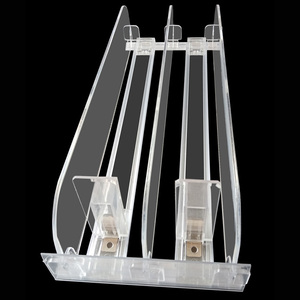
Flow rail technology operates around specialized low-profile tracks containing interconnected roller chains or nested horizontal sliding carriers. When a forklift operator introduces a second pallet into a storage lane, the pallet gently pushes back preceding loads along precision-machined, low-resistance rail assemblies. During the picking process, the retrieval of the forward pallet enables rearward loads to advance smoothly to the aisle face by gravity or spring return tension, managed by internal braking rollers and end-stops.
This layout operates under LIFO (Last-In, First-Out) material movement rules without requiring the extensive incline angles characteristic of classic gravity pallet flow systems. Because traditional gravity flow solutions need vertical drops of 3.5% to 5% across extended track lengths, they consume significant ceiling height in multi-level installations. In contrast, low-profile flow rail assemblies maintain nearly horizontal orientations (slopes below 1.5% to 2%), preserving critical vertical clearance for additional vertical tiers in facilities with ceiling heights under 8.5 meters.
| Evaluation Parameter | Flow Rail Systems | Drive-In Racking | Gravity Pallet Flow (FIFO) | Radio Shuttle Racking |
|---|---|---|---|---|
| Volumetric Space Utilization | 75% – 85% | 65% – 75% | 85% – 90% | 80% – 88% |
| Forklift Mast Impact Risk | Zero (External Loading) | High (Operates Inside Lanes) | Zero (External Loading) | Zero (External Loading) |
| Power/Electrical Dependency | Purely Mechanical (Zero kWh) | Purely Mechanical (Zero kWh) | Purely Mechanical (Zero kWh) | Rechargeable Lithium Batteries |
| Vertical Ceiling Loss per Tier | Minimal (Flat Low Profile) | Moderate (Clearance Rails) | Significant (3.5–5% Slope Pitch) | Minimal (Shuttle Rail Channel) |
| Cold Storage Durability (-28°C) | Exceptional (No Electronics) | High (No Electronics) | Moderate (Roller Bearings) | Requires Low-Temp Battery Cells |
Future Procurement Trends in Flow Rail and Storage Architecture (2026–2030)
Global procurement teams are adapting to supply chain automation and updated structural building codes. When budgeting and drafting equipment specifications for multi-tier industrial storage, engineering teams monitor three primary trends:
⚙️
Hybrid AGV/AMR Interoperability
Modern flow rail systems are shifting toward standard interface tolerances capable of handling Autonomous Mobile Robots (AMRs) and automated counterbalanced forklifts. Accurate rail alignment tolerances (within ±1.5mm) ensure automated reach carriages seat pallets consistently without human intervention.
❄️
High-Performance Cold-Chain Finishes
Surging operational expenses across frozen and refrigerated logistics hubs have accelerated the transition away from standard paint finishes. Industrial facilities specify automated pickling and phosphating processes topped with electrostatically applied anti-corrosive powder coatings or continuous hot-dip galvanizing to withstand constant condensation cycles.
📐
Modular Seismic & Flexural Engineering
Global building codes require certified dynamic load calculations capable of absorbing cross-directional seismic tremors. Next-generation uprights feature high-tensile cold-rolled omega profiles (Q235B/Q355B structural steel grades) that optimize mass while maximizing structural stability under heavy capacity envelopes up to 1,500 kg per pallet.
Why Choose Us
In-House Manufacturing Excellence & Global Reliability
Operating a 30,000 m² heavy-industrial manufacturing base, Guangzhou Heda Shelves Co., Ltd. delivers direct factory engineering, ensuring quality control from structural steel coil to finished shipping container.
🏭
Comprehensive Internal Fabrication
Our facility manages the full production lifecycle: CNC automated column punching, cold-bending roll forming, robotized welding, and automatic electrostatic powder-coating lines, producing over 30,000 metric tons monthly without outsourcing.
📋
Verified Certifications & Traceability
We maintain full compliance with international engineering benchmarks, backed by valid CE Certification No. 2435-CPR-8605159, ISO 9001:2015 Quality Management (No. 18624Q00169R0M), and comprehensive RoHS environmental material standards.
📦
Container-Optimized Logistics
To reduce international landed freight costs, all systems feature knock-down modular components. Structural uprights and dynamic rails are nested and bundled for maximum cubic efficiency inside 20GP and 40HQ ocean shipping containers.
Buyer Knowledge Base
Frequently Asked Questions on Flow Rail Procurement
Direct technical answers from our senior project engineering team covering structural considerations, installation, environmental protection, and operations.
What warehouse data is needed to design a custom flow rail racking layout?
To provide an accurate structural CAD layout and structural static load calculation, our engineers require: (1) Architectural building drawings showing clear ceiling height, column positions, overhead obstructions, and floor flatness (FM2/Superflat specifications); (2) Pallet specifications including overall width, depth, height, bottom board configuration, and gross weight per unit; (3) Forklift fleet details, including maximum reach height, turning radius, and rated lifting capacity at full height; and (4) SKU count and throughput velocity requirements.
How does flow rail racking perform during regional electrical grid interruptions?
Flow rail systems are 100% mechanical. They rely strictly on heavy-gauge gravity tracks, sealed rolling bearings, and internal counterbalance mechanisms, making them completely immune to grid outages. Unlike radio shuttle platforms or high-bay automated cranes, flow rail racking requires zero continuous electrical feeds or battery recharging, ensuring uninterrupted warehouse operations.
How are steel structural profiles protected against coastal corrosion and humidity?
All structural components undergo an industrial multi-stage chemical wash, pickling, and phosphating pretreatment before finishing. This process eliminates surface oxides and creates a chemical bonding profile for our electrostatic thermoset powder coatings. For demanding installations, such as coastal humidity zones or blast freezers (-25°C to -30°C), we offer hot-dip galvanized profiles and marine-grade stainless fasteners to prevent rust creep over decades of service.
Can our local warehouse installation crew erect these racking systems independently?
Yes. Every order ships from our facility with systematically indexed components, detailed structural engineering blueprints, and color-coded component mapping. Our Guangzhou engineering department supports local teams with high-resolution 3D assembly models and real-time technical video guidance. On-site project supervision by senior field engineers can also be arranged for complex, multi-tier projects.
What maintenance schedules are recommended for heavy-duty flow rail track components?
Due to our low-friction mechanical components and sealed-for-life roller bearings, scheduled maintenance is straightforward. We recommend semi-annual visual inspections to check anchor bolt torque, clear dust or strapping debris from floor-level tracks, verify that end safety brakes engage smoothly, and inspect aisle-facing column guards for forklift collision damage.
What is the maximum pallet lane depth achievable using flow rail technology?
Standard flow rail designs efficiently support configurations up to 6 to 8 pallets deep per individual lane in LIFO formats. Beyond 8 pallets deep, our engineering team typically recommends evaluating radio shuttle systems or multi-level push-back arrangements, depending on the number of SKUs and picking frequency, to balance push-back resistance against available forklift mast capacities.
Plan Your High-Density Storage Transformation Today
Send us your warehouse CAD floor plan, target pallet counts, and clear ceiling dimensions. Our senior engineering team will return a customized structural layout, 3D visualization, and detailed pricing quotation within 24 hours.
Get Catalog