Engineered Heavy-Duty Wire Shelving & Industrial Storage Systems
Precision-fabricated in our 30,000 m² automated production facility. Each model complies with ANSI/RMI MH16.1 and EN 15512 safety standards, delivering verified weight capacities from 500 kg to over 4,500 kg per level.
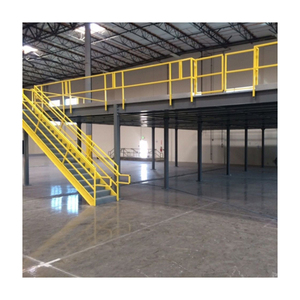
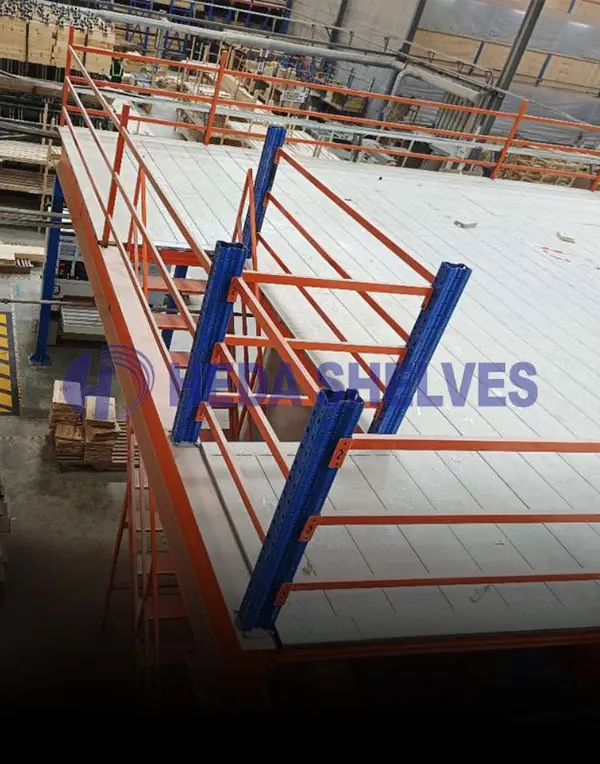
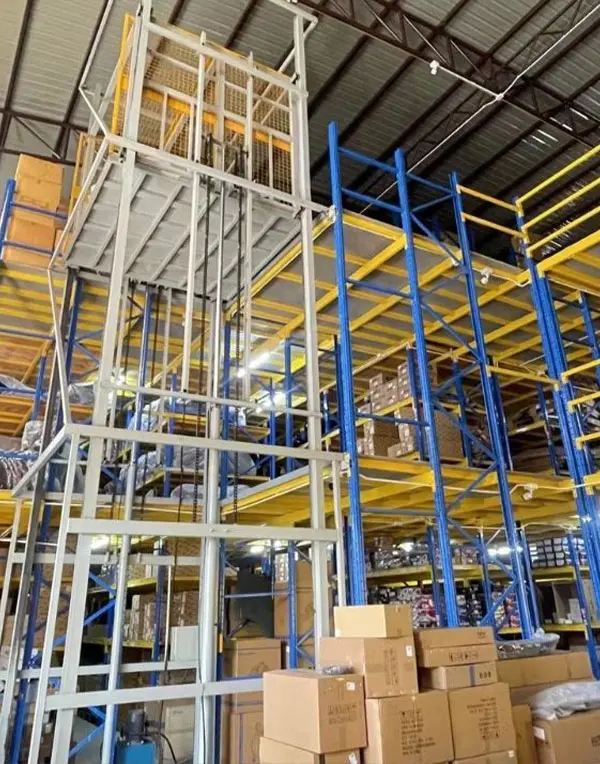
150 Square Meter Customized Attic Industrial Storage Pallet Racking 2 Floors Mezzanine Shelving Rack System Steel Platform
- Load Rating: 300–1,000 kg/m²
- Clear Height: Custom (Up to 12m)
- Deck Type: Steel / Mesh / Plywood
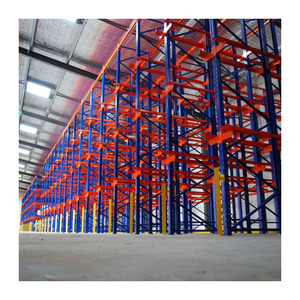
Mracking Manufacturer's Industrial Drive-In Racking System Free Design Low Steel Shelves Garage Storage Corrosion Protection
- Space Utilization: Up to 85% Volumetric
- Lane Depth: 2 to 10 Pallets Deep
- Surface: Epoxy Powder Coating
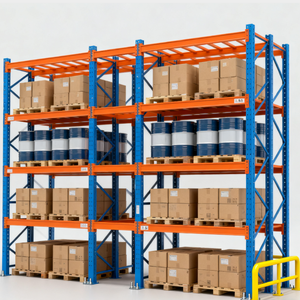
Factory-Direct Wholesale Rates Seismic-Resistant Pallet Rack Shelving Rack
- Structural Steel: Q355B High-Tensile
- Base Plate: Heavy Welded Footplate
- Compliance: RMI / ASCE 7 / UBC
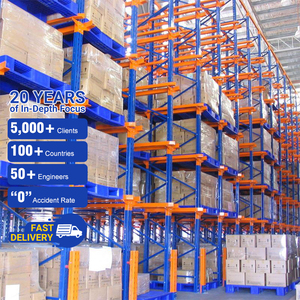
High Quality Warehouse Storage Heavy Duty Drive in Shelves Adjustable Industrial Steel Storage Drive Through Rack
- Operation Mode: FIFO & LIFO Hybrid
- Pallet Payload: Up to 1,500 kg/Pallet
- Rails: Formed Heavy Duty Galvanized
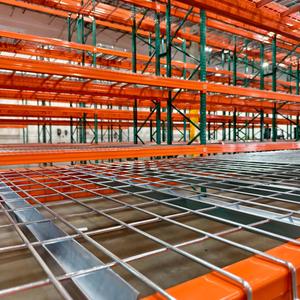
Heavy-Duty Teardrop Pallet Rack Welded Steel Upright Frame Footplate Bolt-Structured Shelves Industrial Warehouse Galvanized 12
- Pitch Adjust: 2-Inch (50.8mm) Increment
- Compatibility: North American Universal
- Finish: Hot-Dip Galvanized / Powder
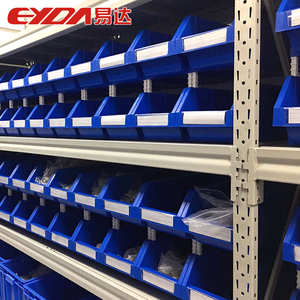
Wholesale Light Duty Multi-Level Steel Storage Racks Corrosion Protection Powder Coated Customizable Layers for Industrial
- Shelf Capacity: 100–300 kg/Tier
- Assembly: 100% Boltless Quick Snap
- Coating: Anti-Microbial Epoxy
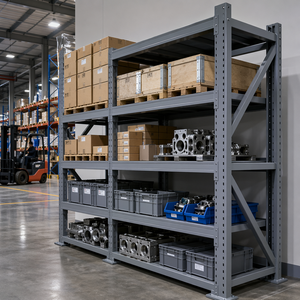
ISO9001 Certified Custom OEM Stainless Steel Shelving Frame | Heavy Duty Welded Fabrication Anti-Corrosion for Warehouse Storage
- Material Spec: SUS304 / SUS316 Austenitic
- Sanitation: Washdown Safe / NSF Grade
- Corrosion Proof: 1000+ Hrs Salt Spray Pass
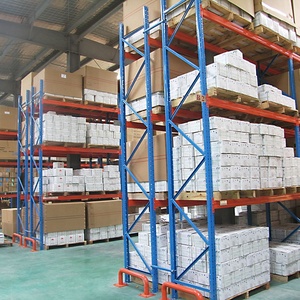
Customizable Boltless Shelving Steel Storage Stacking Racks Shelves Double Deep Selective Pallet Racking For Warehousing
- Aisle Economy: Reduces Aisle Ratio by 30%
- Reach Forklift: Pantograph Extender Fit
- Beam Section: Box Beam 80–160mm
Metallurgical Precision & Structural Mechanics in Industrial Wire Shelving
A definitive technical analysis for supply chain engineers, EPC contractors, and procurement directors evaluating wire gauge diameters, deflection coefficients, and fire sprinkler compliance.
In modern high-velocity distribution centers, the selection of heavy-duty industrial wire shelving and pallet rack wire decking is a foundational engineering decision that directly dictates operational safety, fire code compliance, and structural longevity. Unlike generic commercial shelving, true industrial-grade wire shelving is manufactured from structural carbon steel grades (primarily Q235B and high-yield Q355B according to GB/T 700 / ASTM A36 equivalents). These steels possess a verified tensile strength of 375 to 500 MPa and an elongation percentage greater than 26%, preventing brittle failure under dynamic shock loading caused by forklift placement errors or seismic floor accelerations.
The structural core of an industrial wire deck relies on a precisely calibrated wire matrix. Longitudinal wires, cold-drawn to precise diameters of 4.5mm, 5.0mm, or 6.0mm, are spaced at 50mm × 100mm (2" × 4") or 25mm × 100mm (1" × 4") grid patterns. These wires are resistance-welded at every single intersection using multi-head robotic automated welding arrays. Underneath the mesh deck, cold-formed steel support channels—typically manufactured from 14-gauge (1.9mm) to 12-gauge (2.5mm) cold-rolled strip steel—are mig-welded to the wire matrix. When seated across step beams or structural box beams, these channels translate localized point loads into a Uniform Distributed Load (UDL), guaranteeing deflection limits strictly within the L/240 ratio mandated by the ANSI/RMI MH16.1 specification for industrial steel storage racks.
Engineering Matrix: Industrial Wire Decking vs. Solid Steel Decking vs. Plywood
Comparative performance metrics under rigorous warehouse operating parameters.
| Evaluation Parameter | Industrial Wire Decking (Heda) | Solid Formed Steel Plate | Resin-Coated Plywood Deck |
|---|---|---|---|
| NFPA 13 Fire Sprinkler Permeability | Passed (>70% Open Area) | Failed (0% Permeability - Shielding Hazard) | Failed (0% Permeability - High Fire Fuel) |
| Uniform Distributed Load (UDL) | 1,000 kg – 4,500 kg per level | 1,200 kg – 5,000 kg per level | 400 kg – 1,200 kg per level |
| Deflection Tolerances (at full UDL) | L/240 to L/200 Max Deflection | L/200 Elastic Deflection | L/120 (Susceptible to permanent sag) |
| Debris Accumulation & Lighting Penetration | Zero dust build-up; 65% Light transmission | High dust capture; Blocks overhead light | Moisture retentive; Blocks overhead light |
| Corrosion Resistance Treatment | 10-Stage Phosphating + Powder / HDG | Powder Coated / Galvanized | Surface resin coating only (Decays in humidity) |
| Drop-in Installation Speed | Fastest (Self-centering waterfall edge) | Moderate (Fastened with tek-screws) | Slow (Requires cut-to-fit & screw fixing) |
Future Procurement Trends in Industrial Wire Shelving & Racking
Strategic forecasting derived from Tier-1 logistics investments, macroeconomic steel supply dynamics, and cold-chain infrastructure growth over the next five years.
ASRS & Automated Shuttle Interfacing
Procurement managers are transitioning away from loose-tolerance shelves toward CNC-calibrated wire decking engineered specifically to integrate with Automated Storage and Retrieval Systems (ASRS), autonomous mobile robots (AMRs), and four-way radio shuttles. Tolerances must maintain less than ±1.0mm variance across the horizontal plane.
Embodied Carbon & Scope 3 Auditing
Multinational operators now demand mill-certified scrap-recycled content verification (Electric Arc Furnace - EAF production) for steel structural members. Procurement decisions now balance structural rigidity with lower cradle-to-gate carbon footprints, favoring factories utilizing solar-powered powder coating baking lines.
Severe Environment Hybrid Metallurgy
With the rapid expansion of coastal mega-ports and pharmaceutical cold chains, buyers are abandoning basic single-coat paint finishes. The market trend is heavily shifting toward dual-layer anti-corrosion: zinc phosphating combined with thermoset polyester resin, or full hot-dip galvanizing capable of withstanding 1,000+ hours in ASTM B117 salt fog testing.
Container-Optimized Modular Packing
Surging transoceanic container rates have made nesting efficiency a core buying criteria. Manufacturers that engineer nested wire waterfall profiles and modular knock-down frame geometries allow up to 28 tons or 68 cubic meters of usable volume inside a standard 40HQ container, lowering landed cost per pallet position by 22%.
Technological & Design Evolution in Heavy Industrial Storage
Breakthrough engineering innovations revolutionizing shelf impact resistance, assembly ergonomics, and fire safety mechanics.
Robotic Multi-Spot Micro-Welding
Traditional manual wire tack-welding created micro-fissures and thermal oxidation zones prone to early stress fractures. Modern Tier-1 production lines employ multi-torch high-frequency resistance micro-spot welding. Every wire intersection undergoes localized thermal fusion within 0.08 seconds, maintaining metallurgical integrity and ensuring wire-to-wire pull-apart shear strengths exceed 3.5 kN per joint.
Contoured Waterfall & Inverted Flange Geometries
Design innovation has expanded beyond the traditional 1.5-inch outside waterfall edge. Advanced decks utilize double-turn inverted waterfall flanges and internal step-beam lock contours. This prevents snagging of industrial shrink wrap during automated high-reach pallet placement, eradicating snagging incidents and preventing accidental beam dislodgement.
Hygienic NSF-Compliant Wire Drainage Profiles
In pharmaceutical cleanrooms and food packing logistics, flat horizontal surfaces are prime vectors for microbial incubation. The new generation of industrial wire shelving features 360-degree cylindrical profiles with electropolished stainless steel finishes (Ra < 0.4 µm) that eliminate pathogen harborage and facilitate full fluid runoff during high-pressure chemical washdowns.
Guangzhou Heda Shelves Co., Ltd. (HEDA Shelves)
Founded in 2001, Guangzhou Heda Shelves Co., Ltd. has grown from an elite precision fabrication plant into a world-leading manufacturer of heavy industrial pallet racking, warehouse mezzanine platforms, and industrial wire shelving systems. Operating from our state-of-the-art 30,000 square meter manufacturing campus in Guangzhou, we house full automated cold-roll forming lines, CNC laser cutting centers, and robotic welding stations.
With an engineering team of over 300 skilled technicians, our monthly production throughput exceeds 30,000 metric tons of structural steel storage equipment. Holding both European CE Certification (No. 2435-CPR-8605159) and ISO 9001:2015 Quality Management System Certification (No. 18624Q00169R0M), we engineer solutions certified for stringent structural and seismic codes across 120+ destination countries.
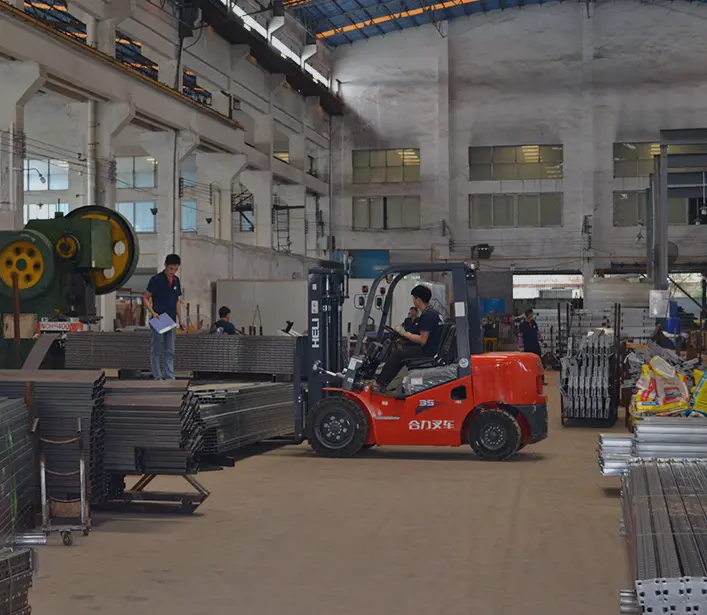
The 10-Stage Precision Manufacturing Protocol
Every length of cold-drawn wire and structural steel profile passes through strict automated production checkpoints before container dispatch.
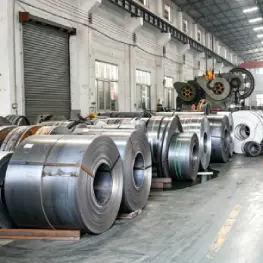
Raw Steel Inspection
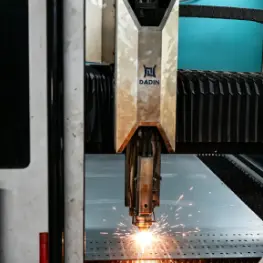
Precision Steel Cutting
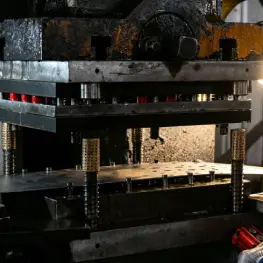
Automated CNC Punching
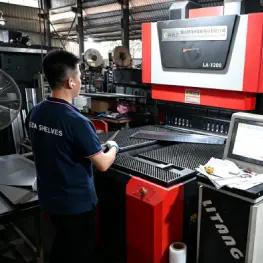
Cold Roll-Bending
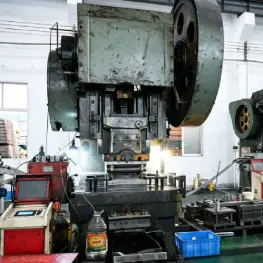
Profile Forming
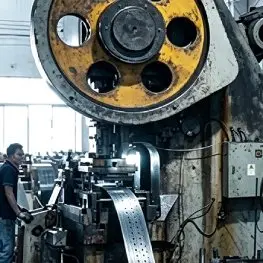
Automated Polishing
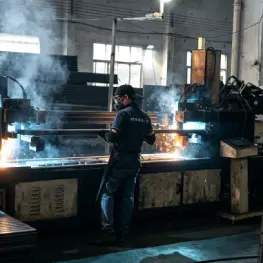
Robotic Matrix Welding
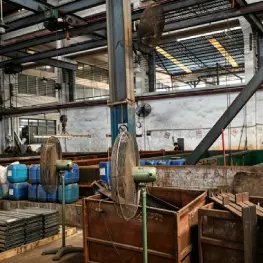
Pickling & Phosphating
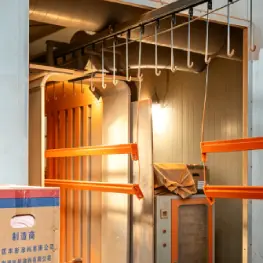
Powder Electro-Coating
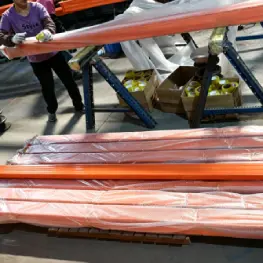
QC & Container Packing
Engineered Deployments Across High-Value Logistics Sites
From heavy chemical storage in West Africa to high-density automotive supply distribution hubs in Southeast Asia.
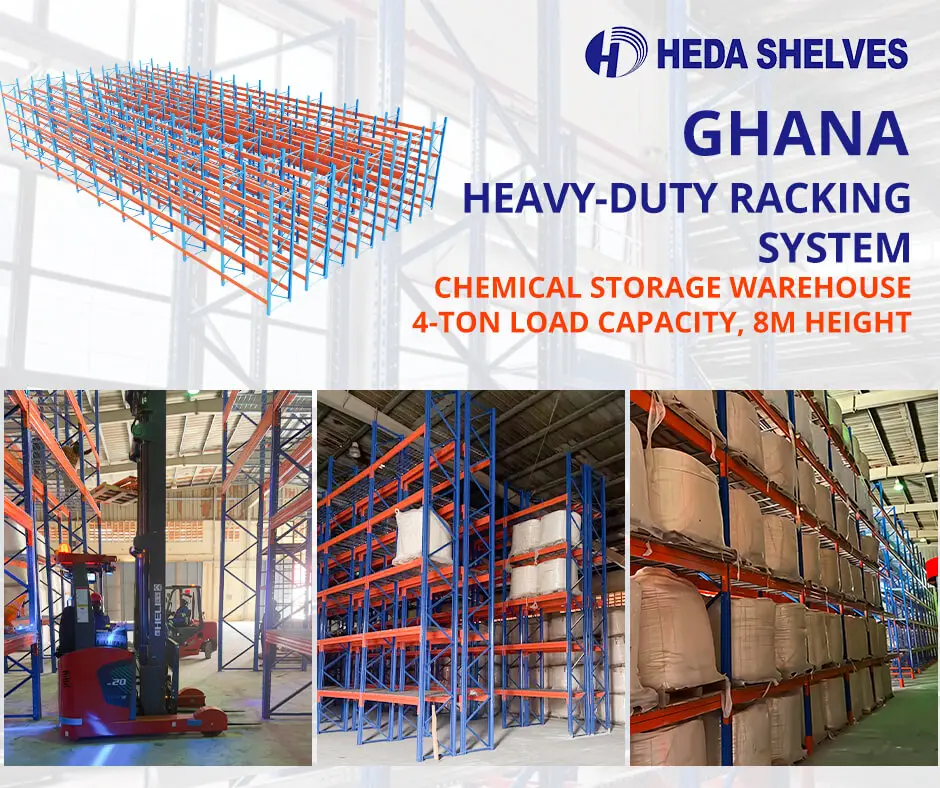
What wire gauge (diameter) is recommended for pallet rack wire decks supporting 1,500 kg per pallet?
Why do warehouse fire insurance underwriters mandate wire mesh decking over solid steel or wood?
How does Heda prevent coastal and high-humidity corrosion on exported shelving?
Can Heda customize upright frames and wire decks to fit existing teardrop or European beam profiles?
What engineering documentation is delivered for seismic and municipal building permits?
How do you optimize container packing to reduce transoceanic shipping freight costs?
What is the lead time for custom production orders, and how is installation supported globally?
Request Your Free Warehouse 3D CAD Layout & Structural Load Audit
Collaborate directly with our senior intralogistics engineers. Submit your warehouse dimensions, forklift clearances, and pallet specifications to receive a full structural layout, bill of materials (BOM), and factory-direct price quotation within 24 hours.
Start Your Storage Project
Our engineering team responds with turnkey CAD drawings and structural estimates within one business day.