ISO 9001:2015 & CE Certified Structural Engineering
Top Trusted Pallet Rack Bay Manufacturers & Factories
Industrial whitepaper and comprehensive technical guide to high-capacity pallet rack bay fabrication, load calculations, anti-corrosive finishes, and international logistics consolidation.
Direct Factory Catalog
High-Efficiency Pallet Rack Bay Systems
Explore heavy-duty, certified pallet rack bay configurations designed and rolled directly in our 30,000 m² Guangzhou manufacturing facility. Built with Q235B and Q355B cold-formed structural steel to meet rigorous global warehousing standards.
Engineering Specifications & Structural Bay Anatomy
In the procurement of industrial racking systems, a single "pallet rack bay" serves as the foundational building block of the entire warehouse matrix. Structural safety, beam deflection limits, and steel ductility are critical parameters that govern asset protection and regulatory compliance.
25+
Years Precision Manufacturing
30,000m²
Modern Production Footprint
30,000
Tons Monthly Steel Throughput
10,000+
Global Warehouses Engineered
The Mechanical Mechanics of a Certified Pallet Rack Bay
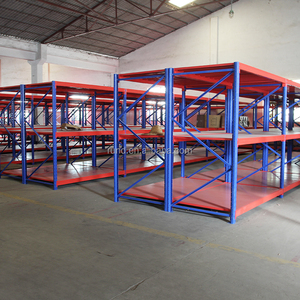
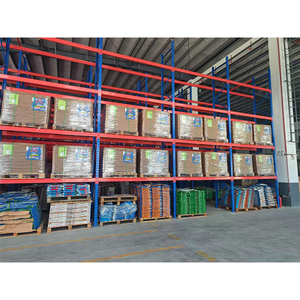
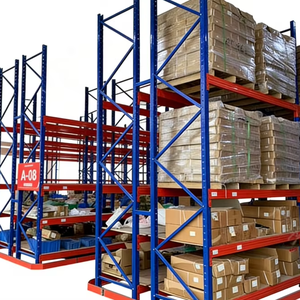
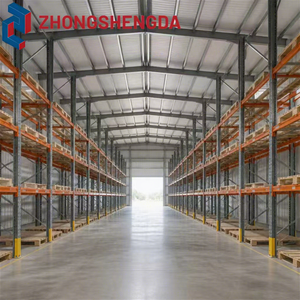
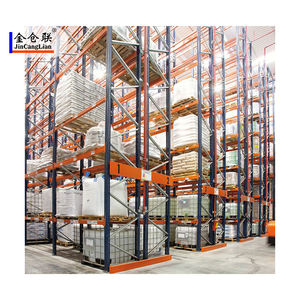
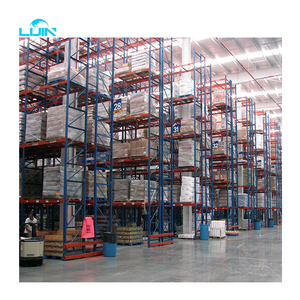
A standard pallet rack bay consists of two vertical upright frames interconnected by horizontal and diagonal bracing struts, linked crosswise by pairs of horizontal load beams. The engineering calculation of each bay is dictated by the European standard EN 15512:2020 (Steel static storage systems), the American RMI ANSI MH16.1, and the Australian AS 4084:2023 codes. Structural load capabilities are heavily influenced by the vertical unbraced length ($K \cdot L$), beam-to-column connector moment resistance, and slab anchor shear capacity.
Load beams are subject to elastic vertical deflection criteria. Under full rated uniform distributed load (UDL), the maximum allowable deflection must not exceed:
Maximum Allowable Deflection = L / 200 (Standard Industrial) | L / 300 (Automated AS/RS Systems)
Where L is the clear span length between upright columns. For a typical 2,700 mm bay engineered for three standard Euro-pallets (800x1200mm) or two industrial ISO/Chep pallets (1000x1200mm), permissible vertical deflection is capped at 13.5 mm. Selecting beam profiles—ranging from light 80x50x1.5mm boxed step sections to heavy 160x50x2.0mm closed box profiles—requires finite element method (FEM) verification based on warehouse seismicity and cyclic forklift impacts.
Standardized Bay Load Engineering Matrix
Bay Configuration
Standard Clear Span
Frame Depth
Beam Section Size
Max Bay Capacity
Compliant Forklift Fleet
Selective Pallet Bay
2,300 mm – 2,700 mm
1,000 – 1,100 mm
100x50x1.5mm Box
12,000 kg total
Counterbalance, Reach Truck
Heavy Beam Bay
2,700 mm – 3,600 mm
1,000 – 1,200 mm
140x50x2.0mm Box
18,000 kg total
Heavy Reach Truck
VNA High-Bay
2,700 mm – 3,900 mm
1,000 – 1,100 mm
130x50x1.8mm Box
24,000 kg total
Man-Up / Man-Down VNA Turret
Drive-In Pallet Bay
1,350 mm – 1,500 mm
3,000 – 12,000 mm
Heavy Cantilever Rail
20,000 kg total
Narrow Reach Truck
AS/RS Automation Bay
2,700 mm – 3,300 mm
1,050 – 1,200 mm
160x50x2.5mm Custom
32,000 kg total
Automated Stacker Crane
Manufacturing Excellence
Precision Fabrication Protocol: 10 Core Stages
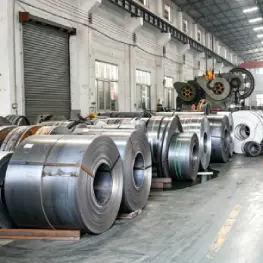
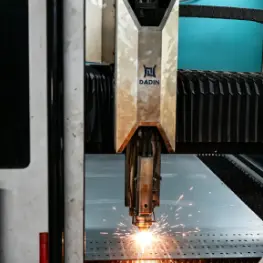
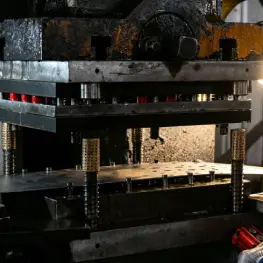
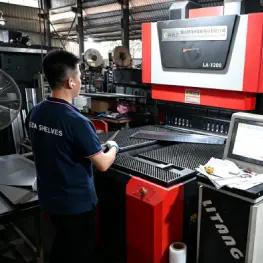
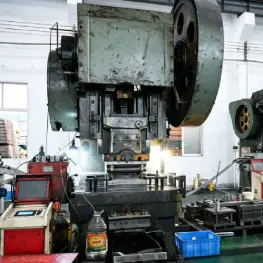
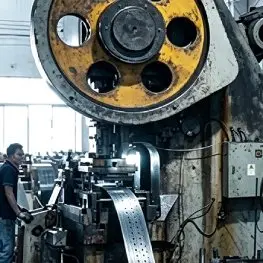
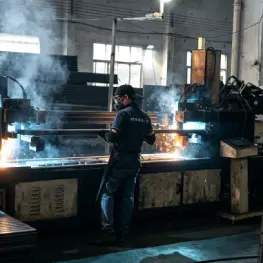
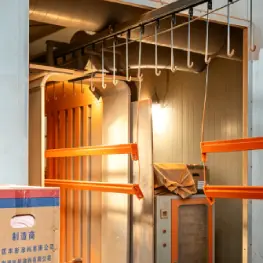
Substandard cold-roll forming results in residual internal stress, non-perpendicular punch profiles, and hazardous upright twist. At Guangzhou Heda Shelves Co., Ltd., every pallet rack bay passes through 10 automated quality control gates from prime coiled steel to finished container loading.
01
Raw Material Batching
02
Precision CNC Slitting
03
Continuous Punching
04
Multi-Pass Roll Forming
05
Omega Profiling
06
Edge Deburring & Polishing
07
Robotic CO2 Arc Welding
08
9-Stage Phosphating
09
Electrostatic Coating (80μm)
10
QA Load Test & Packing
Enterprise Credentials
Guangzhou Heda Shelves Co., Ltd.
Founded in 2001, Guangzhou Heda Shelves has grown into an international leader in structural storage systems. Headquartered in Guangzhou, our heavy-gauge production plants supply distributors, EPC warehouse contractors, and 3PL conglomerates across Africa, Southeast Asia, South America, and Europe.
By keeping coil slitting, cold roll-forming, robotic welding, pre-treatment phosphating, and powder curing under one roof, we eliminate intermediate supply chain margins. This ensures strict dimensional tolerances (±0.5mm profile camber) and guarantees raw material traceability backed by Mill Test Certificates (MTC).
30,000 Ton Monthly OutputContinuous roll-forming lines operate 24/7
Free 3D Layout & Static FEAAutoCAD, Revit & FEM calculations within 24h
Container Packing LogisticsKnock-down bundling maximizes 40HQ cube by 35%
Global On-Site InstallationSupervisor dispatch and video commissioning
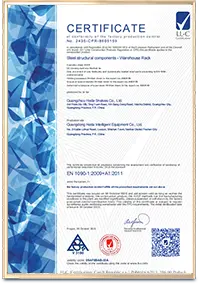
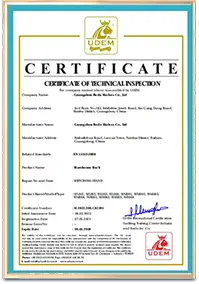
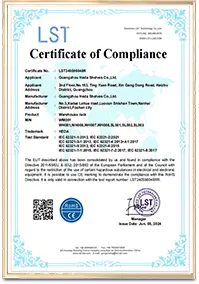
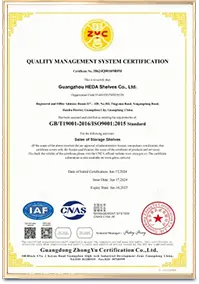
CE Certificate: 2435-CPR-8605159 | ISO 9001:2015: 18624Q00169R0M (Valid through 2027)
Market Intelligence (2025–2030)
Future Procurement Trends in Pallet Rack Bays
Industrial warehousing is shifting from static, manually loaded bays to intelligent, high-density, dynamic storage environments. Supply chain directors must evaluate the following four systemic market transitions to prevent premature infrastructure obsolescence.
1. Convergence with Autonomous Shuttle & AS/RS
Traditional selective bays are increasingly retrofitted with radio shuttles and automated guided vehicles (AGVs). Procurement specifications are now shifting toward ultra-tight tolerance upright channels capable of withstanding lateral shuttle track loads and continuous automated 24/7 cycling without fastener loosening.
2. Cold-Chain Thermal Integrity & Dual Coatings
Cold-storage real estate costs 3-4x more to operate than ambient warehouses. Pallet bays engineered for blast freezers (-35°C) require specialized micro-alloyed low-carbon steel (such as Q355D/E) that resists brittle ductile-to-cleavage fracture, combined with zinc-rich epoxy primers that prevent condensation corrosion under micro-climatic freeze-thaw cycles.
3. Decarbonized Steel & Circular Supply Chains
Global warehouse operators (particularly in the EU, Americas, and South Africa) now enforce carbon boundary audits. Sourcing pallet rack bays manufactured from Electric Arc Furnace (EAF) low-carbon recycled steel coils with verified Environmental Product Declarations (EPDs) will become a primary procurement prerequisite by 2027.
Engineering Knowledge Base
Frequently Asked Questions on Pallet Rack Bay Procurement
Technical and logistical insights compiled directly by our senior structural engineering team to de-risk your international capital expenditures.
What calculations determine the structural load capacity of an individual pallet rack bay?+
The load capacity of a pallet rack bay is governed by three interrelated factors: (1) Beam section modulus and span, which dictate the bending moment under uniform distributed load (UDL); (2) Upright column section and unbraced height, where the distance from the finished concrete floor to the first beam level establishes the effective slenderness ratio ($\lambda = K \cdot L / r$); and (3) Connector moment stiffness, which determines frame stability against progressive collapse. At Guangzhou Heda, load tables are modeled in ANSYS and physically validated in hydraulic compression test rigs to achieve a verified 1.65 to 1.8 structural safety factor compliant with EN 15512 and RMI specifications.
How does teardrop pitch compare to European 50mm/75mm metric pitch racking?+
Teardrop racking utilizes a standardized 2-inch (50.8mm) vertical hole punching pattern with slide-in tapered pins, making it the industry standard across the Americas for interchangeable boltless assembly. European metric racking predominantly employs 50mm or 75mm diamond or rectangular slot configurations that provide higher torsional lock resistance under heavy European pallet formats (EUR 1, EUR 2). We manufacture both configurations on automated CNC punch lines, allowing clients to either match legacy systems or select metric designs for greater high-bay density.
What warehouse slab specifications are required to anchor high-capacity pallet bays?+
Pallet rack bays impose heavy concentrated point loads onto warehouse floors. A standard 4-tier bay carrying 3,000 kg per beam level transfers up to 12,000 kg (117 kN) down each upright pair, producing significant punch shear stresses at the baseplate. Minimum concrete slab specifications require a compressive strength of at least 25 to 30 MPa (3,500–4,000 PSI), with a crack-free slab thickness of 150mm to 200mm. Each upright footplate must be anchored using M12x100mm or M16x120mm mechanical wedge anchors or chemical capsule bolts to withstand seismic base shear and forklift collision forces.
How do you protect exported pallet rack bays against maritime shipping corrosion?+
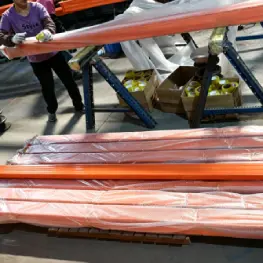
Ocean transit through tropical sea lanes exposes steel to aggressive salt spray and high relative humidity. Our export preservation protocol involves: (1) 9-step chemical pickling, degreasing, and zinc phosphating pretreatment; (2) Electrostatic thermoset polyester powder coating cured at 200°C to achieve an 80–120μm dry film thickness with zero pinholes; (3) Stacking components with desiccated polyethylene spacers; and (4) Wrapping steel upright bundles in heavy-gauge VCI (Vapor Corrosion Inhibitor) film inside containerized shipments, preventing white rust and oxidation during prolonged port customs holds.
Can selective pallet rack bays be modified into drive-in or shuttle bays at a later date?+
Yes, provided the original upright frame section was engineered to support the higher cumulative axial loads required by high-density operations. Because our upright profiles use standardized, continuous CNC punched patterns, standard selective frames can be retrofitted with cantilever support brackets, pallet rails, top tie beams, and back portal framing to transform standard bays into Drive-In, Push-Back, or Radio Shuttle systems without cutting or field-welding on site.
How do you optimize 40HQ container loading to lower landed shipping costs per pallet position?+
Freight charges can represent 15% to 28% of total delivered racking cost. To optimize container packing, our upright frames are shipped in knock-down (unbolted) form with nested column sections, while box beams are paired and bound with custom timber blocks. Using 3D computer packaging simulation, we pack up to 24–26 tons of steel into a single 40-foot High Cube (40HQ) container. This increases container volume utilization from 62% (common with pre-welded frames) to over 92%, substantially reducing the landed freight cost per pallet position.
Custom Engineering & Factory Direct Sourcing
Ready to Calculate Your Warehouse Pallet Rack Bay Layout?
Submit your architectural CAD drawing or building dimensions. Our engineering department will return a verified structural layout, 3D visualization, and detailed Bill of Materials (BOM) within 24 hours—completely free of charge.