Featured Industrial Pallet Racks & Storage Systems
Engineered for cold storage, e-commerce fulfilment, heavy metal fabrication, and distribution hubs requiring high-capacity structural safety and certified load tolerances.
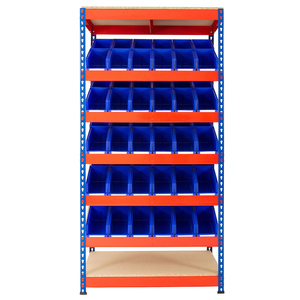
Boltless Medium Duty Metal Rivet Storage Multi Layer Shelf Rack
- Capacity: 150 - 300 kg/tier
- Tool-less boltless assembly
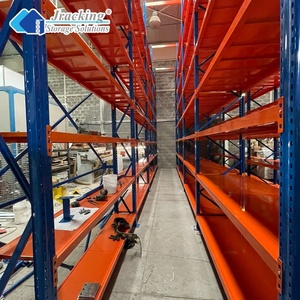
EURO Standard Heavy Duty Steel Pallet Racking for Distribution
- Load: 1,000 - 4,000 kg/level
- Q235B cold-rolled structural steel
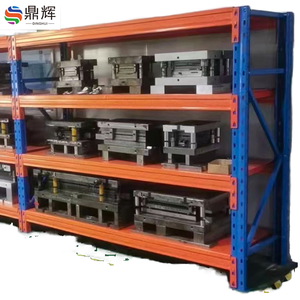
Selective Cold Rolled Steel Pallet Rack Upright Column Frame
- Pitch: 50mm / 75mm adjustable
- Omega profile roll-formed column
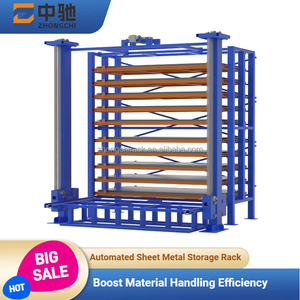
High Density 8-Layer Automated Rack System for Sheet Metal
- Sheet metal cartridge handling
- PLC integration & anti-corrosion
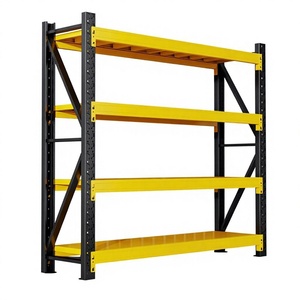
Adjustable Heavy Duty Load-Bearing 500kg/Layer Steel Racks
- Uniform Distributed Load: 500kg
- Epoxy powder coat finish
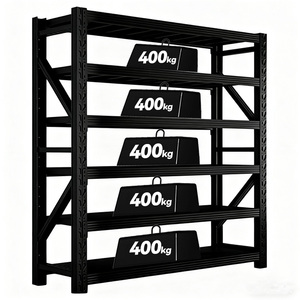
5/6 Layer Heavy Light Duty Steel Garage & Workshop Shelf
- Capacity: 400 kg per tier
- Adjustable shelf beam spacing
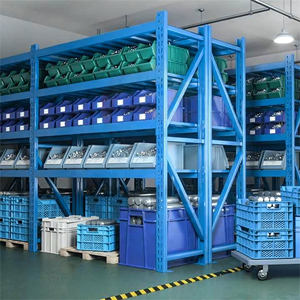
High Quality Durable Corrosion Protected Boltless Metal Shelving
- Acid pickling & phosphating
- Flexible layout reconfiguration
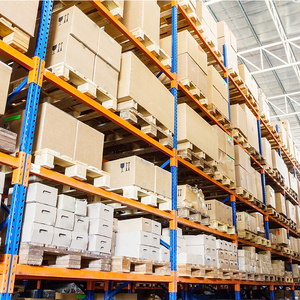
Heavy Duty Steel Fabric Roll Pallet Warehouse Racking System
- Cylindrical cradle attachment
- Textile and coiled roll support
Future Strategic Trends in Global Pallet Rack Procurement
Modern distribution logistics has shifted from simple volumetric static storage to dynamic, high-density, automated intralogistics ecosystems. Enterprise procurement managers face real-world challenges: rising land costs, labor shortages, seismic performance mandates, and energy sustainability requirements.
AS/RS Integration & Shuttle Automation
Traditional manual forklifts are increasingly superseded by Radio Shuttle carriers and Automated Storage and Retrieval Systems (AS/RS). Factory designs must now engineer tighter deflection tolerances (1/500 to 1/1000) for vertical columns, sub-millimeter beam punching accuracy, and specialized guide rails capable of continuous multi-shift automated throughput without physical warping.
Structural Steel Grade Integrity & Testing
Global procurement teams prioritize strict compliance with certified standards including FEM 10.2.02, EN 15512, and RMI ANSI MH16.1. Sourcing factories must guarantee high-tensile hot and cold-rolled coils (e.g., Q235B, Q355B), backed by factory batch metallurgical testing, ultrasonic weld inspection, and dynamic load-bearing deflection stress analysis before shipping.
Corrosion Engineering in Hostile Climates
Cold chain logistics (-30°C freezer facilities) and coastal hubs demand superior metal preservation. Industry leaders avoid cheap air-dried primer paints, mandating multi-stage chemical immersion (pickling, degreasing, phosphating) followed by automated electrostatic epoxy powder coating or continuous hot-dip galvanizing exceeding 65–85 μm thickness.
Engineering Principles: Evaluating Factory Structural Integrity
Selecting an industrial pallet rack manufacturing partner requires technical verification of structural roll-forming, continuous weld penetration, seismic bracing mechanics, and finite element modeling (FEM).
Cold Roll-Forming Multi-Bend Profiles
Premium upright columns utilize automated multi-station cold roll-forming machines with up to 24 consecutive roller passes. This creates multi-ribbed omega profiles that dramatically elevate structural rigidity and torsional resistance without adding excessive dead weight, maximizing dynamic load ratios per kilogram of steel.
Automated Robotic Laser Welding
The beam-to-connector joint is the most critical failure point in high-density pallet racking. Certified factories deploy multi-axis robotic welding cells using continuous CO2 gas-shielded processes. This eliminates human welding inconsistency, ensuring zero weld spatter, complete root penetration, and cyclic fatigue resilience.
Containerization & Export Engineering
Overseas shipping demands high packaging efficiency. Structural beams and uprights are manufactured with modular boltless connections, allowing tight bundle nesting for 20GP and 40HQ high-cube ocean containers. This reduces landed sea freight costs by up to 35% per pallet location shipped.
Enterprise Strength: Guangzhou Heda Shelves Co., Ltd.
With over 25 years of continuous manufacturing experience since 2001, HEDA Shelves operates a modern 30,000 m² production base delivering end-to-end industrial storage solutions.
Established in 2001
Quarter-century track record engineering heavy selective racks, drive-in systems, cantilever shelves, and multi-tier mezzanines.
30,000 Tons Monthly Output
Robust raw coil supply lines and automated production lines ensure rapid lead times even for massive 10,000+ pallet bay tenders.
CE & ISO 9001:2015 Certified
Verified international credentials (CE No. 2435-CPR-8605159, ISO 9001:2015 No. 18624Q00169R0M) with rigorous stage-gate QC.
Complimentary 3D & CAD Engineering
Full warehouse layout planning, structural static calculations, and 3D realistic rendering provided within 24 hours.
Pallet Rack Procurement & Engineering FAQ
Critical technical considerations for warehouse managers, supply chain consultants, and EPC contractors.
We primarily use certified Q235B and Q355B (equivalent to European S235JR and S355JR / ASTM A36) cold-rolled structural steel. Every production lot includes full mill test certificates (MTC) verifying yield strength, tensile limits, and elongation performance under dynamic loading conditions.
In accordance with international FEM 10.2.02 and RMI standards, allowable beam deflection is calculated as L/200 (length of beam divided by 200) under full design working load. For automated systems like AS/RS and Radio Shuttle, our engineering team tightens this limit to L/500 or L/1000 to prevent automated handling errors.
All carbon steel parts undergo multi-stage chemical pretreatment: acid pickling to eliminate scale, degreasing, clean-water rinse, and surface phosphating. Components receive an electrostatic epoxy-polyester powder coat baked at 180°C–200°C. For deep freeze environments (-30°C) or outdoor yards, hot-dip galvanizing is provided.
We require: clear warehouse height and floor plan (including column grid and fire doors), pallet dimensions (width, depth, overall height including cargo), maximum loaded pallet weight, forklift model and turning radius (AST), and desired throughput rate. We return a full 2D CAD layout and 3D rendering within 24 hours.
Yes. Using FEM 10.2.08 and local building code criteria, we engineer customized seismic base plates, heavy-duty floor expansion anchors, and supplemental vertical/horizontal cross-bracing designed to dissipate seismic energy safely during earth tremors.
All racking components feature modular boltless or knockdown structures. Uprights and beams are systematically bundled and nested to maximize the cubic space of 40-foot High Cube (40HQ) ocean containers. This prevents empty volume and lowers shipping costs per pallet position.
Transform Your Warehouse Logistics Efficiency Today
Speak directly with our senior application engineers. Receive a complete, customized 2D/3D CAD warehouse layout design, finite-element structural analysis, and factory-direct volume pricing within 24 hours.