Manufacturing Pedigree Since
Automated Factory Footprint
Monthly Fabrication Capacity
Global Warehouses Engineered
Heavy-Duty Engineered Pallet Storage Systems
Precision-manufactured utilizing premium cold-rolled Q235B structural steel, continuous CNC automated roll-forming, and high-adhesion electrostatic powder coating for harsh global operational environments.
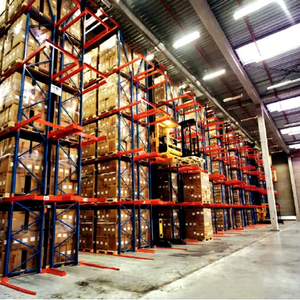
Drive in Pallet Rack Industrial Warehouse Storage Steel Racking OEM/ODM
- Storage Density: Up to 80% Cube Utilization
- Access Principle: LIFO / FIFO Configurations
- Capacity: 1,000 – 1,800 kg / pallet level
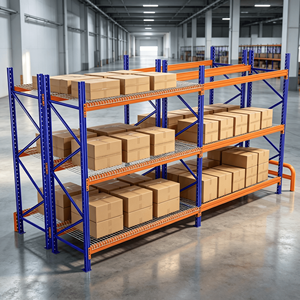
Custom Heavy Duty Industrial Steel Pallet Racking Adjustable Beam System
- Upright Profile: 80×60 to 120×95 mm Omega
- Pitch Increment: 50 mm / 75 mm Adjustable
- Finish: 60-90 μm Electrostatic Coating
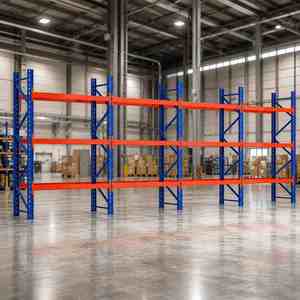
Steel Pallet Racking System Warehouse Heavy-Duty Tiered Storage Shelves
- Beam Profiles: Double C-welded Interlock Box
- Load Range: 1,000 – 4,500 kg per beam tier
- Safety Locks: Zinc-plated M8 Spring Locking Pins
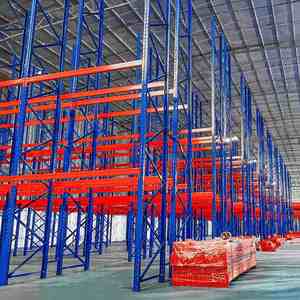
OEM ODM Industrial Steel Warehouse Storage Rack High Load Capacity
- Steel Standard: Certified Q235B / Q355B Hot-Coil
- Structural Engineering: Finite Element (FEM) Checked
- Corrosion Pretreatment: 10-Stage Phosphating
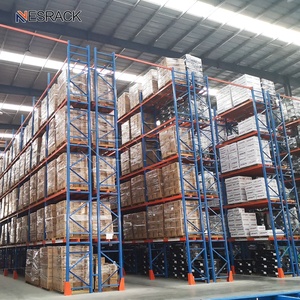
Heavy Duty Selective Pallet Racking System for Refrigerated Cold Storage
- Thermal Rating: Stable Down to -30°C Freezing
- Finish Option: Hot-Dip Galvanized / Epoxied
- Access: 100% Direct Selective Accessibility
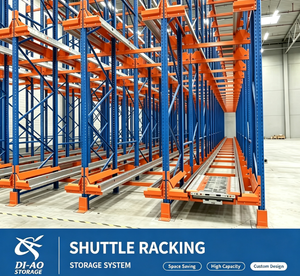
Automatic Radio Shuttle Pallet Racking System Corrosion-Resistant Q235 Steel
- Vehicle Travel Speed: Up to 1.1 m/s (loaded)
- Power Unit: LiFePO4 Quick-Charge Battery
- Lane Depth: Up to 40+ Pallet Positions deep
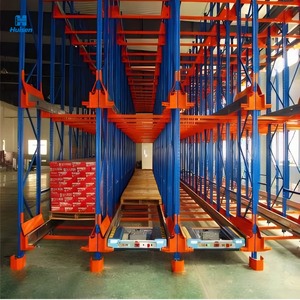
High Density Shuttle Storage System Radio Automated Warehouse Racking ASRS
- Control System: Handheld RF Remote / WMS Link
- Pallet Compatibility: Euro, GMA, ISO 1200×1000
- Floor Space Reduction: 50% vs Conventional
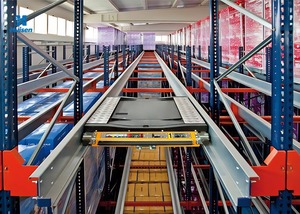
Automated Pallet Shuttle Storage System High Density Radio ASRS Custom
- Pallet Loading Limit: 2,000 kg Payload
- Safety Sensors: Anti-Collision LiDAR + End Stops
- Structure Integration: Vertical Lifts & Conveyors
Direct-From-Factory Manufacturing Excellence & Engineering Controls
Operating a modernized 30,000 m² production base in Guangzhou, HEDA Shelves integrates continuous cold roll-forming, robotic precision welding, and environmentally enclosed finishing to guarantee strict architectural load integrity.
Certified Metallurgy
Fabricated strictly with premier prime certified Q235B and Q355B hot-rolled strip steel from tier-one mills, delivering proven yield strengths exceeding 235–355 MPa without brittle micro-fractures under cyclic stress.
30,000 Tons Monthly Output
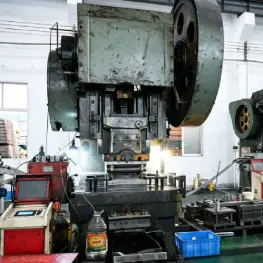
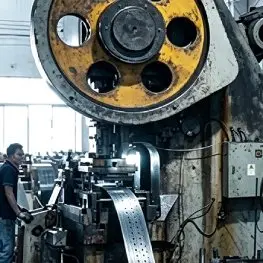
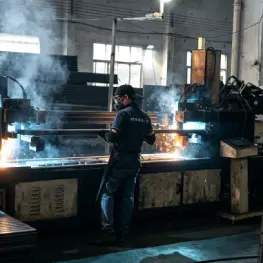
Equipped with 18 automated cold roll-forming lines, computerized continuous high-speed punch stamping, and automated Panasonic robotic welding stations ensuring high capacity and dependable delivery.
Dual CE & ISO Certification
Compliant with international safety specifications including CE (Certificate No. 2435-CPR-8605159) and ISO 9001:2015 Quality Management standards (Cert No. 18624Q00169R0M) verified by independent third-party testing.
Complimentary 3D & CAD Layouts
Our senior structural logistics engineers utilize dynamic finite element structural analysis (FEA) to provide free turnkey 2D architectural schematics, 3D renderings, and precise load calculation certifications within 24 hours.
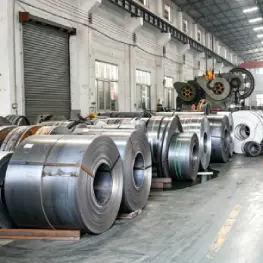
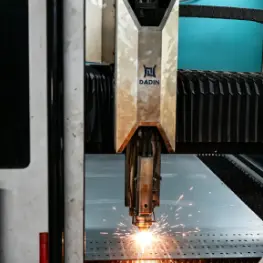
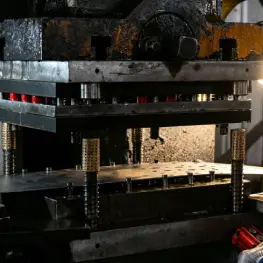
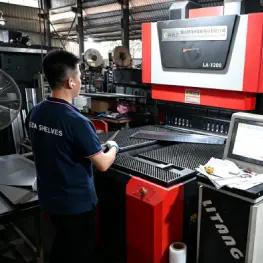
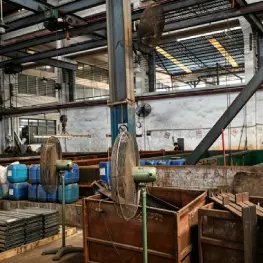
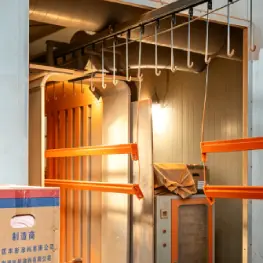
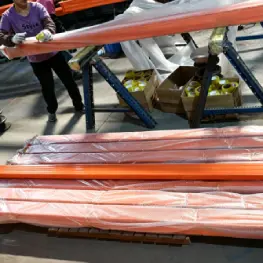
Inside Our 10-Stage Precision Fabrication Workflow
From primary slitting coils to multi-stage pickling, phosphating, electrostatic powder spray, and shipping container bundling.
Future Procurement Trends in Industrial Storage Racking (2025–2030)
Global warehouse real-estate lease surges, land scarcity, and regional distribution volatility have altered how enterprise supply chain directors procure industrial storage assets. Below are the key engineering and sourcing trends shaping B2B procurement over the next five years.
High-Yield Micro-Alloyed Steels & Gauge Optimization
Escalating raw steel index volatility has accelerated the migration from standard thick-wall hot-rolled sections toward high-strength, micro-alloyed cold-formed structural steels such as Q355B and ASTM A1011 Grade 50. By re-engineering column omega geometry with continuous stiffening ribs, manufacturers achieve up to a 14% reduction in deadweight steel tonnage while boosting overall frame buckling load limits.
Vertical Density Optimization Over Floor Expansion
With prime industrial land lease rates escalating globally across trade hubs in Africa, the Middle East, Southeast Asia, and the Americas, building outwards is no longer financially viable. Warehousing operators are utilizing vertical clearances exceeding 12 to 16 meters via Very Narrow Aisle (VNA) and automated shuttle configurations, converting dead overhead volume into productive pallet positions.
Freight-Optimized Nested Packaging Architecture
International ocean logistics rates necessitate strict packaging engineering. Forward-thinking exporters are standardizing on knock-down, fully bolted frame configurations where upright columns, diagonal braces, and horizontal struts nest cleanly within standard 40HQ maritime containers, maximizing payload up to 26–28 metric tons while virtually eliminating container void ratios.
Industrial Warehouse Pallet Racking Comparative Engineering Matrix
Review critical architectural variables across high-density storage configurations to align CAPEX investment with your facility SKU rotation profile.
| Racking Topology | Storage Density | Selectivity | Floor Utilization | Throughput Speed | Relative CAPEX | Primary Application |
|---|---|---|---|---|---|---|
| Selective Pallet Racking | Standard (40-50%) | 100% Direct Access | 40% Space | High / Rapid | Low (Benchmark 1.0x) | FMCG, High-SKU Distribution, 3PL Hubs |
| Double-Deep Pallet Rack | Medium (60-65%) | 50% Direct Access | 55% Space | Moderate | Low-Mid (1.2x) | Homogeneous Batches, Dry Goods |
| Drive-In / Drive-Thru | High (70-80%) | Low (LIFO / FIFO) | 75% Space | Low-Moderate | Moderate (1.4x) | Cold Rooms, Beverage, Seasonal Bulk |
| Push-Back (Cart / Roller) | High (70-75%) | Medium (LIFO by Lane) | 70% Space | Moderate-High | Mid-High (2.2x) | Stage Buffers, High Turnover Pallets |
| Radio Pallet Shuttle | Maximum (80-88%) | Channel-Level (FIFO/LIFO) | 85% Space | Very High | Advanced (2.8x - 3.5x) | Cold Chain Logistics, Food Processing, High Volume |
| Automated ASRS Crane | Ultra-High (85-92%) | 100% Automated Access | 90% Space | Maximum (24/7) | High Investment (6.0x+) | Smart Manufacturing, Mega Logistics Hubs |
Technological Frontiers in Pallet Storage Engineering
Modern warehouse logistics requires pallet racking systems to act as an integrated structural and computational node rather than simple static steel shelving.
Semi-Automated Shuttle Fleet Integration
Modern pallet storage replaces forklift travel down long bays with battery-powered radio shuttle rovers traversing internal high-tensile guide rails. By keeping heavy materials-handling equipment in access staging aisles, forklift collision impact damage to upright frames is reduced by upwards of 92%, substantially extending capital infrastructure longevity and worker safety.
Cold-Chain Metallurgical Resilience
Refrigerated and blast-freezing facilities operating between -20°C and -35°C face severe structural steel embrittlement risks. Advanced manufacturing utilizes low-temperature impact-tested steels combined with specialized structural weld wires and multi-stage thermosetting epoxy powder coatings to prevent micro-fissuring, stress corrosion cracking, and delamination in humid coastal cold rooms.
Structural Health Monitoring & IoT Digital Twins
High-bay seismic installations in modern supply hubs are increasingly retrofitted with embedded strain gauges, accelerometers, and acoustic emission sensors. These devices transmit real-time deflection alerts, live deflection ratios (verifying compliance with L/200 limits), and eccentric load warnings to facility managers before structural failure thresholds occur.
Frequently Asked Questions: Global Industrial Pallet Racking Sourcing
Detailed technical, engineering, and logistics guidance prepared by our senior project engineering and quality assurance team.
What engineering standards govern international pallet racking manufacturing and structural testing?
International pallet racking fabrication is governed by rigorous regional structural building codes and trade associations. In Europe and the Commonwealth, systems comply with EN 15512:2020 (Steel static storage systems – Adjustable pallet racking systems – Principles for structural design) and FEM 10.2.02 / FEM 10.2.08 codes. In the United States and the Americas, production adheres to RMI (Rack Manufacturers Institute) MH16.1 specifications and ANSI MH16.3 for cantilever and movable racks. At Guangzhou Heda Shelves, our structural systems hold full CE Factory Production Control certification (CE No. 2435-CPR-8605159) alongside ISO 9001:2015 quality management benchmarks, ensuring full global regulatory compliance.
How do buyers verify that Chinese racking manufacturers use genuine structural Q235B steel instead of recycled scrap steel?
Verifying raw material integrity requires strict documentation and third-party laboratory verification. Professional exporters provide verified Mill Test Certificates (MTC) under EN 10204 Type 3.1 for every incoming coil batch, displaying chemical composition (Carbon ≤0.22%, Silicon ≤0.35%, Manganese ≤1.4%, Phosphorus ≤0.045%, Sulfur ≤0.045%) and mechanical tensile/yield properties. Furthermore, reputable manufacturers conduct standardized in-house tensile bench testing and invite third-party inspection firms (such as SGS, Bureau Veritas, or TÜV Rheinland) to extract physical steel coupons from the production line for spectrometer metallurgical analysis and Charpy V-notch impact tests.
What warehouse floor slab criteria are necessary before installing heavy-duty pallet racking?
Industrial pallet racks transmit intense point-concentrated loads through their baseplates into the underlying concrete floor. Warehouse slabs must generally possess a minimum compressive strength of 25 to 30 MPa (approx. 3,500 – 4,500 PSI), with a reinforced slab thickness of at least 150 mm to 200 mm depending on rack height and tier loads. Furthermore, slab flatness must be surveyed; high-reach selective racks and VNA layouts demand floor flatness tolerances adhering to DIN 18202 Table 3 Group 4 or Concrete Society TR34 (Class DM2 or FM2) to prevent forklift mast lean and beam collision risks.
How are pallet racking components protected against high humidity and coastal corrosion during ocean shipping?
During maritime ocean transit through tropical waters, cargo can encounter humidity levels exceeding 95% and thermal cycling inside containers ("container rain"). HEDA Shelves addresses this through a rigorous 10-stage chemical surface pretreatment process: acid degreasing, pickling, water rinsing, neutralization, zirconium or zinc phosphating, and deionized rinsing. Next, architectural-grade electrostatic polyester powder (60–90 μm) is applied and baked at 180°C–200°C, passing 500+ hours of continuous salt-spray testing (ASTM B117). For maritime port warehouses or outdoor yards, hot-dip galvanizing to ISO 1461 (≥65 μm zinc thickness) is specified to offer lifelong protection.
What is the difference between welded upright frames and knock-down (bolted) upright frames for export?
Welded upright frames feature columns and bracing permanently fused at the factory. While structurally rigid, they contain enormous internal air voids that make container packing highly inefficient—a 40HQ container can often only hold 12–15 tons of welded frames. In contrast, Knock-Down (KD) bolted upright frames ship with columns, horizontal struts, diagonal braces, and baseplates nested flat. This enables maximum utilization of container weight allowances (up to 26–28 tons in a 40HQ), reducing ocean shipping costs per pallet position by 30% to 50% while allowing individual damaged components to be replaced without replacing an entire frame.
What specific warehouse operational data is required to generate an accurate architectural racking quote?
To produce an engineered CAD drawing, structural calculation, and accurate quotation, our engineering team requires:
1. Architectural floor plan: Building length, width, clear ceiling height under beams/sprinklers, column locations, dock door positions, and floor slab specifications.
2. Pallet & Unit Load Profile: Pallet dimension (L×W×H including cargo overhang), maximum gross pallet weight, and pallet construction type (Euro, GMA, skid, drum).
3. Handling Equipment Specifications: Forklift make, model, minimum turning radius, maximum mast collapsed height, and maximum fork lift reach.
4. SKU Dynamics: Total SKU count, inventory turnover velocity, and preferred picking method (FIFO or LIFO).
How do radio shuttle systems handle power outages or emergency equipment disruptions?
Radio shuttle systems are engineered with high-capacity rechargeable Lithium Iron Phosphate (LiFePO4) battery packs operating continuously for 8 to 10 hours on a single charge. Turnkey systems ship with spare quick-swap battery modules and industrial multi-bay charging docks, ensuring uninterrupted rotation across multi-shift facilities. In the rare event of a mechanical or optical sensor error deep within a channel, a secondary rescue shuttle or dedicated forklift retrieval tether mechanism is deployed to retrieve the shuttle safely without requiring manual operator entry into the racking bays.
What customs HS classification code applies to imported warehouse pallet racking systems?
Industrial pallet racking, mezzanine platforms, and steel shelving are globally classified under Harmonized System (HS) Code 7308.90 ("Structures and parts of structures of iron or steel; plates, rods, angles, shapes, sections, tubes and the like, prepared for use in structures"). For automated shuttle vehicles, autonomous rovers are classified separately under HS Code 8428.90 or 8479.89 depending on specific automated vehicle handling functions. Full commercial invoices, packing lists with heat numbers, and Certificates of Origin (Form E, Form A, or RCEP) are provided to ensure seamless customs clearance at destination ports.
Request a Custom Engineering Layout & Landed Project Estimate
Collaborate directly with our certified warehouse logistics engineers. We provide comprehensive architectural CAD floor designs, dynamic 3D structural visualizers, and precise load rating certifications tailored to your building parameters.
- 24-Hour Turnaround on Custom CAD Layouts
- Structural Load Deflection Certifications
- FOB / CFR / CIF International Shipping Support
- Container Volumetric Loading Optimization
Connect With An Engineer
Direct technical communication with experienced project specialists—no middle agents.
Inquire Now