Engineered Racking Systems for High-Performance US Facilities
Industrial structural steel storage solutions engineered specifically to US teardrop and custom high-bay specifications, balancing load capacities with regional seismic building codes.
Strategic Alignment with North American Warehousing Engineering Norms
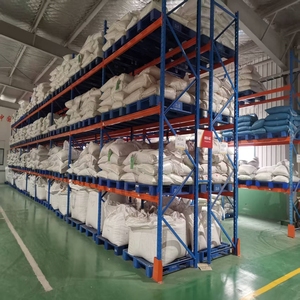
As logistics operations expand throughout major US industrial corridors—from the Inland Empire in Southern California to the Lehigh Valley in Pennsylvania—material handling infrastructure faces rigorous regulatory scrutiny. Industrial storage rack systems imported into the US market require an engineering-first strategy. Compliance with ANSI MH16.1 (Specification for the Design, Testing and Utilization of Industrial Steel Storage Racks) is non-negotiable for project permitting under municipal building authorities (AHJs).
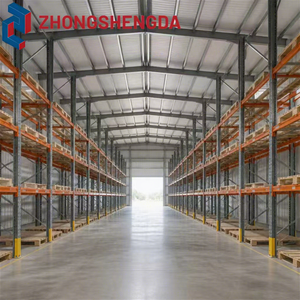
Our direct manufacturing process addresses these structural demands through automated cold roll-forming lines, state-of-the-art robotic continuous seam welding, and certified Q235B/Q355B structural steel coils (traceable to mill certifications equivalent to ASTM A1011 and ASTM A572 Grade 50). We guarantee calculated section properties, post-punch capacity retentions, and specific steel deflection ratios under 1/180th of clear span limits. Whether specifying selective teardrop profiles, heavy deep-lane drive-in configurations, or AGV interface mezzanines, components are engineered to fulfill the seismic demands of IBC (International Building Code) Risk Category Classifications.
Localized US Industrial Deployment Scenarios
Engineered storage architectures tailored to the practical operating metrics of contemporary American supply networks.
High-Throughput E-Commerce 3PL Fulfillment
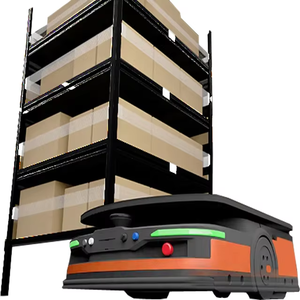
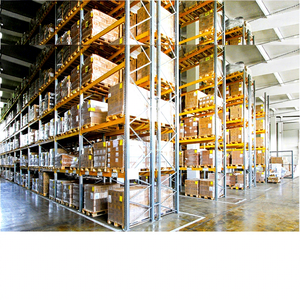
Omnichannel distribution networks demand dense multi-tier catwalk mezzanines and AMR-compatible floor-level picking slots. Combining selective teardrop pallet storage overhead with wire-guided narrow aisle configurations below ensures continuous velocity for quick-turn inventory cycles.
Regulated Cold Storage & Food Distribution
Cold chain facilities operating between -20°F and 34°F in major transport nexuses like Chicago and Dallas utilize our high-density drive-in and dynamic pallet flow systems. Our durable powder coat systems resist thermal shock, peeling, and the micro-fracturing typical of sub-zero logistics operations.
Automotive, Aerospace & Heavy Fabrication
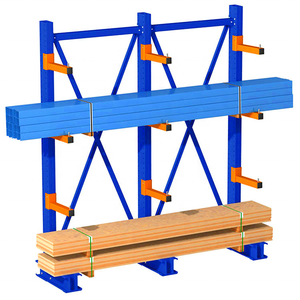
Heavy machinery maintenance complexes require custom structural cantilever racking and reinforced roll-formed bays. These configurations support uneven steel plates, extrusions, engine blocks, and tooling dies, fitted with load bars, column protectors, and structural bull-nose deflectors.
Macro Trends Shaping US Warehouse Storage (2026–2030)
Emerging mechanical, regulatory, and automation transformations defining industrial site procurement.
Seismic Engineering Precision (IBC & RMI)
Due to stringent revisions in regional building codes across the West Coast and New Madrid Seismic Zones, standard off-the-shelf racking is being superseded by custom engineered baseplates, thicker gauge column uprights, and heavy welded back-to-back ties designed specifically to seismic site coefficient data.
Automation & AGV-Centric Infrastructures
The acceleration of labor-neutral facilities requires rack upright tolerances measured in millimeters rather than fractions of an inch. Autonomous mobile robots (AMRs) and automatic storage and retrieval cranes (ASRS) demand ultra-flat profile roll forming to maintain sensor calibration and rapid docking routines.
Container Utilization & Landed-Cost Economics
With high intermodal transport costs across ocean freight channels, tier-one US suppliers demand factory-level engineering that maximizes internal 40ft High Cube container footprints. Knock-down modular components reduce dead shipping space, lowering the freight cost per individual pallet position.
Frequently Asked Questions: Sourcing Storage Racks from China to the US
Direct answers concerning compliance, engineering calculations, logistics handling, and on-site assembly.