High-Performance Pallet Racks & Industrial Storage Solutions
Manufactured using certified high-yield cold-rolled steel (Q235B & Q355B) compliance-tested under EN 15512, RMI MH16.1, and AS 4084 international racking standards.
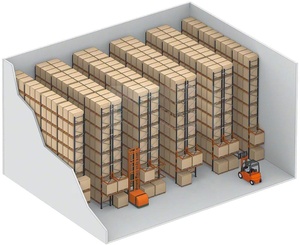
URGO Very Narrow Aisle Pallet Rack / VNA Racking System
- Maximized vertical cube utilization up to 15m
- Guide-rail / wire-guided turret truck routing
- 100% direct pallet accessibility (FIFO)
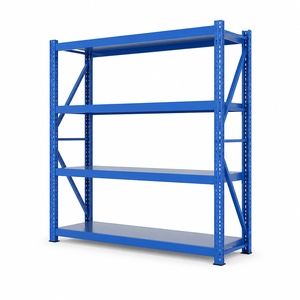
Superior Quality 4-Layer Steel Adjustable Boltless Rack Shelf
- Heavy-duty interlocking rivet connector design
- 10-stage electro-powder coating protection
- Tool-free 50mm pitch beam height tuning
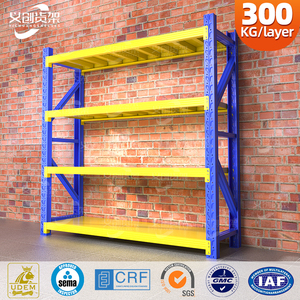
Steel Heavy Duty Load-Bearing 500kg/Layer Shelving Racking
- Continuous roll-formed box/step beam sections
- Tested under dynamic safety factor ≥ 1.5
- Ideal for manual picking & carton replenishment
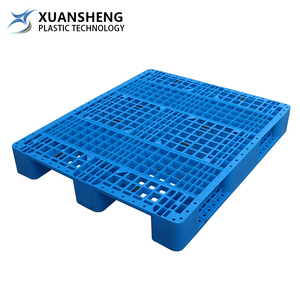
NEXARA High Load Capacity Euro Pallets ASRS System
- Full integration with WMS/WCS microservices
- Engineered deflection limit strict to L/300
- High-speed stacker crane & 4-way entry guide
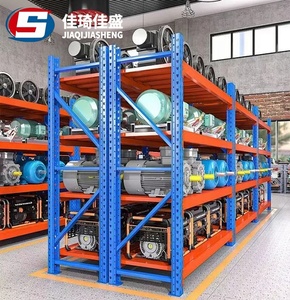
Multi-Level Long Span Boltless Steel Shelving Racking
- Structural steel decking or drop-in wire mesh
- Seamless modular extension with starter/add-on bays
- High torsional stiffness Omega-profile uprights
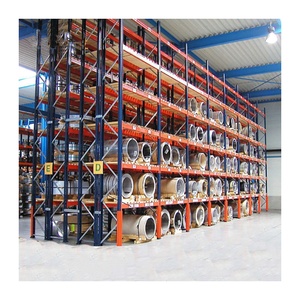
Heavy Duty Warehouse Storage Pallet Racking System
- Payload rating up to 4,500 kg per beam level
- Safety clip automatic spring lock mechanisms
- Certified for ISO 12494 heavy dynamic loading
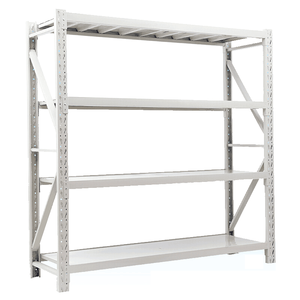
4-Shelf Boltless Rivet Metal Storage Rack HJQ-105
- Compact knocked-down flat-pack export packaging
- Commercial retail, e-commerce, and backroom storage
- MDF board or anti-slip zinc steel shelves
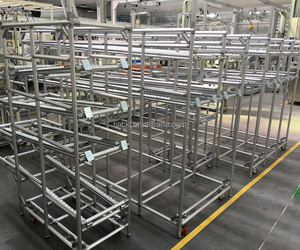
AOCHEN Industrial Stackable Storage Racking System
- Reinforced baseplates for high-seismic zone stability
- Anti-corrosion marine environment durability
- Configurable for chemical, heavy equipment, and bulk
Future Global Procurement Trends in Industrial Pallet Racking (2025–2030)
Global logistics executives and supply chain directors are shifting from pure procurement price metrics to life-cycle resilience, ESG metallurgy, and spatial adaptability.
Procuring heavy-duty warehouse racking from Chinese tier-one manufacturers has transitioned from an exercise in spot-rate price discovery into a multi-tiered engineering partnership. As intralogistics ecosystems become capital-intensive, the selection of pallet racking systems directly determines return on invested capital (ROIC) across fulfillment facilities. Below are three definitive procurement megatrends transforming commercial contracts:
1. Total Cost of Ownership (TCO) vs. Landed Metric
Global procurement teams now evaluate Total Cost of Ownership rather than simple FOB mill costs. Racking profiles that feature pre-galvanized or double-pass powder-coated surfaces mitigate operational downtime, eliminate rust-induced structural failures in high-humidity littoral environments, and cut maintenance costs by over 38% across a 15-year facility design life.
2. Decarbonized Metallurgy & Circular Certification
With stringent European CBAM (Carbon Border Adjustment Mechanism) implementation and worldwide ESG compliance, enterprise buyers are mandating recycled-scrap steel ratios (EAF route) and audited Scope 1, 2, and 3 emission profiles. Top Chinese exporters are adopting certified low-carbon coil sourcing and non-toxic, TGIC-free polyester powder formulations.
3. Container-Optimized Modular Packing Architecture
Ocean freight fluctuations require smart spatial packaging algorithms. Forward-thinking manufacturers employ parametric nesting of Omega upright columns and step beams inside 40-foot High Cube (40HQ) maritime containers. This increases volumetric fill efficiency from 68% to over 92%, directly reducing freight costs per pallet location by roughly $4.50 to $7.20.
Structural Innovation & Technological Evolution in Heavy Storage
How cutting-edge Chinese manufacturing leverages finite element analysis (FEA), automated robotic roll-forming, and seismic damping engineering.
Modern pallet rack installations are no longer static, low-tech steel frameworks; they operate as precision structural load-bearing skeletons engineered to interface with Autonomous Mobile Robots (AMRs), high-speed automated cranes, and dynamic seismic environments. Chinese production infrastructure has evolved dramatically, employing high-yield steel coils such as Q355B (equivalent to S355JR under EN 10025) to provide elevated tensile yield boundaries while reducing overall structural weight.
| System Architecture | Space Utilization | Selectivity Profile | Structural Load Rating (Max) | Ideal Industry Applications |
|---|---|---|---|---|
| Selective Pallet Racking | 40% – 50% | 100% Direct (Immediate FIFO) | Up to 4,500 kg per beam tier | FMCG, 3PL Warehousing, Retail Distribution |
| Very Narrow Aisle (VNA) | 65% – 75% | 100% Direct Access | Up to 4,000 kg per level | High-Density Pharmaceutical, E-Commerce Hubs |
| Drive-In / Drive-Through | 70% – 85% | LIFO / FIFO by Batch | Up to 1,500 kg per pallet position | Cold Storage, Beverage & Bulk Seasonal Goods |
| Radio Shuttle Automation | 80% – 90% | High Density Semi-Automated | Up to 2,000 kg per pallet position | Food Production, Deep-Freeze Logistics (-30°C) |
| Rack-Supported Mezzanines | 150% – 200% (Cube Gain) | Hybrid Pallet + Pick Bin | 300 – 1,000 kg/m² floor loading | Automotive Spare Parts, Hardware, Apparel Fulfillment |
Seismic Resilience Engineering
Finite Element Analysis (FEA) models dynamic responses under real-world seismic drift. Upright baseplate anchoring uses chemical capsule anchors and heavy ductile bracing, satisfying FEM 10.2.02 and ASCE 7 design requirements.
Automated Cold-Roll Forming Lines
Advanced Chinese manufacturing facilities utilize continuous CNC multi-station profiling roll-forming machinery. Hole pitch precision on columns is held within ±0.1mm, ensuring flawless interlocking beam safety lock engagement.
10-Stage Anti-Corrosion Treatment
Prior to coating, steel components undergo hot degreasing, dual acid pickling, rust conversion, and zinc phosphating. This establishes an iron-phosphate molecular conversion layer yielding 500+ hours salt spray test resistance (ASTM B117).
IoT Strain-Gauge Monitoring Readiness
Heavy upright columns can be pre-configured with structural health monitoring (SHM) brackets. Smart strain-gauge sensors detect deflection excursions, fork-truck impact shocks, and asymmetrical pallet overloading in real time.
10-Stage Precision Manufacturing Flow at HEDA Shelves
From prime hot-rolled carbon steel coils to final container loading, each step is monitored under strict ISO 9001:2015 quality control protocols.
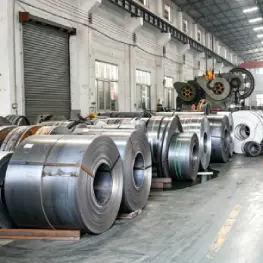
Raw Material Verification
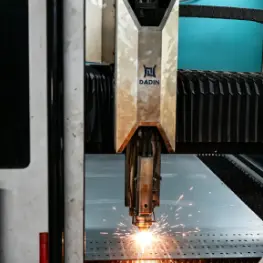
High-Speed Precision Slitting
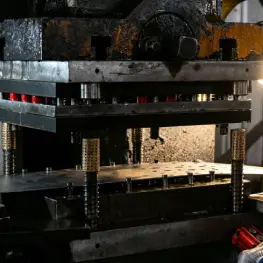
Automated Column Punching
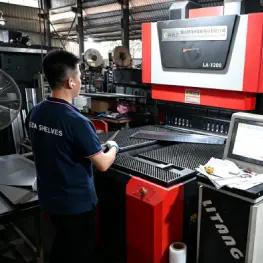
Continuous Cold Roll Forming
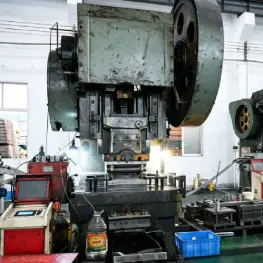
Connector Profile Stamping
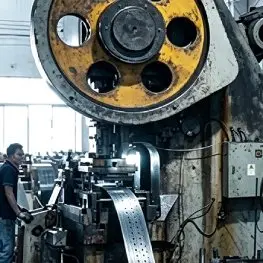
Automated Mechanical Polishing
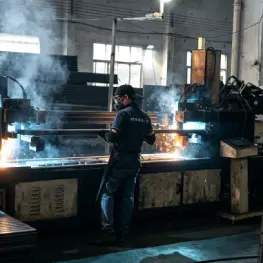
Robotic Structural Shield Welding
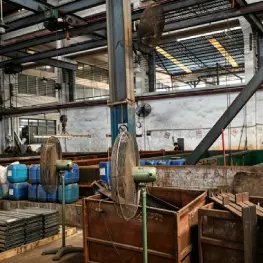
Pickling & Zinc Phosphating
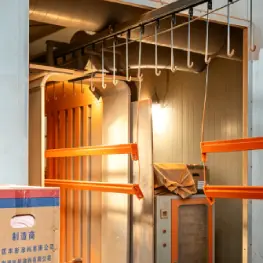
Electrostatic Powder Coating
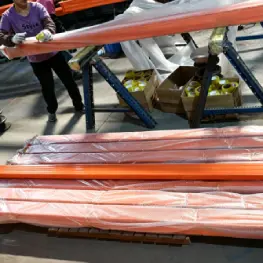
Dimensional QC & Bundling
Why Tier-1 Importers Partner With Guangzhou HEDA Shelves
Combining 25+ years of dedicated structural storage manufacturing with verified technical credentials and direct export logistics optimization.
25 Years Manufacturing Mastery
Founded in 2001, HEDA Shelves operates a modern 30,000 square meter dedicated factory in Guangzhou. Our quarter-century focus on structural engineering has yielded more than 10,000 completed warehouse projects globally.
30,000 Tons Monthly Scale
High-volume continuous roll-forming lines guarantee consistent output and immediate coil buying power at mill-direct pricing. Large-scale distribution centers can achieve rapid lead times without batch-to-batch variation.
Free Engineering CAD & 3D Design
Our in-house team of structural engineers delivers full CAD layout schematics, 3D spatial renderings, beam deflection calculations, and forklift turning radius simulations within 24 business hours at zero cost.
Internationally Certified Quality
Fully certified under CE Certification (No. 2435-CPR-8605159) and ISO 9001:2015 Quality Management Standards (Certificate No. 18624Q00169R0M). Every order ships with third-party verified material mill test certificates (MTC).
Frequently Asked Questions on Heavy-Duty Pallet Racking Sourcing
Engineering and commercial guidance compiled by senior structural project managers for overseas procurement officers.