Precision Structural & Heavy-Duty Warehouse Storage Systems
Direct factory-engineered structural channel, longspan, cold chain, and automated retrieval configurations manufactured to international seismic, wind load, and material deflection criteria.
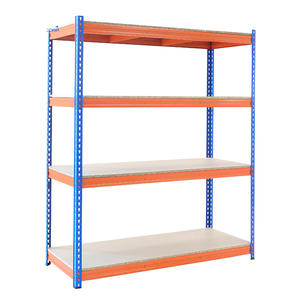
- Rated Capacity:150 kg / Layer
- Connection:Boltless Snap-In
- Coating:Pre-Galvanized Q235B
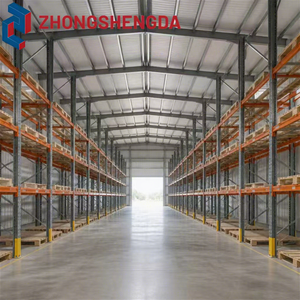
- Structure:Structural Column Channel
- Layout:Central Aisle Prefab 3PL
- Integration:WMS / Vertical Lift Ready
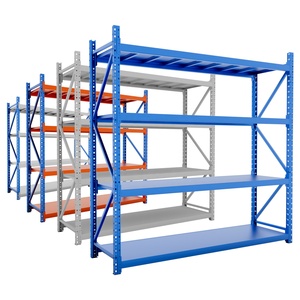
- Uniform Load:800 kg / Level
- Beam Section:Box Profile / Step Beam
- Pitch Interval:50mm / 75mm Adjustable
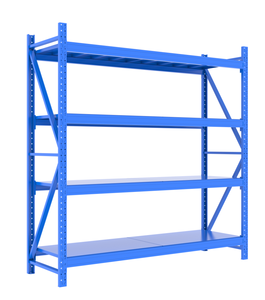
- Load Index:300 kg / Shelf
- Corrosion Proof:Phosphated Powder Coat
- Application:Buffer & Maintenance Bay
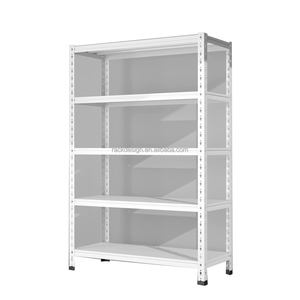
- Profile:Perforated L-Section
- Assembly:Modular Corner Plates
- Flexibility:Rapid Reconfiguration
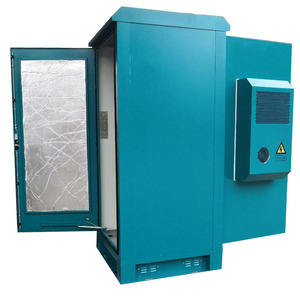
- Standard:19-Inch EIA-310-D (40U)
- Ingress Rating:IP55 Sealed Waterproof
- Thermal Control:Cabinet Heat Exchanger
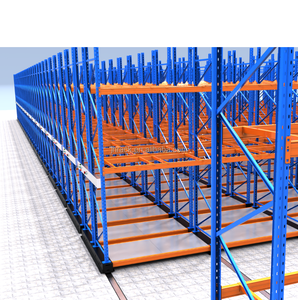
- Operational Temp:Down to -30°C Cryogenic
- Floor Utilization:85% Net Volume Gain
- Drivetrain:Synchronized Electric Base
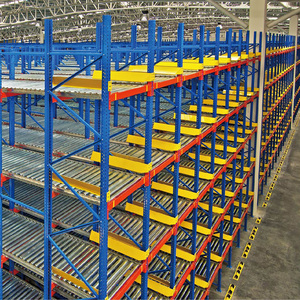
- Inventory Rule:Strict First-In First-Out (FIFO)
- Speed Control:Centrifugal Magnetic Brakes
- Roller System:Reinforced Galvanized Steel
Engineering Analysis: Hot-Rolled Structural Channel vs. Cold-Formed Roll-Formed Racking
When engineering high-bay logistics centers, seismic-zone distribution nodes, and harsh cold-chain facilities, enterprise procurement directors face a decisive engineering choice: Hot-Rolled Structural Steel Racking (C-Channel and I-Beam structural shapes) versus Light-Gauge Cold-Formed Steel Racking. In China's industrial manufacturing supply chain, leading manufacturers differentiate themselves by their structural fabrication capabilities, yielding vast differences in lifecycle durability, seismic resilience, and total cost of ownership (TCO).
Hot-rolled structural steel racking is manufactured using structural steel channels (typically compliant with GB/T 700 Q235B, Q355B, or ASTM A36 / ASTM A572 Grade 50) formed at recrystallization temperatures exceeding 1,100°C. This thermomechanical process completely relieves residual molecular stress and yields structural sections with wall thicknesses typically ranging between 4.0mm and 8.0mm. Conversely, standard roll-formed racking employs cold-coiled sheet steel (1.5mm to 2.5mm thickness) stamped and incrementally bent at ambient temperatures, retaining work-hardening residual stresses that render corners vulnerable to shear failure during forklift impact collisions.
| Structural Parameter | Hot-Rolled Structural Channel (HEDA Spec) | Standard Roll-Formed Commercial Racking | Engineering Impact on Global Operations |
|---|---|---|---|
| Steel Grade & Yield Strength | Q355B / ASTM A572 Gr 50 ($f_y \ge 355\text{ MPa}$) | Q235B Cold Coil ($f_y \approx 235\text{ MPa}$) | 51% greater dynamic resistance against lateral seismic sway and live-load deflection. |
| Column Upright Thickness | 3.5mm – 6.0mm Structural Channel | 1.5mm – 2.0mm Formed Profile | High resistance to vehicular impact; eliminates the need for bolt-on leg protectors in high-traffic bays. |
| Torsional Buckling Limit | Closed / High-Section Modulus Channel: Immune to Torsion | Open Slotted Omega Profile: Vulnerable to Twist | Structural channel maintains upright plumb line even when subjected to eccentric loading and fork truck scraping. |
| Seismic & Wind Shear Tolerance | Full Moment-Resisting Welded Beam Connectors | Teardrop / 3-Tooth Hook Lock Pins | Structural bolts (Grade 8.8 structural fasteners) eliminate the risk of accidental beam dislodgement in magnitude 8+ earthquake scenarios. |
| Cold-Room Fracture Toughness | Charpy V-Notch Tested at -20°C / -40°C ($AK_v \ge 27\text{ J}$) | Unrated Commercial Coil (Prone to Low-Temp Embrittlement) | Prevents sudden catastrophic ductile-to-brittle transition in deep-freeze cold storage (-30°C). |
Guangzhou HEDA Shelves: Advanced Manufacturing Pedigree Since 2001
Operating a modernized 30,000 square-meter fabrication plant in Guangzhou, China, HEDA combines metallurgical robotics, parametric CAD layout architecture, and end-to-end quality governance.
Certified Compliance & Traceability
Factory holds valid CE Certification No. 2435-CPR-8605159, ISO 9001:2015 Management System Certification No. 18624Q00169R0M (audited to June 2027), and RoHS environmental clearance. Complete Mill Test Certificates (MTC EN 10204 Type 3.1) accompany every raw coil and structural channel heat.
10-Stage Anti-Corrosion Treatment
Every structural upright and horizontal beam undergoes rigorous automated surface preparation: chemical degreasing, ultrasonic rust removal, hot-water rinsing, pickling, zinc phosphating, high-purity passivation, followed by dual-cyclone electrostatic powder coat baking at 200°C (60-80μm film thickness) or optional hot-dip galvanization (ISO 1461).
Parametric 3D CAD & FEA Load Calculation
Prior to steel cutting, HEDA's senior structural engineering division executes full 3D Building Information Modeling (BIM), finite element analysis (FEA) for slab load-bearing capacities, floor expansion joint accommodation, and material handling equipment (MHE) turning-radius optimization free of charge.
The HEDA Turnkey Engineering & Export Workflow
Data Mining & Spatial Audit
Evaluating facility clear height, concrete slab thickness, seismic zone coefficients ($S_s, S_1$), pallet unit weights, and forklift mast specifications.
Parametric Simulation
Generating CAD schematics, 3D animated renders, Euler column buckling stress analysis, and picking cycle simulation for optimum SKU turnover.
Robotic Automated Production
CNC cold bending, multi-axis automated beam welding, 10-stage phosphating, and electrostatic powder curing with dimensional tolerance under ±0.5mm.
Container Cube Optimization
High-density nesting packing into 20GP/40HQ shipping containers, minimizing landed freight costs with complete assembly documentation and remote video supervision.
Future Structural Racking Trends: Automation, Cold Chain & Modular ASRS
The global warehousing landscape is undergoing an unprecedented shift toward dense, vertically integrated, and robotically accessible storage configurations. Enterprise buyers sourcing from China must align their technical specifications with emerging supply chain paradigms:
ASRS & Shuttle-Ready Structural Tolerances
Traditional roll-formed racks exhibit minor elastic dimensional changes under variable thermal and live loads. Next-generation smart fulfillment centers deploy Automated Storage and Retrieval Systems (ASRS) and 4-way autonomous shuttles that require structural upright tolerances within ±1.0mm per 10 vertical meters. Structural channel racking provides the ultra-rigid geometric stability mandatory for laser-guided optical sensors and robotic crane positioning.
Cold Chain Optimization & Hot-Dip Galvanization
With pharmaceutical and fresh produce cold chains expanding globally, sub-zero operations (-25°C to -30°C) represent a critical growth sector. Cryogenic operations demand structural steel grades free of silicon-induced brittleness. Continuous hot-dip galvanization conforming to ASTM A123 or ISO 1461, achieving 80–100μm zinc cladding, has superseded standard paint for preventing corrosive condensation rust in high-turnover cold rooms.
Modular Rack-Supported Clad Buildings
To curb steep industrial land expenditures, industrial developers increasingly favor rack-supported building systems ("clad-rack warehouses"). In this typology, the structural racking serves as the load-bearing framework that supports the building roof and external wall sandwich panels, eliminating separate structural building columns and slashing capital construction expenditures by up to 35%.
Frequently Asked Questions: Importing Structural Racking from China
Rigorous answers addressing load capacities, maritime shipping logistics, international safety codes, and installation protocols.
How do hot-rolled structural racking and roll-formed racking differ in impact resistance?
Which design standards are used to verify structural seismic compliance?
How does HEDA prevent container cargo damage during transoceanic shipping?
What surface finish should be specified for humid, coastal, or refrigerated environments?
Can your engineering team assist with local fire department (NFPA) compliance?
What technical data is required to generate a complimentary CAD layout and price quotation?
Request Your Custom Engineering & Factory-Direct Layout Proposal
Collaborate directly with HEDA's senior structural racking engineering team. Receive detailed 2D CAD layout schematics, 3D photorealistic renderings, structural beam deflection models, and container-optimized landed cost estimates within 24 hours.