Engineering Cube Utilization: The Economics of High-Density Pallet Storage
In an economic era defined by escalating industrial land procurement prices, rising construction cap rates, and volatile maritime logistics, volumetric cube efficiency has surpassed simple square-meter footprint calculation as the foremost operational metric for warehouse developers. Traditional selective racking layouts consistently surrender 55% to 65% of floor area to forklift operational access aisles. In contrast, engineered high-density pallet racking systems leverage structural depth, multi-tiered vertical clearance, and mechanical or semi-automated material handling mechanisms to compress footprint requirements by up to 80% while scaling overall pallet capacity.
Aisle-to-Storage Ratio Compression
By transforming conventional horizontal transit aisles into continuous structural storage channels, high-density installations elevate floor area utilization from 35% up to 85%, dramatically lowering real estate expenditure per unit stored.
Structural Metallurgy & Safety Compliance
Fabricated using prime cold-rolled Q235B and high-yield Q355B structural steel, conforming rigorously to EN 15512:2020, RMI ANSI MH16.1, and FEM 10.2.02 codes to withstand seismic acceleration and dynamic beam deflection.
Dynamic Inventory Flow Optimization
Configurable for both First-In, First-Out (FIFO) stock turnover for perishables and Last-In, First-Out (LIFO) strategies for uniform, bulk SKUs, ensuring minimum forklift cycle intervals and zero damage to underlying cargo.
Featured Industrial Pallet Racking & Storage Systems
Precision engineered by Guangzhou Heda Shelves Co., Ltd. for extreme mechanical reliability, harsh industrial environments, and high-turnover logistical velocity.
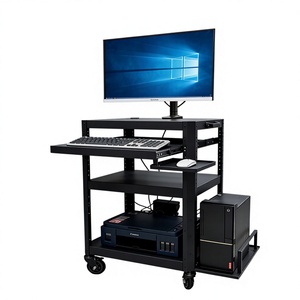
Computer Instrument Equipment Workbench Server Room Training Laboratory Bracket Trolley Multi-layer Movable Steel Storage Rack
- Heavy-duty casters with lock breaks
- Electrostatic anti-static powder coating
- Server room & testing laboratory load
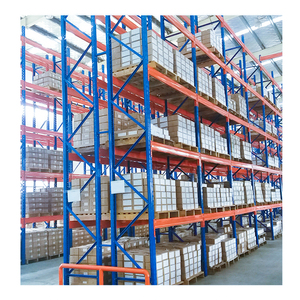
Factory Industrial Racks Manufacturers Warehouse Storage Heavy Duty Selective Steel Pallet Racking System
- Load: 1,000 kg – 5,000 kg per beam level
- 75mm pitch adjustable column slots
- Standard high-throughput 3PL logistics
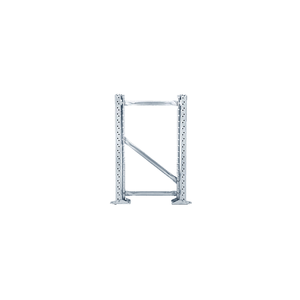
METALSISTEM Superbuild Heavy Duty High Strength Industrial Steel Pallet Rack Shelving System Multi-Level Design Galvanized
- Hot-dip galvanized structural elements
- Multi-level elevated mezzanine capacity
- C4/C5 marine & coastal climate rating
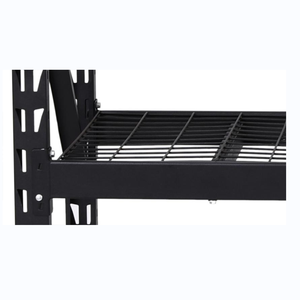
JDS Warehouse Heavy Duty Steel Racking Pallet Racking Adjustable Shelves System Factory Shelves Powder Coating
- Interlocking safety spring-lock pins
- Pickling-phosphated cured polyester
- Seamless boltless frame erection
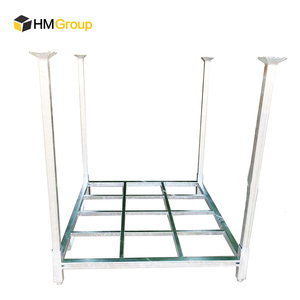
OEM Heavy Duty Galvanized Steel Stacking Racks for Warehouse Stack Pallet
- 4-way forklift pocket entry design
- Stackable up to 4 to 6 units high
- Removable upright posts for deadhead
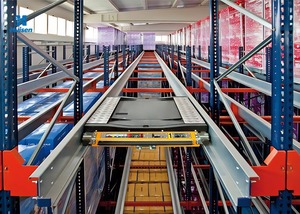
Automated Pallet Shuttle Storage System High Density Warehouse Racking Radio Heavy Duty ASRS OEM Custom
- Autonomous radio shuttle cart vehicle
- Cold storage ready down to -25°C
- Dual FIFO & LIFO software logic
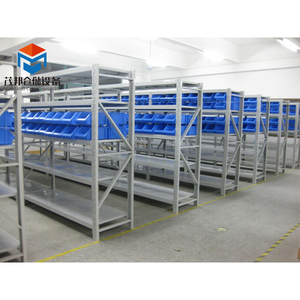
Manufacture Factory Metal Materials Light Duty Racks Warehouse Storage Racks Light Equipment 400 kg Metal Rack
- Uniform 400 kg per shelf capacity
- Solid cold-rolled steel deck panels
- Rapid butterfly hole modular assembly
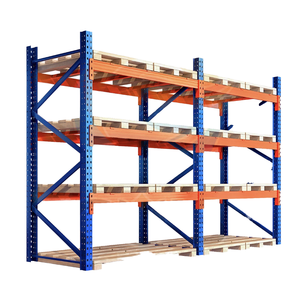
Mracking Durable Warehouse Supermarket Heavy-duty Shelving Equipment Retail Store Display Racks Customized 1000-5000kg Per Layer
- Hybrid Cash & Carry bulk retail racking
- Palletized reserves above hand-pick deck
- Impact-resistant reinforced end frames
Comparative Structural Analysis: High-Density Archetypes
Selecting the ideal high-density racking configuration demands a rigorous trade-off evaluation between storage density, SKU selectivity, stock turnover speed, and capital expenditure per pallet position.
| Storage System Type | Space Utilization | SKU Selectivity | Turnover Principle | Forklift Intrusion | Relative Capex Index |
|---|---|---|---|---|---|
| Selective Pallet Racking | 40% – 50% | 100% Immediate | FIFO / LIFO | Aisle Only | $ (Baseline) |
| Double Deep Racking | 55% – 65% | 50% Immediate | LIFO | Aisle Only (Pantograph) | $$ |
| Drive-In / Drive-Thru | 70% – 80% | 20% – 30% Per Bay | LIFO (Drive-In) / FIFO | Inside Storage Lane | $$$ |
| Push-Back (Carts/Rollers) | 70% – 75% | 30% – 40% Per Lane | LIFO | Aisle Only | $$$$ |
| Pallet Flow (Gravity Roller) | 80% – 85% | Per Lane Dedicated | Strict FIFO | Loading & Unloading Face | $$$$$ |
| Radio Pallet Shuttle AS/RS | 85% – 90%+ | High Batch Selectivity | Configurable FIFO / LIFO | Zero Lane Intrusion | $$$$$ (High ROI at scale) |
*Note: Relative capital expenditure considers initial steel tonnage, mechanical rollers/carts/electronics, and necessary specialized materials handling equipment (e.g., reach trucks vs deep-reach pantograph trucks).
Future Procurement Trends in High-Density Warehousing
Global supply chain directors are redesigning fulfillment centers around four core transformative engineering pillars to hedge against inflation and labor shortages.
1. Hybridization with Autonomous Mobile Robots (AMR)
Procurement models are shifting rapidly away from static drive-in bays toward hybrid high-density matrices where semi-automated radio shuttles interface directly with autonomous mobile robots and automated guided vehicles (AGVs). This eliminates human forklift entry into storage corridors, dropping equipment collision damage by 94% and allowing continuous dark-warehouse operation during off-peak power windows.
2. Low-Carbon Steel & Eco-Coatings
Corporate ESG directives and the EU Carbon Border Adjustment Mechanism (CBAM) are compelling enterprise buyers to specify verified low-embodied-carbon structural steel coils. Surface finish procurement now strictly enforces heavy-metal-free, zero-VOC TGIC-free electrostatic polyester powder coatings that deliver 500+ hours of ASTM B117 salt-spray resistance without environmental contamination.
3. Modular Seismic & Climate-Resilient Engineering
With increasing climate volatility and global warehouse development along high-seismic and coastal tropical corridors, procurement engineers require Eurocode 8-compliant dynamic seismic ductility. Upright column geometries are optimized with variable wall thickness and hot-dip galvanization options for corrosive coastal ports and sub-zero cold room environments.
From Steel Coil to High-Density Racking: 10 Precision Production Stages
Structural integrity in high-density pallet racking begins with strict metallurgical discipline. At Guangzhou Heda Shelves Co., Ltd., raw steel undergoes ten automated manufacturing gates before container consolidation.
Raw Material Grading
Certified Q235B/Q355B hot-rolled steel coils with mill test certificates verifying tensile yield.
Precision Slitting
High-speed automated decoiling and edge slitting within ±0.1mm dimensional tolerance.
CNC Column Punching
Continuous hydraulic multi-station CNC punching of tear-drop or diamond slot patterns.
Continuous Roll-Forming
18-to-24 station roll forming lines creating high-inertia Omega and boxed upright profiles.
Beam Interlock Forming
Precision step-beam and box-beam rolling with internal seamless double-rib stiffening.
Robotic Laser Welding
Automated multi-axis robotic welding of 3-to-5 tooth connector claw brackets to crossbeams.
Mechanical Polishing
De-burring, weld seam shot-blasting, and automated edge chamfering to eliminate stress risers.
Pickling & Phosphating
9-stage chemical wash, acid pickling, rust conversion, and zinc phosphating pre-treatment.
Electrostatic Coating
Automated powder coating curing at 200°C for superior adhesion, gloss, and impact resistance.
CPO Container Loading
Deflection load testing, bundle strapping, and container packing optimization for ocean shipping.
Guangzhou Heda Shelves Co., Ltd.: 25 Years of Engineering Excellence
Established in 2001, HEDA Shelves stands as a globally acknowledged tier-one manufacturer of heavy-duty pallet racking, industrial mezzanines, and automated warehouse storage architectures.
30,000 m² Integrated Facility
Operating fully synchronized manufacturing divisions in Guangzhou, China, including automated slitting, high-tonnage rolling, robotic welding, and specialized surface curing lines with a monthly output reaching 30,000 metric tons.
CE & ISO 9001:2015 Accredited
Holding verifiable European CE Certification No. 2435-CPR-8605159, ISO 9001:2015 Quality Management System Certification No. 18624Q00169R0M (valid until June 2027), and complete RoHS hazardous substance control compliance.
Container-Optimized Logistics (CPO)
Engineering knock-down structures that interleave seamlessly into 20GP and 40HQ ocean containers. Designed to maximize freight cube fill rates and dramatically reduce landed shipping costs per pallet position to global ports.
Frequently Asked Engineering & Procurement Questions
Rigorous technical clarity provided by senior structural warehouse engineers to assist project managers and procurement officers in system specification.
Request a Custom CAD Layout & Structural Load Calculation
Collaborate directly with senior racking engineers. Send your warehouse architectural drawings (DWG/PDF), clear height dimensions, pallet load profiles, and forklift turning radius specs to receive a comprehensive 3D layout, static load analysis, and landed price quotation within 24 hours.
- Free 24-hour CAD layout & 3D rendering
- FEA structural beam deflection audit
- Optimized ocean container packing manifests
- Direct factory pricing with CE/ISO credentials
Direct response from structural engineers