High-Performance Pallet Racking & Automated Storage Solutions
Engineered to international structural safety benchmarks (RMI ANSI MH16.1, EN 15512, and FEM 10.2.02). Every racking profile is optimized for maximum buckling resistance, superior structural steel yield strength, and container-shipping volume efficiency.
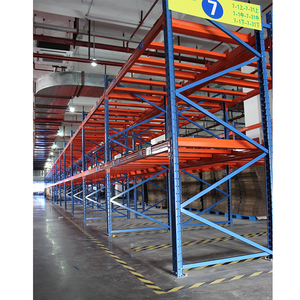
Heavy-duty structural upright frames rolled from high-yield Q235B/Q355B coil steel. Features 75mm beam adjustment increments and custom welded boxed beams.
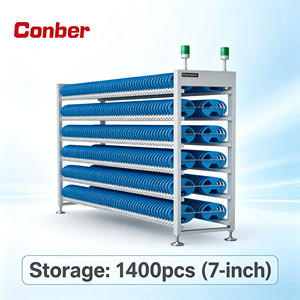
Intelligent electronic component feeder management integrating multi-color dynamic LED indicators, motor-driven locking pins, and automated MES/WMS software.
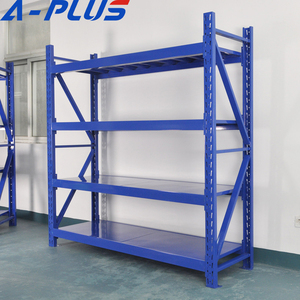
Fast-assembly interlocking modular shelving designed for commercial distribution, backroom retail inventories, light-industrial stores, and e-commerce picking aisles.
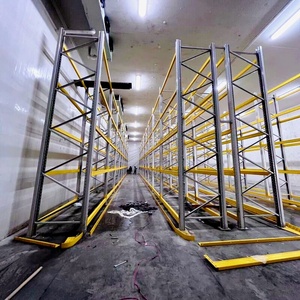
Very Narrow Aisle (VNA) system reducing operating aisle widths down to 1.6m. Maximizes vertical cubic volume utilization up to 90% when paired with high-lift turret trucks.
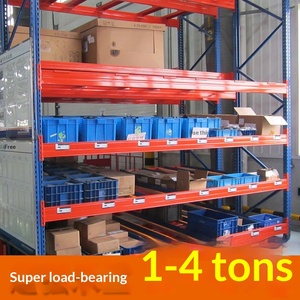
Purely mechanical FIFO live storage relying on inclined gravity roller beds and automatic centrifugal speed controllers. Eliminates internal transit aisles completely.
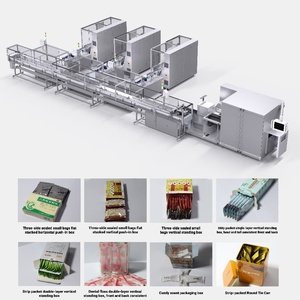
Industrial packaging automation interface connecting sorting conveyors directly to secondary buffer staging racks. Accelerates end-of-line pouch sorting throughput.
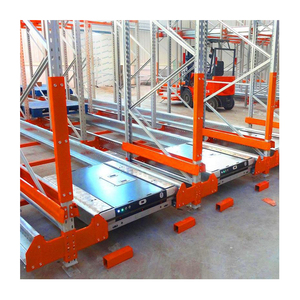
Semi-automated deep-lane storage system utilizing wireless radio-controlled shuttles. Delivers maximum volumetric density for high-throughput cold rooms and FMCG distribution.
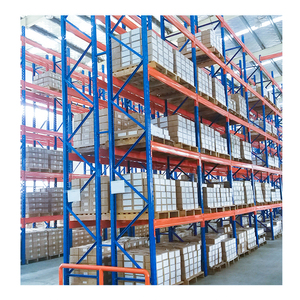
Engineered factory-direct pallet storage engineered for heavy-manufacturing inventory, steel coil buffers, automotive component stamping racks, and third-party logistics (3PL).
Guangzhou Heda Shelves Co., Ltd. (HEDA): Engineering Dominance Since 2001
With 25 years of specialized manufacturing experience, Guangzhou Heda Shelves Co., Ltd. has evolved into an authoritative international supply chain partner. Operating an integrated 30,000 m² smart fabrication complex with monthly output surpassing 30,000 metric tons, we provide end-to-end structural assurance for logistics directors, procurement managers, and industrial builders globally.
25 Years Manufacturing Rigor
Founded in 2001, HEDA has delivered over 10,000 warehouse projects across Europe, North America, Southeast Asia, the Middle East, and Africa. Every rack system reflects quarter-century metallurgical expertise.
Rigid International Certification
Full regulatory compliance verified by CE Certificate No. 2435-CPR-8605159, ISO 9001:2015 Management System Certification No. 18624Q00169R0M, and RoHS compliant chemical coatings.
Free 3D Layout & Structural FEA
Our licensed engineering division utilizes AutoCAD, Revit, and Finite Element Analysis (FEA) software to model deflection tolerances, dynamic seismic base reactions, and container stowage maps at zero design fee.
Knock-Down Shipping Economics
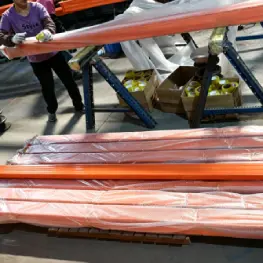
Precision modular boltless nesting reduces empty maritime dead-space by up to 34%. We engineer knock-down bundle dimensions explicitly tailored for maximum weight and cube utilization inside 20GP and 40HQ containers.
10-Stage Precision Production Pipeline
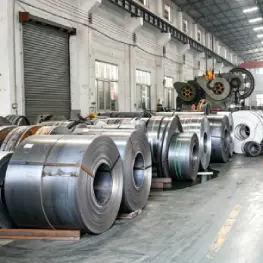
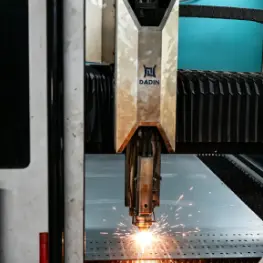
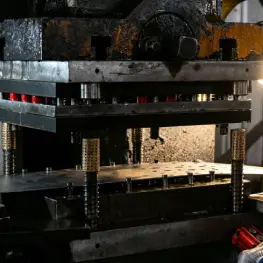
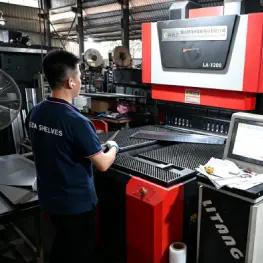
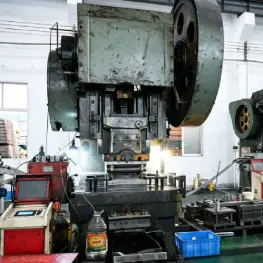
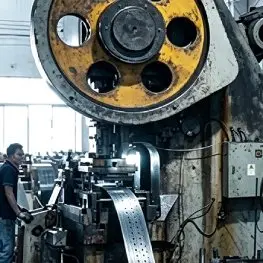
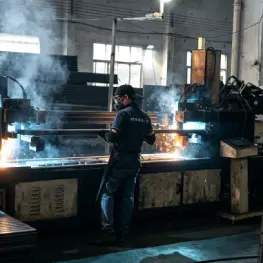
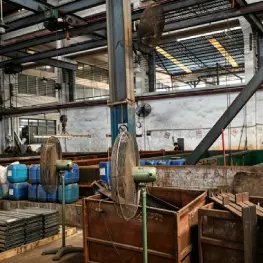
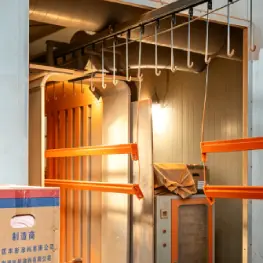
From prime hot-rolled carbon steel coils to robotic welding and chemical passivation, every phase ensures our upright profiles deliver uncompromised seismic stability and load-bearing safety margins.
Future Procurement Trends in Pallet Racking & Industrial Shelving (2025–2030)
Global logistics heads and real estate investment trusts (REITs) are navigating fluctuating raw steel indices, accelerating warehousing automation, and decarbonization mandates. Discover the major operational trends dictating global storage procurement over the next five years.
1. Transition to AS/RS and AMR-Compatible Racking
Traditional manual forklift warehouses are rapidly migrating toward hybrid architectures where Automated Guided Vehicles (AGVs) and Autonomous Mobile Robots (AMRs) interface with pallet racking. Future racking procurement demands tighter structural tolerances (less than ±1.5mm variance), specialized ground rail integrations, and optical sensor reflector mounting channels along all rack uprights.
- High-precision floor-level guidance beam alignments
- Reinforced lower frame impact buffers designed for autonomous chassis
- Integrated power-charging busbar brackets for shuttle fleets
2. Explosion of Sub-Zero High-Density Deep Lane Staging
With global temperature-controlled food logistics and biopharmaceutical distribution expanding exponentially, refrigerated warehouse real estate carries a 250% construction and operational premium over ambient facilities. Sourcing trends prioritize Radio Shuttle systems and live gravity flow racks, reducing cubic refrigeration waste by eliminating redundant forklift aisles entirely.
- Pre-galvanized or hot-dip galvanized finishes mitigating condensation
- Low-temperature ductile steel formulations resisting freeze embrittlement
- Cold-chain lithium battery swap docks embedded within racking uprights
3. Decarbonized Steel Metallurgy & Modular Lifecycle
Corporate ESG commitments are driving procurement directors to audit the carbon footprint of structural steel storage assets. Sourcing teams prioritize cold-formed high-strength micro-alloyed steels that reduce gross structural weight without sacrificing load factor ratings, paired with modular teardown boltless configurations that support multiple warehouse re-tenanting lifecycles.
- Zero-VOC thermoset electrostatic powder coatings
- Standardized 75mm and 50mm connector pitches for universal expansion
- Full traceability mill test certificates (MTC) matching EN 10204 Type 3.1
Structural Mechanics, Load Calculations & System Selection Matrix
Selecting the optimal pallet racking topology requires evaluating four competing performance trade-offs: Floor Footprint Utilization, Pallet Selectivity Speed, Equipment Capital Expenditure, and Floor Slab Point Loading. Below is an engineering comparison matrix synthesized for technical supply chain planners.
| Storage Topology | Cubic Density | Selectivity Ratio | Rotation Logic | Forklift Compatibility | Max Height | Relative Cost Index |
|---|---|---|---|---|---|---|
| Selective Pallet Racking | Baseline (40–50%) | 100% Direct Access | FIFO / Random | Counterbalance, Reach Truck | Up to 12m | $$ (Lowest Capex) |
| Very Narrow Aisle (VNA) | High (70–80%) | 100% Direct Access | FIFO / Random | Specialized Turret Truck / Man-Up | Up to 16m | $$$ (Moderate) |
| Drive-In / Drive-Through | Very High (75–85%) | Low (Batch Access) | LIFO (Drive-In) / FIFO | Standard Counterbalance, Reach | Up to 10m | $$$ (Moderate) |
| Radio Pallet Shuttle | Ultra High (85–92%) | Medium (Lane-Level) | FIFO / LIFO Dual Mode | Standard Reach (Forklift avoids lane) | Up to 24m | $$$$ (High Tech) |
| Gravity Pallet Flow | Ultra High (80–90%) | Medium (Lane-Level) | Strict FIFO (Gravity Incline) | Standard Forklifts at End Faces | Up to 12m | $$$$ (High Mechanical) |
| Push-Back Cart Racking | High (70–78%) | Medium (2–6 Deep) | LIFO Nested Gravity Carts | Standard Counterbalance / Reach | Up to 9m | $$$ (Moderate High) |
| Heavy-Duty Cantilever | Custom Volume | 100% Unobstructed | Manual / Random (Long Goods) | Side Loader, Multi-Directional Reach | Up to 10m | $$$ (Specialized) |
Structural Engineering & Euler Buckling Loads
The structural safety factor of cold-formed steel racking depends on cold-bending work-hardening mechanics and cross-sectional perforation design. Under EN 15512 and RMI ANSI MH16.1 specifications, racking uprights cannot be engineered simply as solid columns; hole punches for beam tear-drops alter torsional and flexural buckling centers.
HEDA's roll-formed Omega (Ω) upright profiles integrate up to 13 continuous longitudinal bends across the web and flanges. This multi-rib cross-section shifts the shear center closer to the centroid, multiplying torsional rigidity and effectively increasing the Euler critical buckling capacity by over 26% compared to conventional basic open channel steel frames.
Beam Deflection Limits & Seismic Anchorage
In international warehouse building engineering, structural beam deflection must strictly adhere to the L/200 threshold (maximum vertical deflection at mid-span under full rated static load must not exceed 1/200th of the clear horizontal beam length). In high-precision automated AS/RS applications, this allowable deflection is further tightened to L/300 to prevent automated shuttle bottom-striking.
Furthermore, seismic baseplate anchoring calculations account for peak ground acceleration (PGA). HEDA supplies ductile forged baseplates featuring four-corner expansion anchoring apertures, ensuring overturning moment resistance and ductile energy dissipation during seismic shock events without brittle weld fractures.
Frequently Asked Questions: Global Pallet Racking Sourcing & Export
Clear, uncompromised technical guidance directly from our factory structural engineers to assist international buyers, warehouse EPC contractors, and import logistics managers.
Request Your Custom CAD Layout & Load Calculation Within 24 Hours
Partner directly with an authoritative manufacturer. Submit your warehouse dimensions, pallet unit weights, and forklift specifications to receive an engineered 3D layout, static load simulation, and direct FOB/CIF container shipping proposal.